
For any vessel, explosion-proof marine equipment must meet classification society standards before it is installed on board. Many shipyards and owners treat the approval process as a final checkbox, only to face delays when documentation is incomplete or test reports are missing. With over thirty years of experience manufacturing explosion-proof electrical equipment for the marine sector, I have seen that early coordination with manufacturers can shorten approval timelines by weeks and prevent costly rework. This article explains how classification societies approve explosion-proof marine equipment, from type certification to onboard inspection, and what project teams can do to move through the process efficiently.
What Classification Societies Require for Marine Hazardous Area Equipment
Classification societies like ABS, DNV, BV, LR, and CCS enforce rules that incorporate IEC 60079 series standards for equipment in hazardous zones. A marine explosion-proof luminaire or junction box must demonstrate compliance not only with the Ex protection method (Ex d, Ex e, etc.) but also with marine-specific requirements: salt spray resistance, vibration testing, and IP66 or higher ingress protection. Flag states may add further requirements, but the class society is the primary approver.
When a manufacturer seeks approval, the society reviews the equipment’s design, the test reports from an accredited laboratory, and the quality system behind production. Some equipment is approved through type approval, while individual units may require surveyor inspection on a case-by-case basis. In practice, most marine projects rely on type-approved equipment because it avoids reinspection of every identical unit. The table below summarizes the typical certification paths accepted by major class societies.
| Society | Accepted Certifications | Typical Process |
|---|---|---|
| ABS | IECEx, ATEX, manufacturer’s type test with ABS witness | ABS PDA (Product Design Assessment) or type approval |
| DNV | IECEx, ATEX, EU-type examination | DNV type approval or certificate of conformity |
| BV | IECEx, ATEX, national certificates | BV type approval or acceptance of existing third-party certs |
| CCS | CCS type approval, IECEx, ATEX | CCS product certificate, often requires CCS witness testing |
Manufacturers who hold multiple international certificates (IECEx, ATEX, and national approvals) can usually shorten the class society review because the underlying test data is already accepted.
Type Approval: The Documentation Package Manufacturers Must Submit
The core of class society approval is the type approval documentation package. This package typically includes:
- Explosion protection certificate from a recognized body (IECEx CoC, ATEX EU-type certificate, or CCS product certificate).
- Test reports showing compliance with IEC 60079-0 and relevant parts (-1 for flameproof, -7 for increased safety, etc.) plus marine environmental tests (salt mist, vibration, EMC).
- Material traceability and certificates for enclosure components, especially where flamepath dimensions are critical.
- Design drawings and parts lists with certified dimensions.
- Quality system certification (ISO 9001 or equivalent), along with the manufacturer’s production test procedures.
I have seen many approval delays caused by missing a single test report or by presenting test data from a laboratory not recognized by the target class society. For example, on the Tilenga project in Uganda, we supplied explosion-proof lighting and electrical systems for wellpads and a CPF located partly within a national park. The class society and client required full documentation demonstrating that all equipment met IECEx and additional environmental standards. Because Warom had pre-prepared documentation aligned with IECEx and CCS requirements, the approval proceeded without safety incidents and on schedule. Preparing a complete package before the class society’s review is not just good practice; it directly protects project timelines.
If your project includes multiple equipment types (floodlights, junction boxes, control stations), having a single manufacturer who can deliver consistent documentation across the entire package reduces surveyor questions and cross-reference effort.
How Shipyards Coordinate with Classification Societies and Manufacturers
Shipyard coordination with class societies and manufacturers typically follows a sequence: the shipyard submits a hazardous area schedule and equipment list; the society confirms the required protection level for each location; the manufacturer provides type approval certificates and technical datasheets; the society reviews the documents and may request additional data or a factory acceptance test (FAT). After approval of the equipment itself, onboard installation is then subject to surveyor inspection, covering correct mounting, cable gland installation, and earthing.
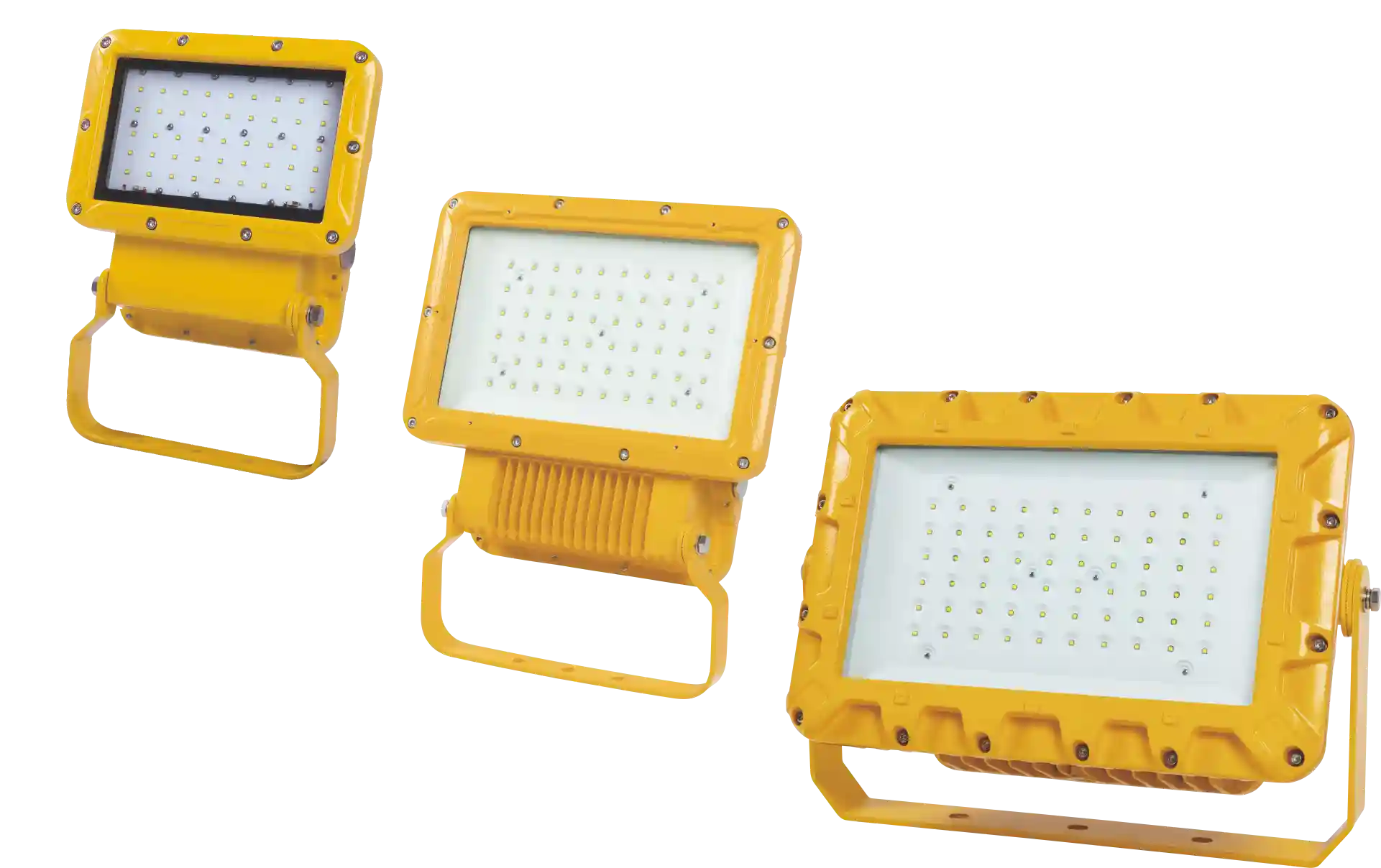
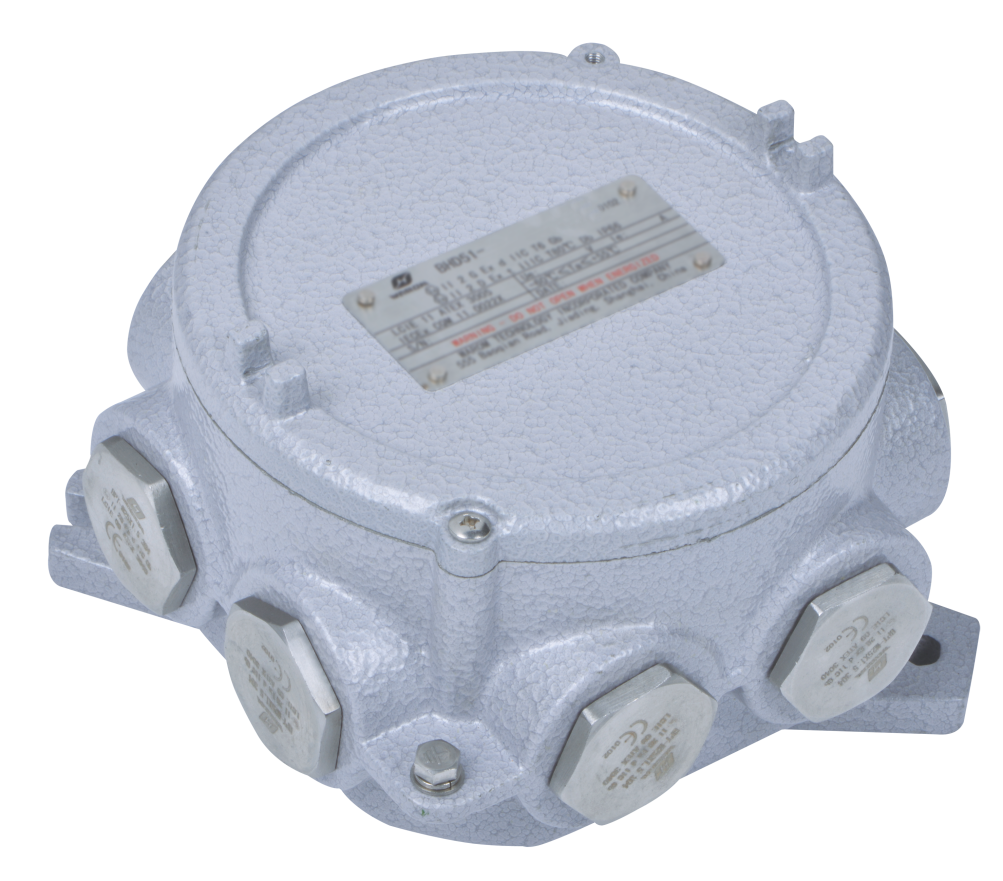
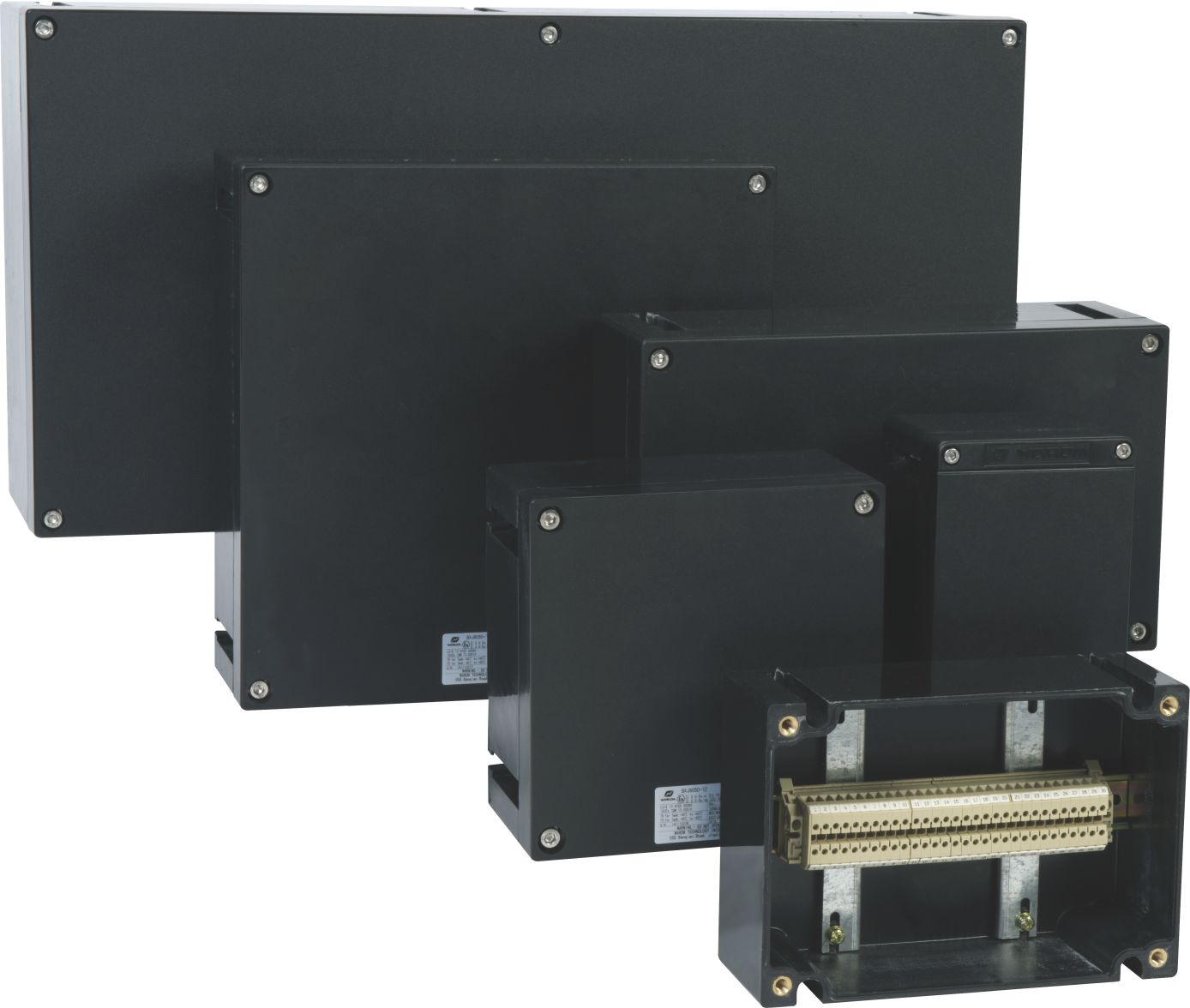
A practical point stands out: when a shipyard waits until the equipment arrives on site to request the documentation, approval chain delays are almost inevitable. Suppliers who maintain a digital documentation pack for each product line, with society-specific certificates already organized, allow the shipyard to submit the complete dossier weeks before equipment delivery. Warom’s marine product range, including BAT86 LED floodlights, BHD91 junction boxes, and BXJ8050 terminal boxes, are supplied with standard documentation packs that cover IECEx, ATEX, and CCS requirements. That removes a common friction point between shipyard, society, and manufacturer.
Onboard Inspection and Final Approval: Common Pitfalls to Avoid
Even with type-approved equipment, the final onboard inspection often uncovers issues that delay acceptance. The most frequent problems I see are:
- Cable glands installed incorrectly, damaging the flameproof joint or compromising the IP seal.
- Junction box covers not torqued to specification after field wiring.
- Missing or illegible Ex marking plates after painting or corrosion.
- Self-certified modifications to equipment that invalidate the original type approval.
Surveyors pay close attention to flamepath gaps and bolting. A gap larger than the certified maximum, even by a fraction of a millimeter, will cause rejection. In one instance, a project I supported had all lighting fixtures approved, but the shipyard’s subcontractor used non-certified stopping plugs on unused cable entries. The entire batch had to be reinspected, adding two weeks. The fix was simple: using manufacturer-supplied certified plugs, but the lesson is that every accessory and installation detail must match the approved design exactly.
I recommend that shipyards include a pre-inspection walk-down with the manufacturer’s technical representative before the formal society inspection. This catches 90% of the typical faults and avoids re-inspection fees.
Selecting Equipment with the Right Certifications for Your Marine Project
Choosing equipment that already carries multiple certifications reduces project risk. A floodlight that holds both IECEx and ATEX certificates may be accepted by ABS, DNV, or BV with minimal additional review, while equipment that only has a single national certificate may require supplementary tests. For projects under CCS, equipment already holding CCS type approval eliminates further testing entirely.
When evaluating manufacturers, look for a certificate scope that matches your operating environment: temperature class T4 or T5 for engine rooms, IP66 for open decks, and Ex db or Ex eb protection depending on zone. Warom’s BAT86 series floodlights, for example, are certified to IECEx, ATEX, and CCS, with ambient temperature range from -60°C to +60°C and IP66, making them suitable for arctic and tropical marine conditions. Junction boxes like BHD91 carry ATEX and IECEx certificates and have CCS type approval options. Starting with products that already have the relevant documentation avoids the time and cost of per-project testing.
Common Questions About Marine Explosion-Proof Equipment Approval
What is the difference between type approval and individual survey for explosion-proof marine equipment?
Type approval certifies that a product design meets all applicable rules; every unit manufactured to that design is then accepted without individual inspection. Individual survey means a surveyor inspects each unit, often after installation. For large projects, type approval is essential to avoid inspection bottlenecks.
Can explosion-proof equipment with ATEX certification be accepted by ABS or DNV?
Yes, widely. ABS and DNV accept ATEX EU-type certificates, provided the product also meets the marine environmental test requirements (vibration, salt mist, EMC). A manufacturer should supply the ATEX certificate along with a declaration of conformity that references the additional marine tests.
How long does it take to get class society approval for explosion-proof marine equipment?
Timelines vary. If the manufacturer already holds IECEx and marine test reports, a class society type approval can be completed in 4–8 weeks, assuming no re-testing is required. New designs without pre-testing can take 3–6 months. Projects that coordinate documentation early avoid idle time.
What costs are involved in classification society approval?
Costs include witness testing fees, document review charges, and sometimes pre-production inspection. For a typical product line with existing IECEx certification, the total for an additional society approval (like CCS or ABS) may be several thousand dollars, but this cost is offset by eliminating per-project inspection fees.
Does the class society inspect the manufacturer’s factory?
For type approval, the class society often conducts an initial factory audit to verify the quality system and production controls. Subsequent surveillance audits may follow. Manufacturers with ISO 9001 and existing IECEx or ATEX quality system approvals typically pass these audits with minimal additional burden. When you are specifying equipment for a marine project, confirming that the manufacturer has recently passed a class society audit can save time.
If your next marine build involves explosion-proof equipment and you need a reliable documentation package that meets ABS, DNV, BV, or CCS requirements, send your equipment list and classification society to gm*@***om.com or call +86 21 39977076. We will review the documentation requirements upfront so you can avoid the schedule delays that come from last-minute certificate gaps.
If you’re interested, check out these related articles:
Ensuring Safety: The Indispensable Role of Explosion-Proof Fluorescent Lamps
Offshore Wind: Explosion Proof Electrical Safety Solutions
With over a decade of experience, he is a seasoned Explosion-Proof Electrical Engineer specializing in the design and manufacture of safety and explosion-proof products. He possesses in-depth expertise across key areas including explosion-proof systems, nuclear power lighting, marine safety, fire protection, and intelligent control systems. At Warom Technology Incorporated Company, he holds dual leadership roles as Deputy Chief Engineer for International Business and Head of the International R&D Department, where he oversees R&D initiatives and ensures the precise delivery of design documentation for international projects. Committed to advancing global industrial safety, he focuses on translating complex technologies into practical solutions, helping clients implement safer, smarter, and more reliable control systems worldwide.
Qi Lingyi