

Explosion proof marine sockets and plugs for deck service are safety devices first and convenience outlets second. On an exposed deck, the assembly has to contain any arc or hot surface that could ignite flammable gas, keep salt water out of the contact area, and prevent a live plug from being withdrawn under load. The correct specification starts with the hazardous area classification of the deck zone, then resolves voltage, pole arrangement, enclosure material, and the interlock or switching arrangement. The following checks are intended for marine electrical engineers, EPC buyers, and shipyard procurement teams who need to turn a deck power requirement into a verifiable product specification.
How Deck Conditions Change Socket Selection
A shore-side industrial plug and socket is usually chosen for convenience and mechanical durability. A marine deck installation adds several conditions that change the selection. Salt spray and green water attack exposed threads and fasteners. Vibration from engines, thrusters, and cargo equipment can loosen cable glands. Sunlight can embrittle plastics. Around tank vents, cargo manifolds, fuelling stations, and other gas-prone deck areas, a small spark at a plug contact may be enough to create an ignition hazard.
The socket therefore has to combine hazardous-area protection with the mechanical and environmental ratings needed on deck. The first question is not the socket amperage. It is the classification of the location. Deck areas are not automatically hazardous. Classification normally follows the vessel hazardous area schedule or the charterer requirements, using the applicable classification standard or class society rules. A Zone 1 area at a tank vent needs a more restrictive certificate than a Zone 2 general weather deck location.
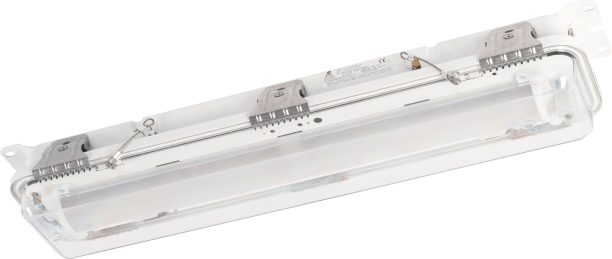
The socket outlet also has to survive the same deck washing and salt-laden air as nearby pendant and floodlight fittings. A deck pendant light circuit may be fed from the same local distribution arrangement as the socket outlets. The socket enclosure and cable entries should be reviewed with that adjacent equipment, not as an isolated accessory.
Certification and Protection Method Checks
Explosion proof certification is a document-backed property. For marine deck sockets, the buyer should request the actual certificate, not only the supplier marking. The BCZ8060 series declares IECEx, ATEX, and CU-TR certificates, but the certificate scope must still be compared with the vessel zone and gas group. A certificate for Zone 2 does not by itself cover Zone 1, and a certificate for gas group IIB does not automatically cover IIC.
IP66 is an ingress-protection rating. It tells the buyer that the enclosure resists powerful water jets, but it does not mean the product can contain an internal explosion. Both properties are needed, and they are checked separately.
Why IP66 alone is not an Ex rating
An IP66 socket can keep water out of a clean industrial area and still be unsuitable for a gas-prone deck. The Ex certificate records the protection concept, such as flameproof, and the conditions under which it remains valid. The IP rating, enclosure material, ambient temperature range, and cable entry arrangement are all part of the same assessment. When a supplier quotes only IP66, ask for the certificate number and scope.
Socket and Plug Specification Controls
Using the BCZ8060 series as a reference, a marine deck socket specification should be checked against a short set of catalog values. It is not enough to select a 16 A socket because the circuit breaker is 16 A. The pole arrangement, voltage range, and cable entry also have to match the ship service.
| Specification | BCZ8060 series catalog value | Deck project check |
|---|---|---|
| Enclosure material | GRP composite | Confirm salt-spray, UV, and impact resistance |
| Pole arrangements | 2P, 3P, 4P, 5P | Match earthing and phase requirement |
| Rated voltage | 480 V to 500 V AC, 380 V to 415 V AC, 200 V to 250 V AC, 100 V to 130 V AC, 12 V to 48 V AC; DC 50 V to 250 V, 12 V to 48 V | Verify ship service voltage and frequency |
| Rated current | 10 A, 16 A | Check connected load, inrush, and temperature |
| Degree of protection | IP66 | Confirm washdown and deck exposure |
| Ambient temperature | -20 °C to +55 °C | Compare with Arctic or tropical deck conditions |
The interlock is one of the most important controls on a deck socket. The BCZ8060 design allows the plug to be withdrawn only after the switch is off, and the switch can be closed only after the plug is inserted. That prevents the plug from being separated under load in a hazardous area. For maintenance work, the socket still needs to be isolated and locked out upstream because the interlock is a product safety feature, not a substitute for permit-to-work.
Socket selection should also be made with the surrounding system in view. A socket installed beside a terminal box, junction box, or local lighting panel must use compatible glands, thread types, and earthing. The deck package is usually easier to commission when these interfaces are defined before order placement.
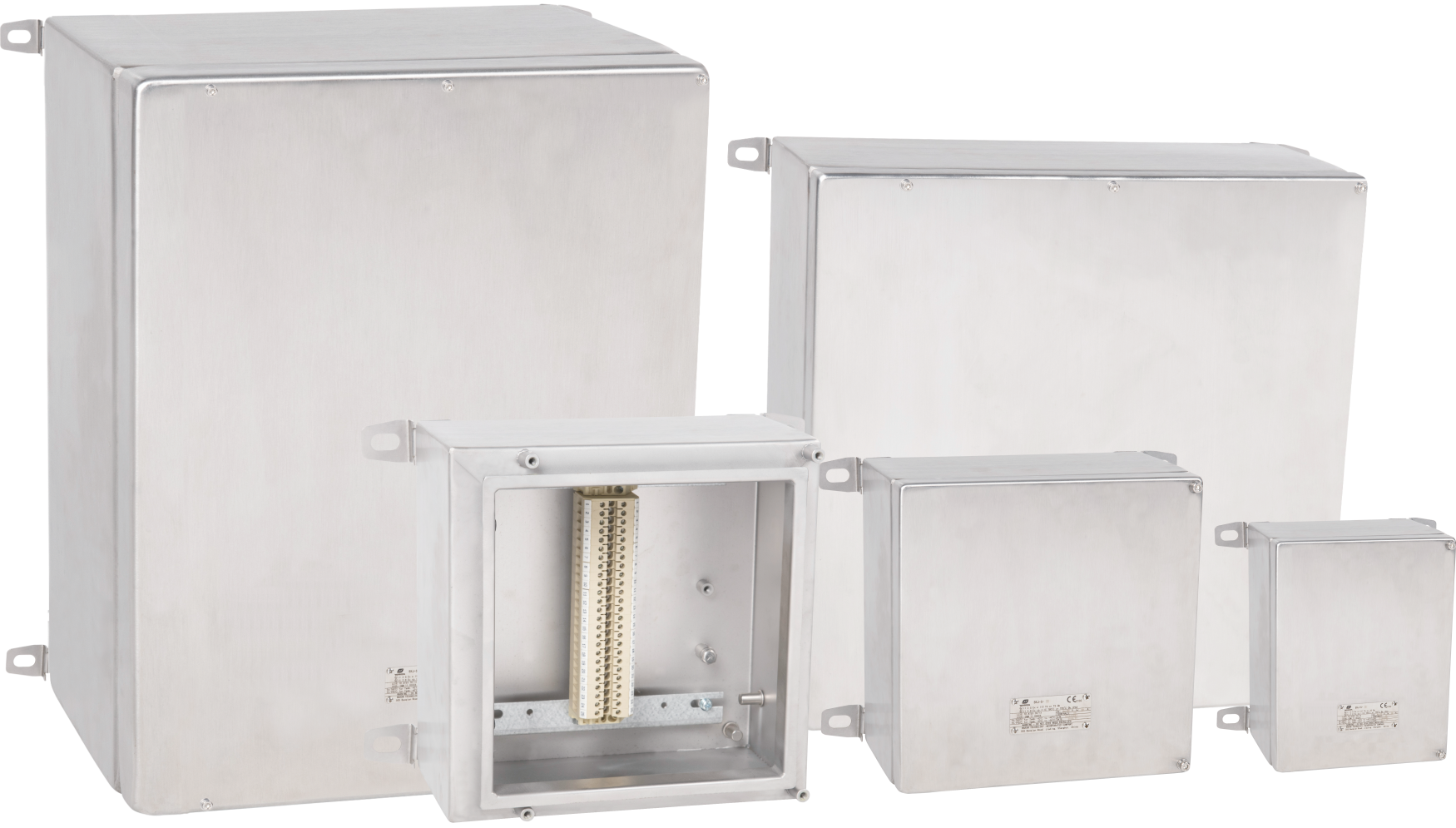
Marine socket outlets are usually specified inside a wider deck electrical package that includes lighting, terminal boxes, and distribution equipment. <Explosion Proof Marine Products for Offshore Wind Vessels> covers marine electrical products for offshore wind vessels.
Deck Load Planning and Circuit Sizing
Before the socket order, confirm the ship service voltage and frequency, the connected load, and the earthing arrangement. The BCZ8060 table shows multiple voltage ranges, but only one circuit voltage applies to a particular installation. A 440 V 60 Hz deck socket should not be treated as interchangeable with a 380 V 50 Hz unit without checking the certificate and contact arrangement.
For a three-phase load, calculate the current from the load power, voltage, and power factor. The socket rated current must exceed the continuous load current, and the cable cross section must match both the socket terminal range and the gland range. In the BCZ8060 example, the cable cross section is 2.5 to 4 mm², which limits the practical cable size even when a larger breaker is installed upstream.
Deck lighting circuits also need to be included in the load review. Floodlight and pendant loads often share the local switchboard sections with socket outlets, and their starting or inrush characteristic can affect protective coordination. The socket and its upstream protection should be reviewed together with adjacent junction boxes and distribution boards.
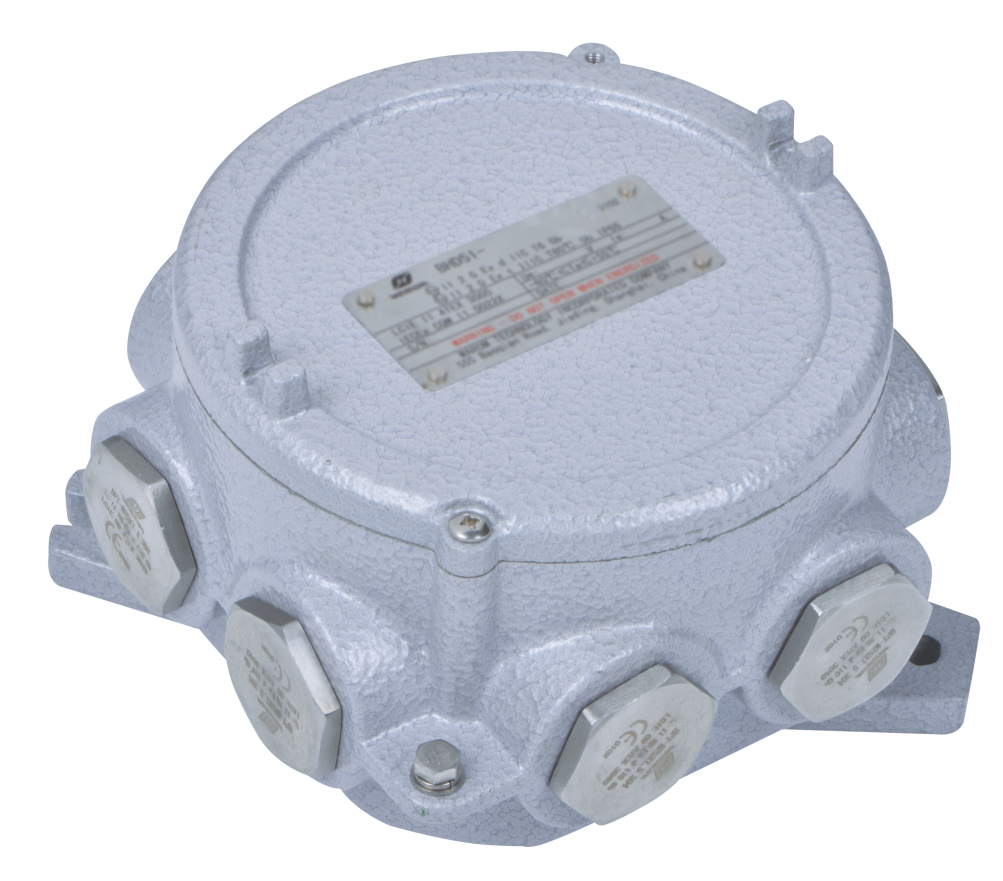
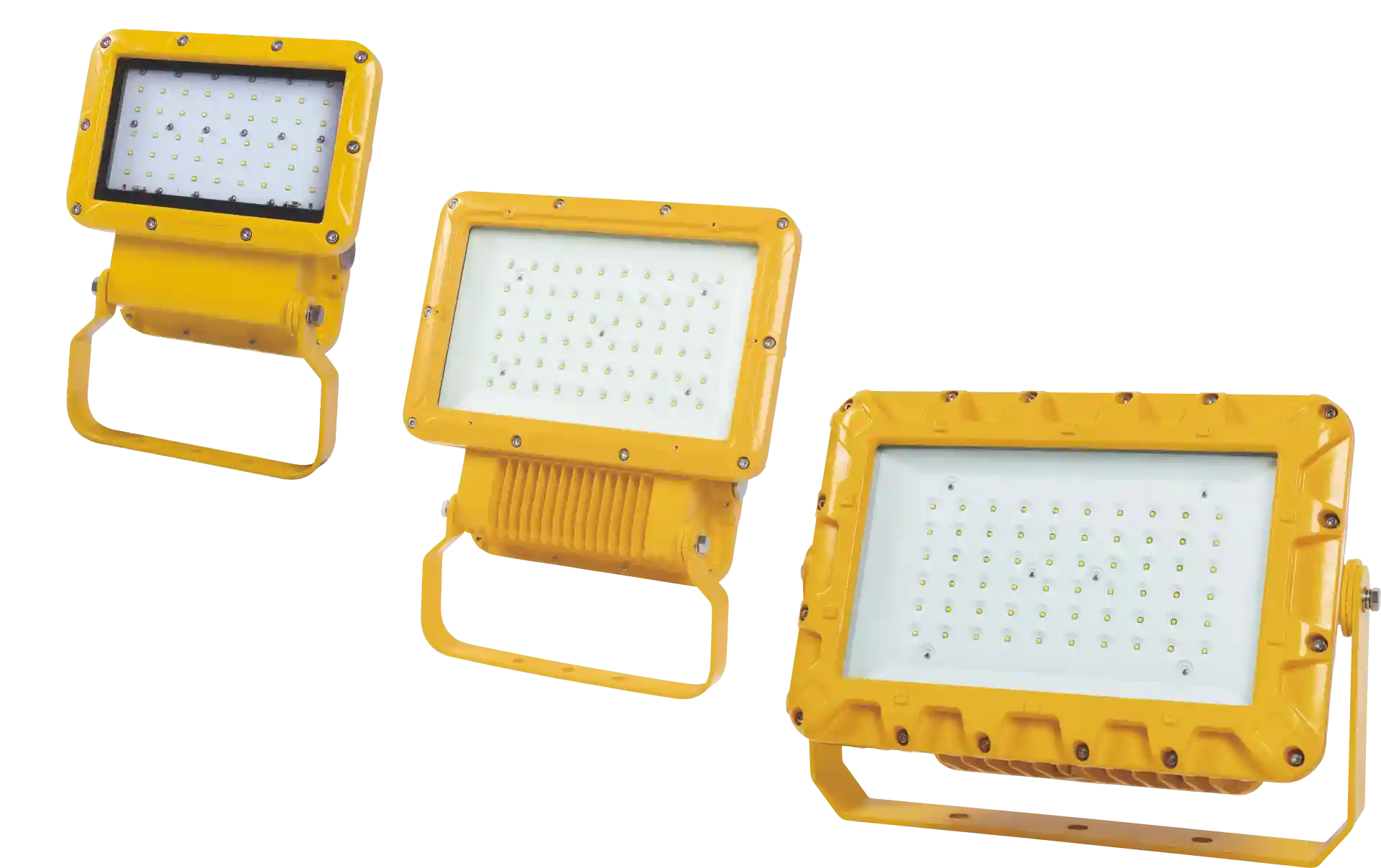
Deck lighting circuits often share the same circuit planning review as socket outlets when generators and switchboards are being sized. <Explosion Proof Floodlights for Hazardous Industrial Areas> covers explosion proof floodlights for hazardous industrial areas.
Installation, Inspection, and Maintenance
Most deck socket failures begin at the cable entry or gland, not at the contact itself. The installer should use the gland type recommended for the cable construction, check that the armour or screen is terminated according to the certificate, and confirm that unused entries are closed with certified stopper plugs. Exposed fasteners should be the material specified by the manufacturer so that corrosion does not weaken the flame path.
Before energization, verify the socket and plug are clean, dry, and free of salt deposits. After heavy weather or deck washing, inspect for water inside the enclosure, cracked GRP, damaged threads, or a plug that cannot be fully inserted. A socket that shows signs of water entry should be isolated and inspected before reuse, even if the circuit appears to work.
How to Write the Socket and Plug RFQ
Most vague enquiries can be reduced to a few fields. Instead of asking for an explosion proof marine socket, specify the certificate scope, service voltage, pole arrangement, current rating, ingress protection, enclosure material, cable entry, and ambient conditions.
| RFQ field | What to request | Why it matters |
|---|---|---|
| Hazardous area | Zone or division, gas group, temperature class | Confirms certificate scope |
| Service voltage | 440 V, 380 V, or other, frequency | Prevents socket mismatch |
| Poles and current | 2P, 3P, 4P, or 5P; 10 A or 16 A | Matches load and earthing |
| Protection | IP66 or the required ingress rating | Covers washdown and salt water |
| Enclosure | GRP or metallic, fastener material | Determines corrosion life |
| Cable interface | Thread type, gland type, cable range | Keeps the flamepath and seal effective |
Reject this RFQ line: explosion proof marine plug and socket with IP66.
Use this instead: IECEx and ATEX certified plug and socket, 3P+E, 16 A, 380 to 415 V AC, 50 Hz, IP66, GRP enclosure, interlocked switch, M25 entry suitable for 2.5 to 4 mm² cable, certified for the deck Zone 1 or Zone 2 area shown on the vessel hazardous area schedule.
Send Your Deck Power Requirements
To get a socket and plug solution that matches the deck installation, send the following information: the hazardous area zone or division, gas group, temperature class, ship service voltage and frequency, required pole arrangement and current, IP rating, enclosure material preference, cable diameter and gland type, and any classification society certificate required. Include the target quantity and delivery schedule so the proposal can be checked against the project compliance plan.
Contact Warom at gm*@***om.com or +86 21 39977076 / +86 21 39972657 with those details. The more complete the specification, the less time is spent rechecking certificates and cable interfaces.
Frequently Asked Questions
Can I use the same socket in Zone 1 and Zone 2?
Only if the certificate explicitly covers both zones. Zone 1 and Zone 2 have different likelihood assumptions. A product marked for Zone 1 may be acceptable in Zone 2, but a Zone 2 product cannot automatically be moved into Zone 1. Check the certificate number against the product model and the installation drawing.
Does IP66 make a plug and socket explosion proof?
No. IP66 describes protection against dust and water jets. Explosion proof protection is shown by the Ex certificate and the protection concept, zone, gas group, and temperature class. A deck socket normally needs both, but they are separate acceptance checks.
Why is an interlock required on a deck socket?
The interlock prevents the plug from being withdrawn while the contacts are live. That removal under load is a serious hazard in a gas-prone area. The interlock also prevents switching on until the plug is fully inserted. It does not replace upstream isolation for maintenance.
What cable glands should be specified with deck sockets?
Use glands that are covered by the product certificate or recommended by the manufacturer. The gland must match the cable diameter, armour or screen type, and thread. Blank entries should be sealed with certified stopping plugs. The BCZ8060 example uses M25 plastic glands and plugs, but the project may require metallic or marine-grade glands depending on the cable.
How do classification society requirements affect the purchase?
Class rules can add type approval, documentation, or installation review beyond the IECEx or ATEX certificate. Confirm with the vessel owner or class surveyor whether the socket must be listed or approved for the specific vessel flag and service. Ask for the relevant certificate or design appraisal before shipment.
If you’re interested, check out these related articles:
Explosion Proof Definition: Essential 2025 Safety Facts
Warom Explosion-Proof Supplier Conference 2024
GRP Fiberglass Enclosures: Ultimate Corrosion Protection
Explosion Proof Cable Glands for SWA Armored Cable Safety
2025 Explosion Proof Lighting Standards: Compliance Guide
With over a decade of experience, he is a seasoned Explosion-Proof Electrical Engineer specializing in the design and manufacture of safety and explosion-proof products. He possesses in-depth expertise across key areas including explosion-proof systems, nuclear power lighting, marine safety, fire protection, and intelligent control systems. At Warom Technology Incorporated Company, he holds dual leadership roles as Deputy Chief Engineer for International Business and Head of the International R&D Department, where he oversees R&D initiatives and ensures the precise delivery of design documentation for international projects. Committed to advancing global industrial safety, he focuses on translating complex technologies into practical solutions, helping clients implement safer, smarter, and more reliable control systems worldwide.

Qi Lingyi