
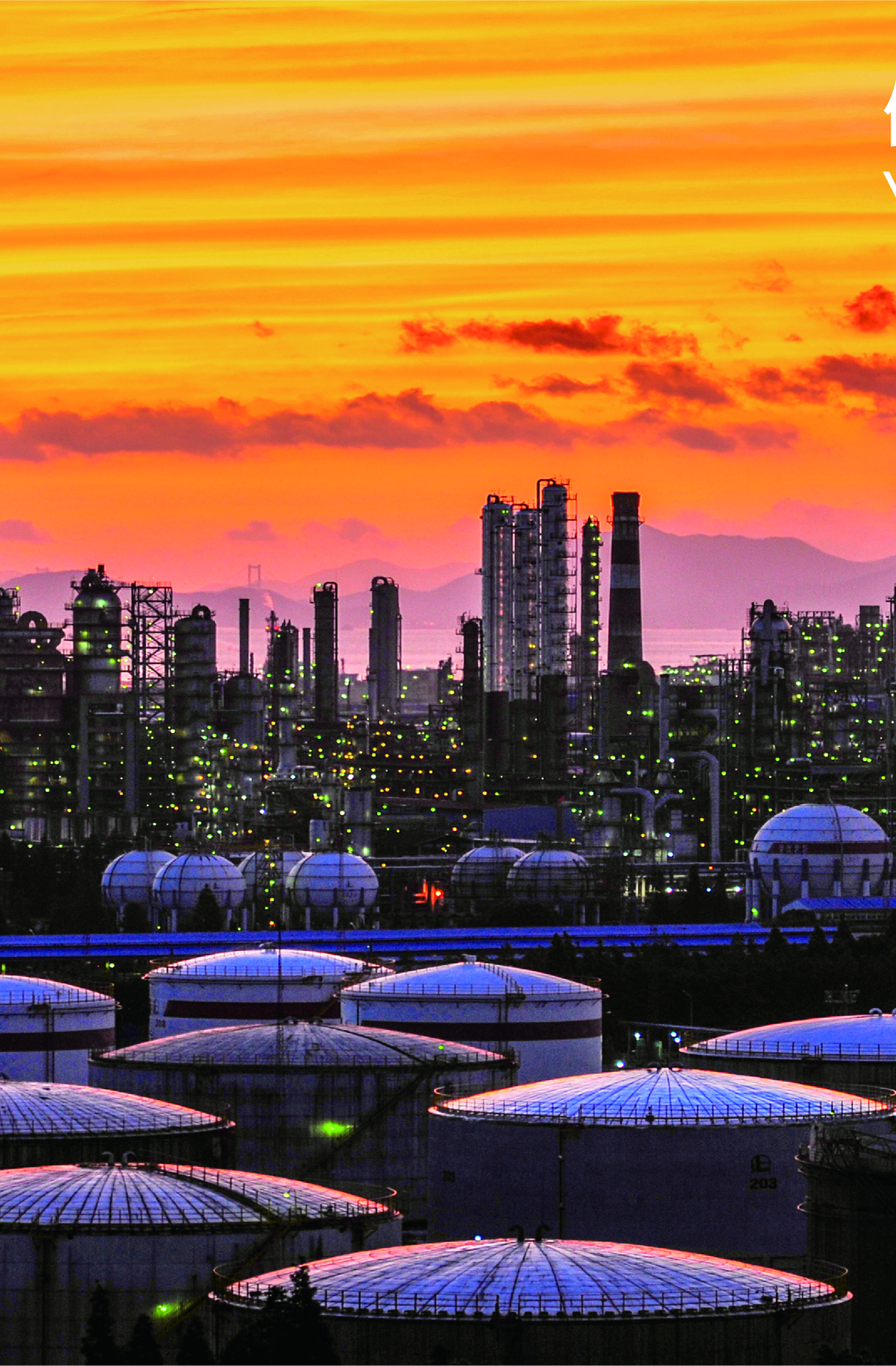
Explosion proof equipment for a LNG regasification terminal rarely fails specification because a certificate is missing. It fails because the certificate covers a different ambient range, a different enclosure variant, or a duty the terminal does not actually have. A regas terminal holds a small equipment population compared with a refinery, but each item sits in a different mix of methane risk, cryogenic spill, salt-laden air and a maintenance window measured in hours. The workable method is to match four things area by area: the zone and gas group, the protection concept, the materials and ingress protection that survive the local climate, and the evidence that proves the delivered unit matches what was certified.
Why LNG regasification duty breaks generic hazardous area specifications
Most terminal specifications begin as a refinery template. LNG is mostly methane, so the template usually assigns gas group IIA and temperature class T1, and for methane alone that assignment holds because methane’s autoignition temperature is high enough that surface temperature rarely governs. The template then travels to areas where its assumptions stop working.
Cold vapor behaves differently from warm hydrocarbon gas. When LNG is released it boils, and the vapor is initially colder and denser than ambient air. It can travel at low level and collect in pits, sumps and cable trenches before it warms and disperses. Low-level gas detection and low-mounted equipment therefore matter more at a regas terminal than the ceiling-level layout a hydrocarbon template assumes.
Cryogenic surfaces and spill paths add a second condition. Equipment near a spill path faces thermal shock, ice build-up and cable jackets that stiffen and crack. No standard explosion proof enclosure is rated for direct LNG impingement, so the answer is layout, shielding, drainage and slope, not a heavier box.
The third condition is continuous duty in a marine climate. Send-out runs, and the maintenance window is short. Salt, UV, humidity and thermal cycling attack fasteners, gaskets and cable entries. A seized cover or a corroded gland turns a routine inspection into a shutdown activity, which is a cost the purchase price never shows.
The equipment population also skews toward lighting, small power, instrumentation and monitoring rather than large motors. That shifts the specification burden toward enclosures, cable entries and ingress protection, where small errors are expensive to correct after installation.
Which terminal areas drive the equipment list
Zone extents at a regas terminal come from a hazardous area classification study, normally performed to IEC 60079-10-1. Buyers should request the zone drawing with the equipment list rather than infer zones from a plot plan, because the boundary of a Zone 1 area around a loading arm, a relief valve outlet or a sump is a study output, not a judgement call.
The table below shows how the dominant specification driver changes by area. It is a planning aid, not a substitute for the project’s own classification.
| Terminal area | Typical classification | Equipment focus | Dominant specification driver |
|---|---|---|---|
| Jetty and unloading arms | Zone 1 near flanges and vents, Zone 2 to the zone boundary | Marine luminaires, junction boxes, plugs and sockets, ESD stations | Salt spray, vibration and cable entry sealing |
| Boil-off gas compression and reliquefaction | Zone 1 and Zone 2 | Motor starters, control stations, gas detection, distribution | Gas group, temperature class and hot surface control |
| Vaporizers and send-out metering | Zone 2 in most layouts | Instrument junction boxes, terminal boxes, trace heating | Measurement integrity and electromagnetic compatibility |
| Flare knock-out drum and vent stack | Zone 1 at the outlet, Zone 0 inside the stack | Vent and stack lighting, monitoring | Beam direction, mounting distance and ignition risk |
| Drains, sumps and cold box spill areas | Zone 2 with cryogenic spill exposure | Low-level detection, hand lamps, junction boxes | Cold embrittlement and low mounting height |
| Substation, control room boundary and analyser houses | Unclassified or pressurized | Pressurized cabinets, air conditioners, panels | Pressurization monitoring and alarm response |
Monitoring deserves separate attention because it changes how the rest of the list is maintained. A jetty camera package must be rated for the zone it overlooks, and it must tolerate salt spray on the housing and lens.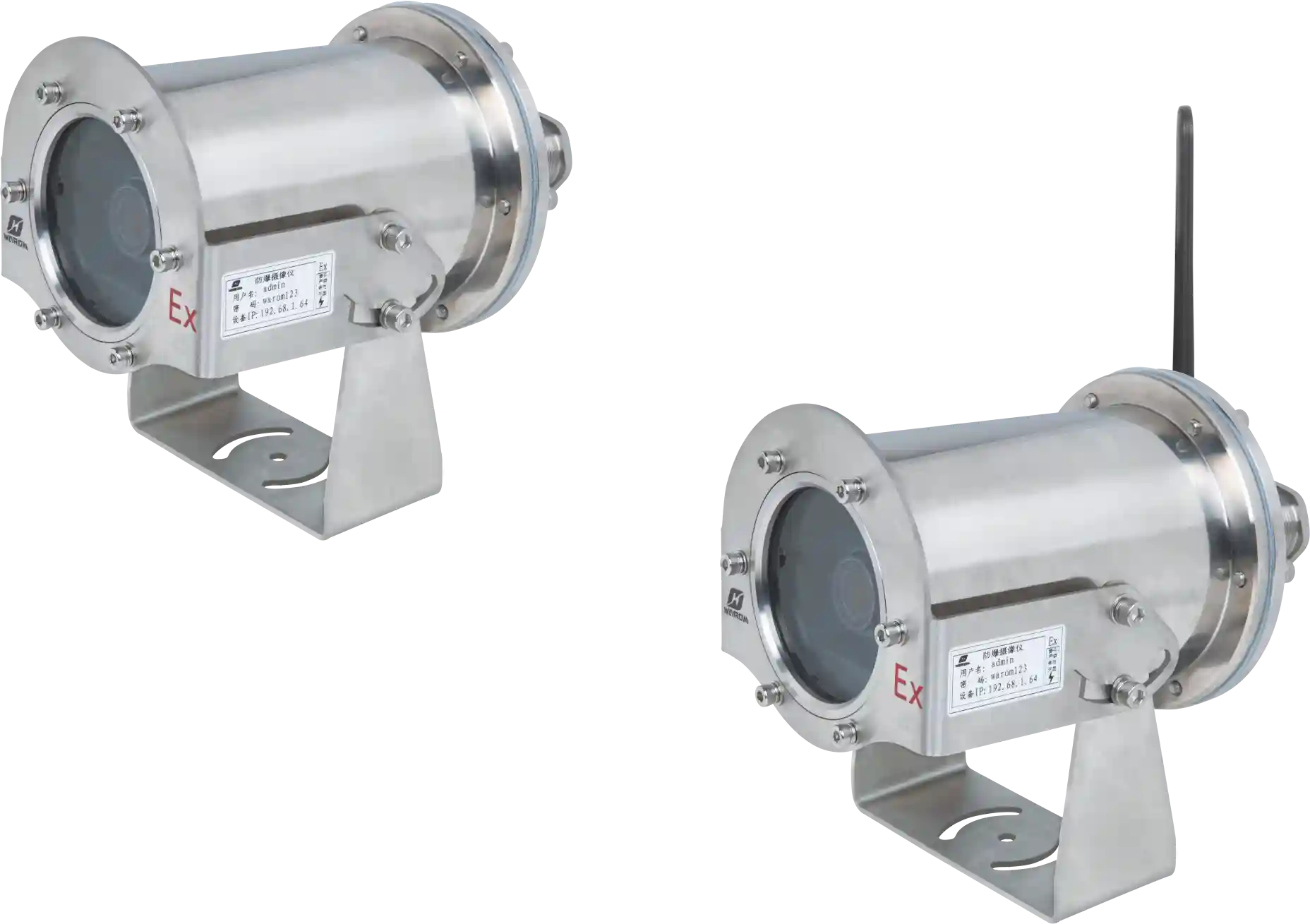
Which protection concept fits each duty
Protection concepts are not interchangeable grades of the same thing. Each solves a different problem, and choosing the heavier concept by default usually raises cost and weight without improving safety.
| Concept | Where it fits at a regas terminal | What it does not solve |
|---|---|---|
| Ex d flameproof | Luminaires, junction boxes, motor starters where arcing parts cannot be avoided | Correct flame path maintenance after a cover is opened on site |
| Ex e and Ex ec increased safety | Terminal boxes, distribution, luminaires with no sparking parts in the Ex e compartment | Faults from loose terminations, which is why torque records matter |
| Ex i intrinsically safe | Instrumentation, gas detection, thermocouples and signals into the control system | System documentation, since entity parameters must be checked as a circuit |
| Ex p pressurized | Analyser houses, large cabinets and control enclosures near process | Loss of purge pressure, which must alarm and trip the load |
| Ex tb dust protection | Areas where insulation or catalyst dust accumulates | Gas hazards, since dust protection addresses a different ignition route |
Gas group and temperature class for methane duty
Methane sits in group IIA with a high autoignition temperature, so T1 equipment is generally adequate and IIA is sufficient for the gas itself. Buyers still see IIC and T6 on terminal datasheets. That is a margin decision driven by adjacent streams such as hydrogen, solvent vapours or lube oil mist, or by a corporate standard applied across a portfolio. IIB and IIC enclosures are often larger and more expensive, so the reason should be recorded. If the only hazard is methane, specifying IIC and T6 without a stated basis adds cost and can lengthen delivery without reducing risk.
Temperature class needs the same discipline. A T6 rating limits surface temperature far below what methane requires. Where the terminal also handles a stream with a lower autoignition temperature, the class follows the most sensitive gas in the area, not the main cargo.
Where the classification scheme itself creates confusion
ATEX, IECEx and North American classifications describe the same physics with different labels, and a terminal built to NFPA 59A may still receive IECEx-marked equipment through an EPC package. Marking alone does not tell you which scheme governs acceptance at the terminal gate, or how a Zone 1 area maps onto a Division 1 label in the vendor’s documentation.
Equipment can be correctly certified and still be rejected at the gate if the marking scheme does not match the project specification. <ATEX vs UL Classification: Mastering Explosion Proof Lighting> covers how the ATEX and UL classification systems differ.
Emergency egress hardware sits at the end of this decision chain. Exit and route lighting must remain certified for the area it serves, and its battery or emergency duration claim has to be checked against the terminal’s evacuation philosophy rather than accepted as a catalogue line.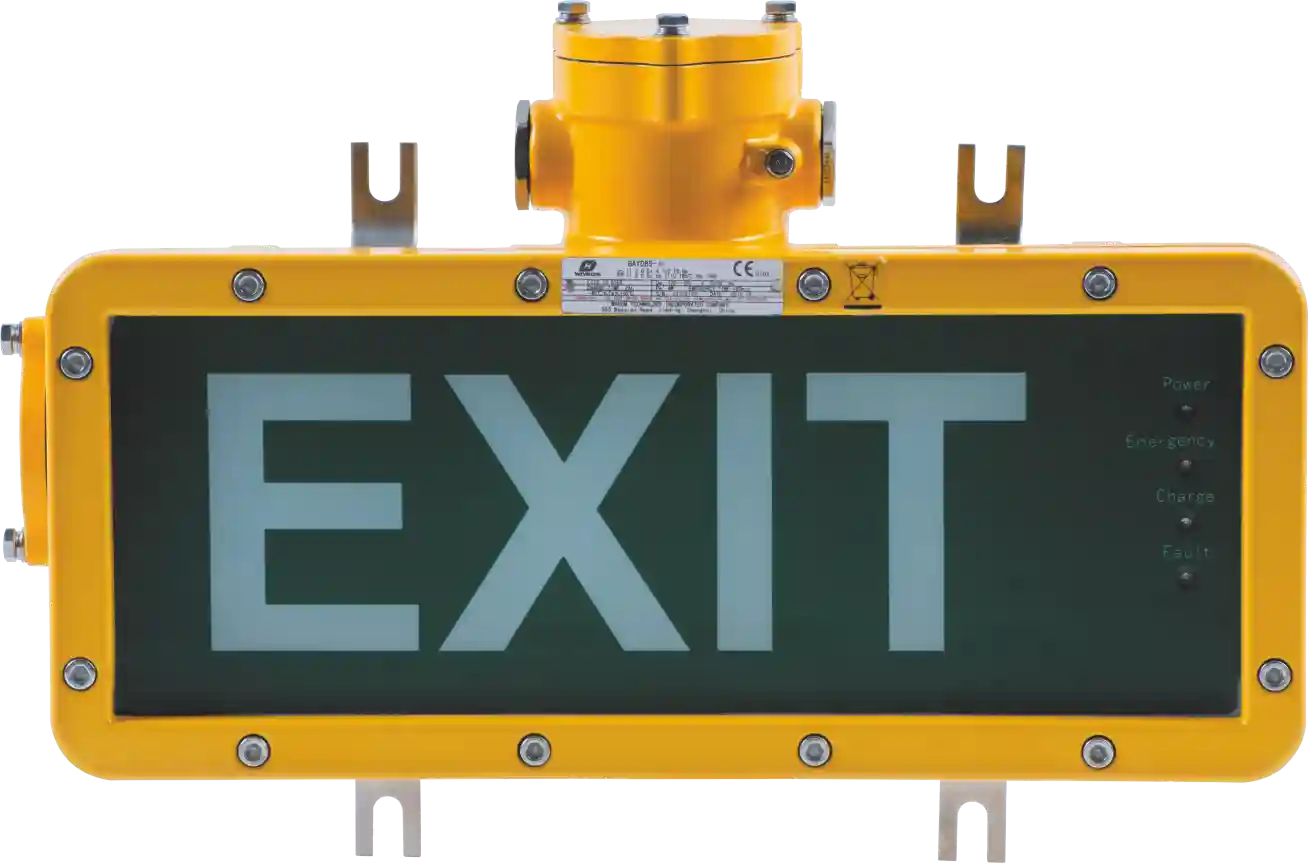
Cold, salt and condensation decide materials and ingress protection
Three environmental factors eliminate more candidate products at a regas terminal than the gas group does.
Ingress protection is the first. IP66 suits most outdoor positions, since it covers dust tightness and powerful water jets. IP68 becomes relevant in sumps, flooded pits and locations where temporary immersion is credible, and it is agreed with the manufacturer rather than fixed by the code. Ingress protection and explosion protection are separate qualifications, and a high IP number does not widen a certificate’s ambient range or gas group.
A junction box can carry an IP68 claim and still be the wrong choice for a sump if its gasket material hardens at the local minimum temperature. <Choosing IP68 Outdoor Junction Boxes: A Buyer’s Strategic Guide> covers how buyers compare ingress ratings for outdoor junction boxes.
Corrosion is the second. Copper-free aluminium alloy with a powder coating and stainless steel fasteners is a common balance of weight, cost and resistance for coastal sites, while GRP suits highly corrosive positions and 316 stainless steel suits marine deck areas where abrasion is also present. Two details decide long-term behaviour: the fastener material against the enclosure material, because a stainless fastener in an aluminium body creates a galvanic couple that seizes, and the condition of the coating at cable entries, where most corrosion begins.
Cold is the third and the most frequently underestimated. A standard −20 °C rating is not a cold climate rating. At −45 °C or lower, gaskets lose elasticity, cable jackets crack when bent, polycarbonate covers become brittle under impact, and ice on a cover can hide a damaged flame path. The minimum ambient temperature must appear on the certificate, not only on the datasheet. A floodlight rated from −60 °C ambient, with an upper limit of +40 °C or +60 °C depending on the version and IP66 with WF2 corrosion resistance, shows the kind of stated window a cold site should be asking for; the same window applied to a generic fixture is a claim to be tested, not assumed.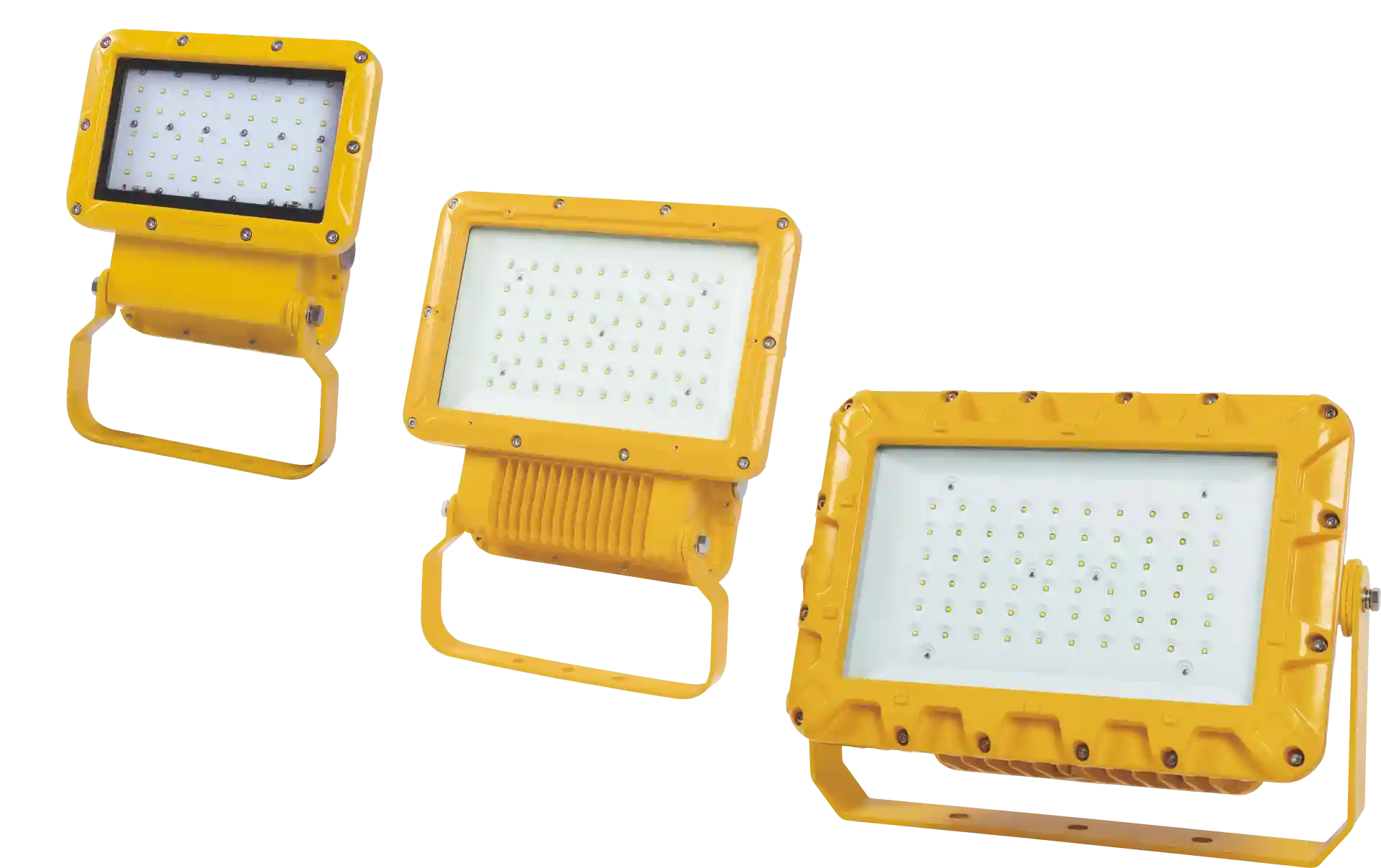
Condensation needs a design answer rather than a desiccant sachet. Temperature cycling draws moisture into an enclosure through every entry, and internal heaters with a thermostat are more reliable than breathers, which can compromise both the IP rating and the flameproof arrangement. Junction boxes with anti-static coating, anti-loosening fasteners and a stated −60 °C to +60 °C ambient range are the practical baseline for exposed positions, because the box is usually the last item reviewed and the first to fail in service.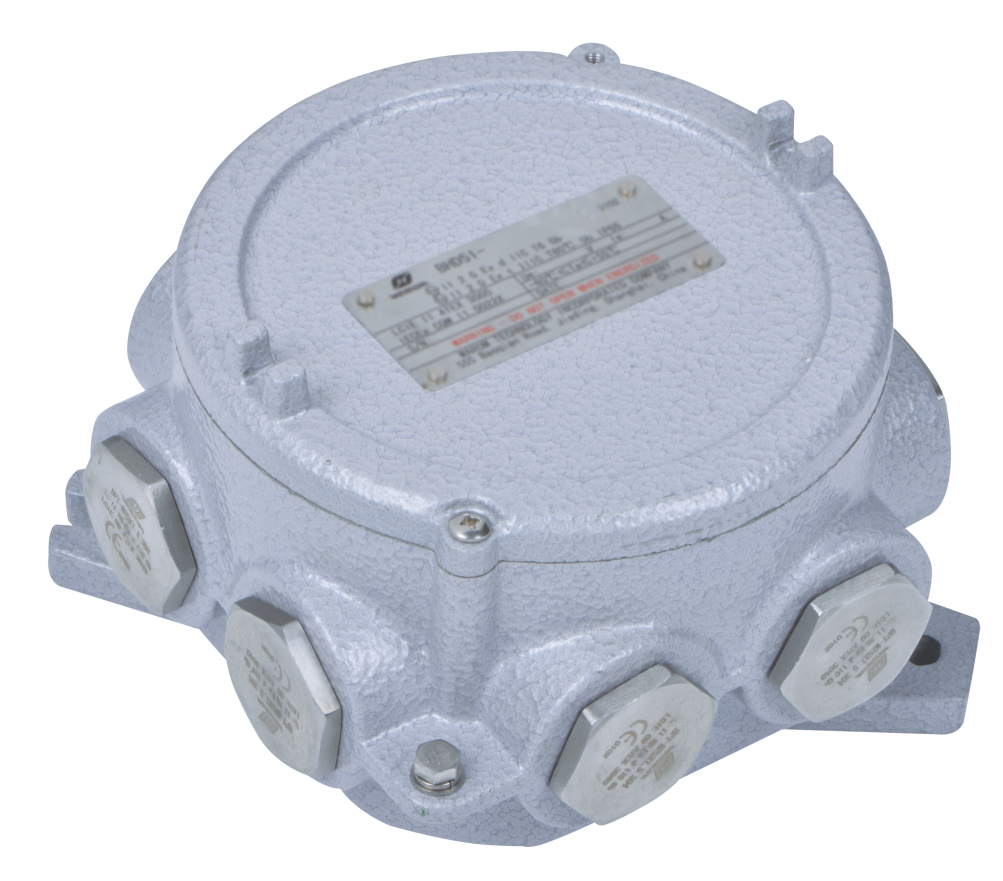
Cryogenic spill remains outside any of these ratings. No enclosure in common use survives direct LNG impingement on a gasket face. The correct response is to move the equipment out of the spill path, shield it, and slope the surface below it so a spill drains away instead of pooling against the cover.
What evidence proves a package is terminal grade
Certificates are screening documents. They confirm that a design family has been assessed, and they support acceptance only to the extent that they name the delivered variant, the ambient range and the protection concept actually ordered. The table below separates what common records can legitimately prove from what buyers often assume they prove.
| Record | Method context | Responsible use | Do not infer |
|---|---|---|---|
| Ex certificate naming the model code, ambient range and IP rating | Issued by the certification body for a defined enclosure and temperature window | Confirms the certified configuration and its stated limits | That a similar model in the same family shares the rating |
| Nameplate Ex marking, for example Ex db eb IIC T6 Gb | Applied at manufacture under IEC 60079-0 | Identifies the concept, group, class and equipment protection level of that unit | That marking alone proves routine tests were performed |
| Routine and factory acceptance test records | Documented or witnessed before shipment | Shows the tested unit met the agreed test list | That site wiring and installation are correct |
| Initial inspection to IEC 60079-14 | Performed after installation, before energization | Verifies the installed arrangement against the certified one | That later modification keeps the certification valid |
| Spare parts and interchangeability statement | Supplier declaration covering covers, gaskets and glands | Supports planned maintenance and spares stocking | That an unlisted third-party part is acceptable |
Two records are routinely missing from terminal packages and are worth insisting on. The first is a marking schedule that maps every delivered item to its certificate number, its area and its protection concept, so a receiving inspector can check a box against a document instead of decoding a nameplate. The second is a list of the parts that are certified as part of the assembly, particularly cable glands and stopping plugs, because an uncertified adaptor at the entry changes the rating of an otherwise correct enclosure.
Terminal boxes for instrument and signal connections carry a disproportionate share of this documentation burden, since a single missing gland certificate can hold up commissioning of an entire marshalling scope.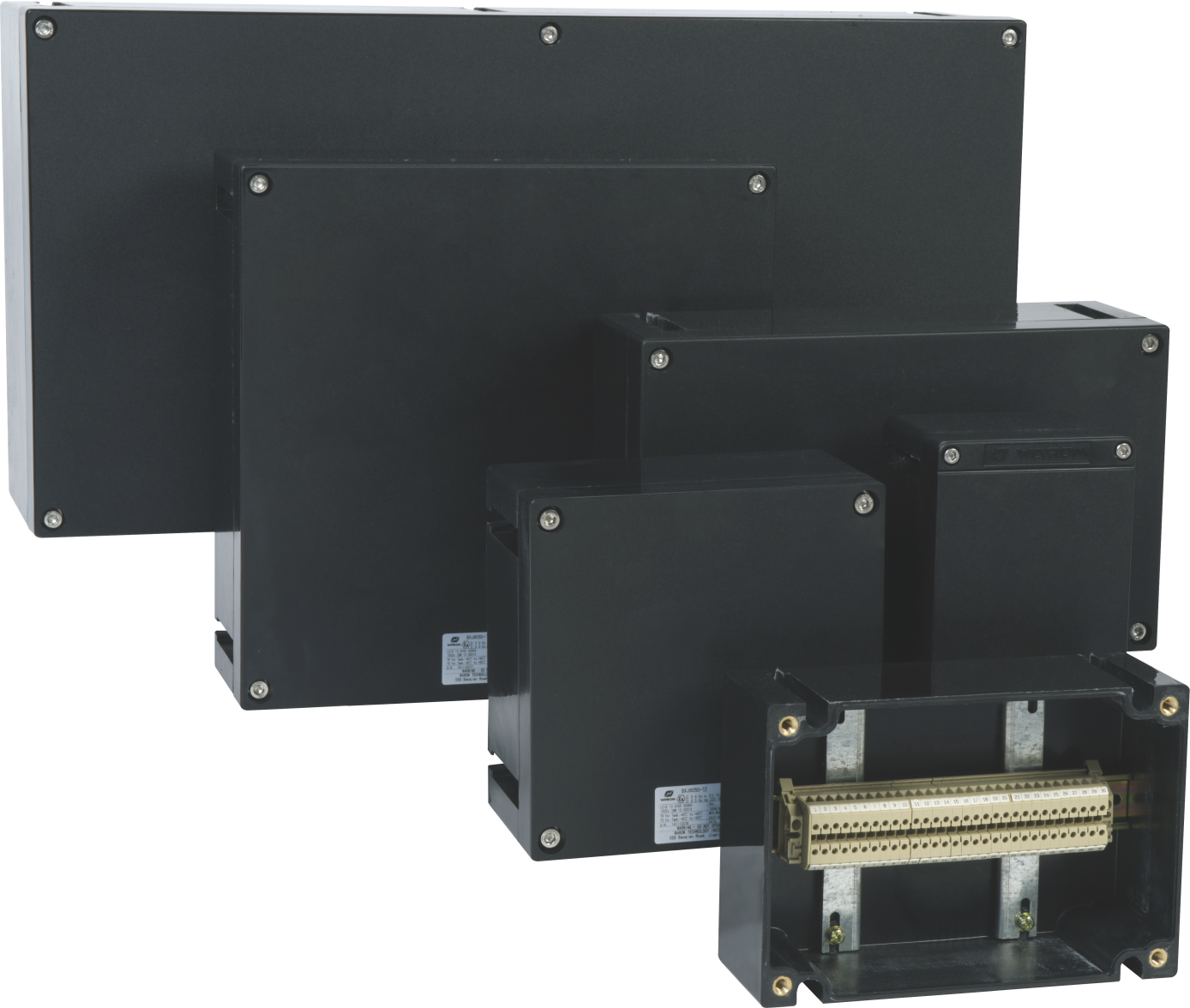
What to put in the RFQ and how to compare the answers
Most quotation problems at a regas terminal come from the RFQ, not from the supplier. A request that asks for “ATEX certified junction boxes, IP66” will receive exactly that, in a default ambient range that may not suit the site.
| RFQ field | What to request | Failure it prevents |
|---|---|---|
| Area and zone | Zone drawing reference plus gas group and temperature class per area | Equipment ordered for the wrong group or class and unusable at the gate |
| Ambient temperature | Minimum and maximum ambient, plus any spill or radiant heat exposure | A standard range unit delivered to a cold climate terminal |
| Ingress and corrosion | IP rating, corrosion category, enclosure and fastener materials | Seized covers and rusted entries at the first inspection |
| Certification scope | Scheme, certificate number, model list, EPL and ambient range on the certificate | A family certificate that does not name the ordered variant |
| Cable entry | Gland type, thread, cable diameter range and whether the gland is certified with the assembly | Unlisted adaptors that change the entry rating |
| Documentation and spares | Test reports, marking schedule, recommended spares and spare glands | A shutdown waiting for one enclosure cover |
A reject and replace pair makes the difference concrete.
Reject this RFQ line: “Explosion proof junction boxes, ATEX certified, IP66, 20 off.”
Replace it with: “Ex d enclosure in copper-free aluminium alloy, IP66, ambient −60 °C to +60 °C stated on the certificate, gas group IIC and temperature class T6 for margin, 12 terminals at 4 mm², two M25 entries fitted with Ex d nickel-plated brass glands for 12.5 to 20.5 mm cable, IECEx and ATEX certificates naming the model, test report, marking schedule and spare gaskets.”
Quote comparison then becomes an evidence exercise rather than a price exercise. Rank offers on four questions. Does the certificate name the variant and the ambient range? Are the glands, plugs and breathers certified as part of the assembly? Is the spare parts list specific enough to stock a remote site? And what is the realistic lead time for a repeat order, not the first order? Price differences of a few percent disappear against a single unplanned shutdown, while an oversized enclosure chosen for margin adds weight, mounting cost and delivery time for no safety benefit.
What to send with the inquiry
Describe the terminal area, zone classification reference and gas group, the temperature class required and the reason for any margin such as IIC or T6, the minimum and maximum ambient temperature, the ingress protection and corrosion requirement, the enclosure material preference, the certification scheme the project accepts, the cable entry type and cable diameter range, the quantity and required delivery date, and the documentation package the receiving inspection will check. Send that list to Wang Lei at Warom Technology Incorporated Company, gm*@***om.com, or call +86 21 39977076 or +86 21 39972657, and the quotation can be built around your zone drawing instead of a default catalogue range.
FAQ
Does a LNG terminal always need Group IIC equipment?
No. Methane is group IIA, and IIA equipment is adequate where methane is the only flammable gas in the area. IIC is a margin decision that becomes necessary when hydrogen, acetylene or similar streams are present, or when a corporate standard applies across a portfolio. IIC enclosures are often larger and more costly, so the basis for the margin should be written into the specification. If no such stream exists, ask what the IIC requirement is protecting against before accepting the added cost and lead time.
Is IP68 required instead of IP66 at a regas terminal?
Usually not. IP66 covers dust tightness and powerful water jets, which suits most outdoor positions on a jetty or process area. IP68 becomes relevant in sumps, flooded pits and low points where temporary immersion is credible, and its exact conditions are agreed with the manufacturer rather than fixed by the standard. Higher ingress protection does not extend a certificate’s ambient range or gas group, so it should be specified for the positions that need it rather than applied to the whole package.
Can standard Zone 1 equipment be used at −45 °C?
Only if the certificate states that ambient range. Many Zone 1 products are certified for −20 °C, and the datasheet may not repeat the certificate limit. Below the certified minimum, gaskets stiffen, cable jackets crack and impact resistance changes, so the explosion protection argument no longer holds even though the marking looks correct. Request the certificate and read the ambient window before accepting a quote, and treat a datasheet figure that does not appear on the certificate as unconfirmed.
Which certification should an EPC accept, ATEX or IECEx?
Accept the scheme the project specification and the local authority require, and confirm that the delivered model appears on the certificate by name. IECEx is widely accepted for global projects and ATEX for European Union installations, while terminals built to NFPA 59A may follow North American practice. Mixing schemes across a package is workable when the marking schedule maps each item to its certificate and area, but it needs to be agreed before ordering rather than resolved at receiving inspection.
If you’re interested, check out these related articles:
Warom Technology Shines CSSOPE 2024
PETROLEUM ENERGY SHOW 2024
With over a decade of experience, he is a seasoned Explosion-Proof Electrical Engineer specializing in the design and manufacture of safety and explosion-proof products. He possesses in-depth expertise across key areas including explosion-proof systems, nuclear power lighting, marine safety, fire protection, and intelligent control systems. At Warom Technology Incorporated Company, he holds dual leadership roles as Deputy Chief Engineer for International Business and Head of the International R&D Department, where he oversees R&D initiatives and ensures the precise delivery of design documentation for international projects. Committed to advancing global industrial safety, he focuses on translating complex technologies into practical solutions, helping clients implement safer, smarter, and more reliable control systems worldwide.

Qi Lingyi