

Specifying explosion proof monitoring systems for a refinery project is a design exercise, not a camera order. The first thing I ask for is the hazardous area schedule and the signal interface list, because a device with the right certificate can still fail site acceptance when it cannot hand data to the plant control system. After thirty years on refinery and EPC jobs, I have watched more delays come from missing integration data than from the camera itself. A workable specification treats the monitoring package as a certified system, with every enclosure, gland, cable, and protocol accounted for from Zone 1 to the safe area.
What Does a Refinery Monitoring System Actually Need to Capture?
Start with field conditions before any device list. A refinery monitoring system includes cameras, gas detectors, flame detectors, alarm devices, and local junction boxes. The specification should define what each device sees or detects, where it sits, and where its signal terminates. If a security camera is only for perimeter viewing, it may not belong in the same package as a gas detection loop connected to shutdown logic. Keep the two streams separate in the bill of materials. For safety functions, the loop matters more than the enclosure. A camera that records but does not alarm is not the same as a gas detector that triggers executive action. In the same package, visual alarms and caution spotlights need a defined response policy: which event lights the alarm, who silences it, and where the status is logged.
Which Protection Concepts Apply to Refinery Monitoring Equipment?
Monitoring equipment in refinery areas is usually specified as Ex d or Ex db for enclosures and Ex ia for low-energy field signals. Ex d contains an internal explosion and cools escaping gases through a flame path. Ex ia limits energy so a spark cannot ignite the atmosphere. Both can appear in one device: the camera housing may be Ex db while the 4-20 mA signal is Ex ia. Do not copy a certification code from a similar project without checking the gas group and temperature class. A refinery with hydrogen-bearing streams changes the design from Group IIB to Group IIC, and the T class sets the maximum surface temperature the device may reach.
Refinery monitoring equipment shares field wiring paths with other hazardous area apparatus, and the protection concept must match across the enclosure, gland, and terminations. <Explosion Proof Light Fittings for Zone 1 Hazardous Areas> covers how Ex d and Ex e construction rules carry across lighting circuits that often sit beside camera power and junction boxes on the same cable tray.
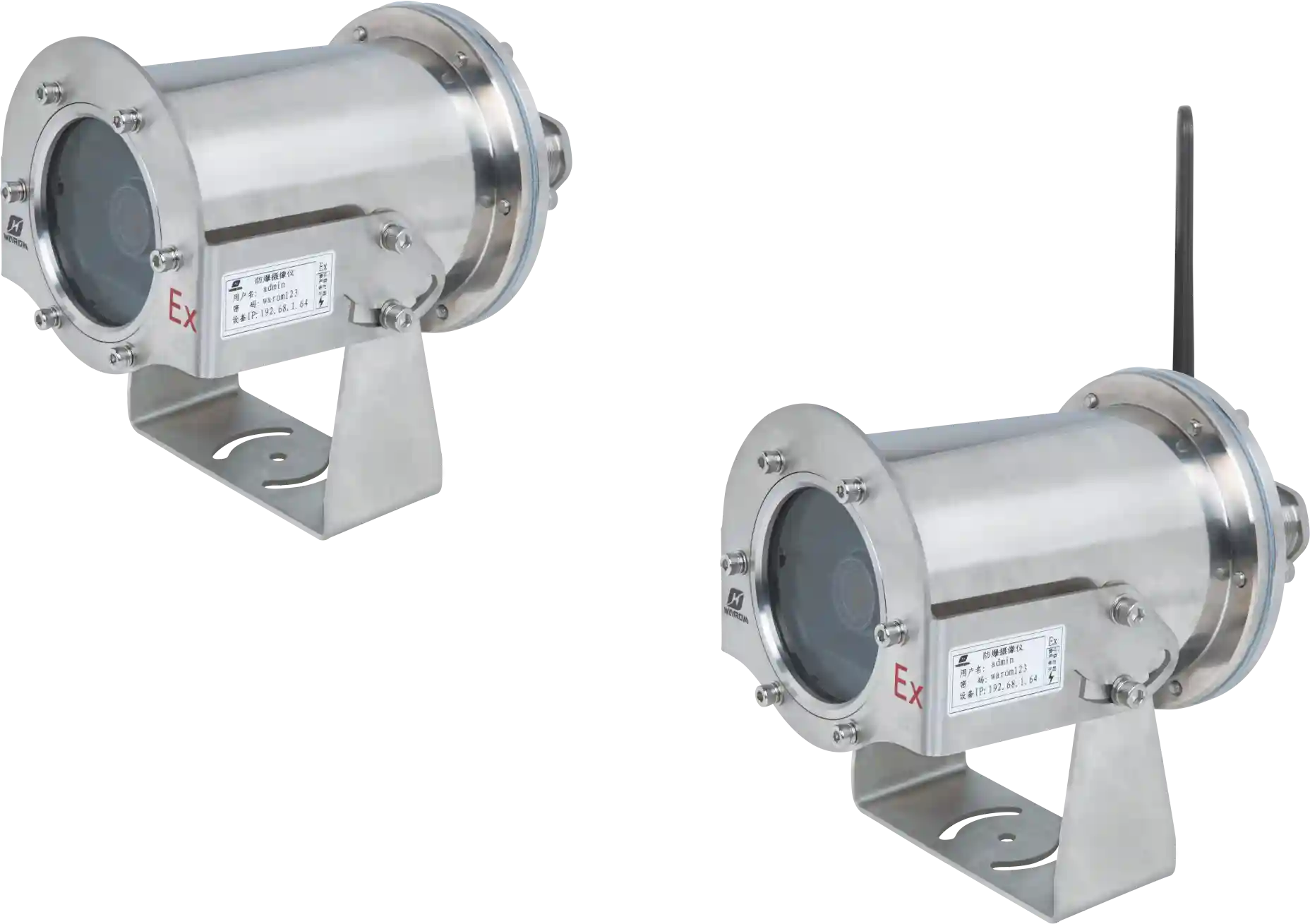
For field video, a camera rated for Zone 1, Zone 2, Zone 21, and Zone 22 with IP66 or IP68 body protection is a practical baseline. That covers most process unit locations including dusty areas. Video compression choices such as H.265 and H.264 matter because the plant network may not carry the same bandwidth as an office system. The BJK-S/G camera, for example, lists Zone 1, 2, 21, 22 use and IP66/IP68 ingress protection with H.265 and H.264 compression. But the certificate is only valid if the cable entries and glands carry compatible Ex d or Ex e marking.
How Do You Match Monitoring Devices to Refinery Zones?
Zone matching starts with the area schedule, not the product catalog. The table below maps typical monitoring points to protection concepts.
| Refinery location | Typical zone | Monitoring device | Protection concept |
| Process pump rows | Zone 1 | Fixed gas detector | Ex db enclosure, Ex ia probe |
| Tank dyke and vents | Zone 1 | Flame detector and camera | Ex db, Ex ia signal |
| Loading or unloading rack | Zone 1 or Zone 2 | Camera and overfill monitoring | Ex db or Ex nA, Ex ia |
| Cable marshalling cabinet | Zone 2 | Junction or terminal box | Ex e or Ex db |
| Main control room | Safe area | Operator workstation | Not applicable |
Video cameras and visual alarms
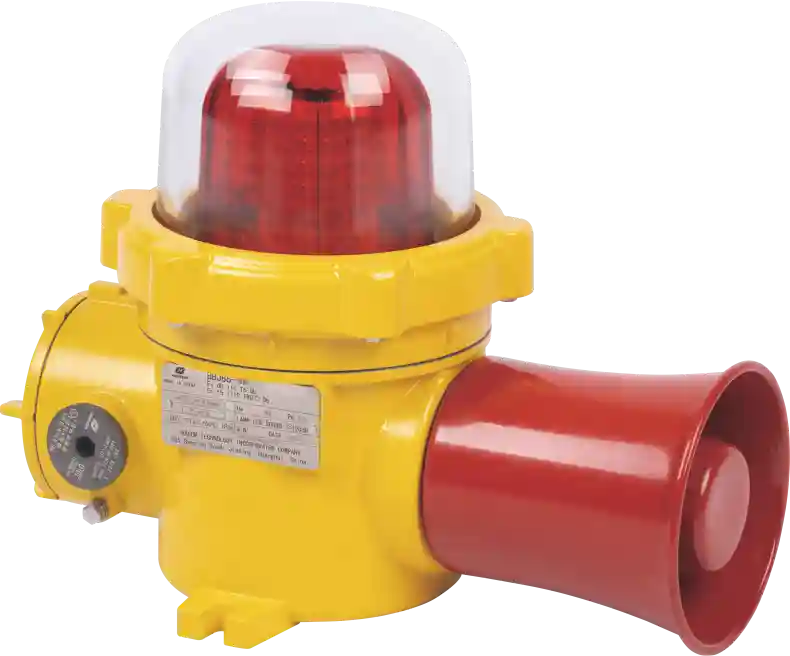
Refinery video usually falls into two groups: process surveillance and safety verification. Process surveillance uses fixed cameras positioned for readouts and movement. Safety verification links a visual or audible alarm to a gas or flame detector. The BBJ86 audio and visual caution spotlight, for example, operates at 110 to 120 dB sound intensity and uses a glass cover rated for 4 J impact. That output matters in a noisy process area where a missed alarm is worse than a false one.
Gas and flame detection loops
Combustible gas and flame detection loops need defined alarm levels and wiring limits. If the detector drives executive action, the loop should follow the same interlock discipline as other instrumented safety functions. The monitoring camera may simply observe the detector; it should not be the only alarm path unless the project specifically designs it that way.
Cable marshalling and power isolation
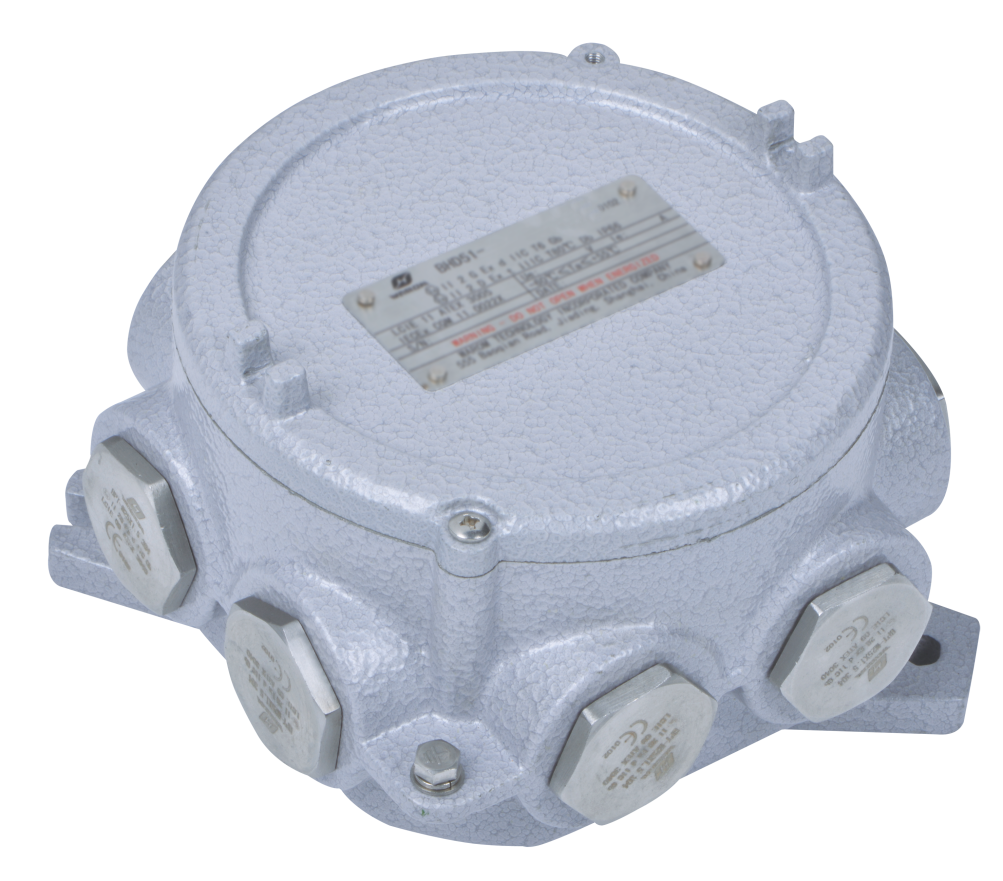
Power and signal should be separated in the specification. Refinery monitoring cables often run in the same tray as lighting circuits, which creates maintenance and noise issues if gland type and screening are not stated. Specify cable glands with the same protection concept as the enclosure. For a Zone 1 junction, the BHD91 enclosure carries IP66 and accepts Ex d gland recommendations. For instrument terminations, a separate Ex e terminal box keeps signals isolated from power.
What Should a Technical Specification Include Before RFQ?
A complete refinery monitoring specification includes zone classification, gas group, temperature class, ingress protection, cable entry and gland type, signal protocol, power supply, and documentation package. Write these as mandatory clauses, not preferred options. If a supplier cannot answer a clause, that is a useful finding before the order.
- List every monitoring point with its zone, gas group, and T class.
- State the protection concept for each device and its cable entry.
- Define the signal type and termination point for every loop.
- Require a certificate package that names the complete device, not a family certificate.
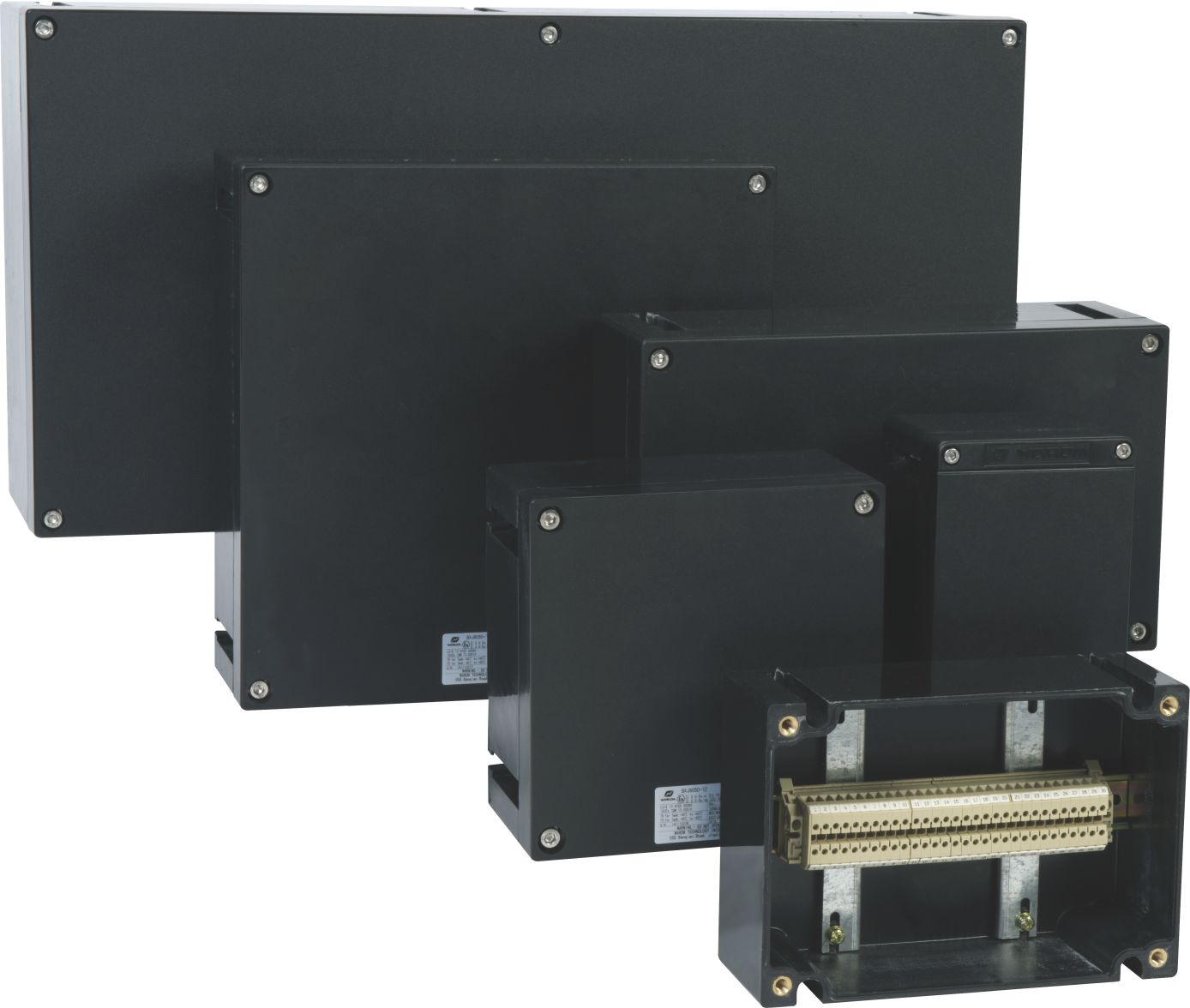
A specification that says only “explosion proof camera, Zone 1” is too thin. It leaves the supplier free to choose incompatible entry hardware and the buyer pays for rewiring later. For Zone 2 instrument terminations, the BXJ8050 terminal box is an Ex e option with IP66 protection and a GRP enclosure. Its cable entries and earthing details should appear in the RFQ, not be left to the installer. If your monitoring package includes gas detection loops tied to emergency shutdown actions, confirm the Ex ia loop parameters and cable screen grounding before finalizing the BOM. Send the loop list and zone map to gm*@***om.com.
What Supplier Evidence Should You Check Before Ordering?
Separate paper certificates from complete device certificates. A certificate for a component family is not the same as a certificate that names the exact enclosure size, entry configuration, and model. Ask for the actual marking plate and a site drawing that shows cable entries. Check that the temperature class on the certificate matches the gas group in the area schedule. If any documentation is marked “for reference only,” treat it as a missing document until the supplier confirms the production revision.
Factory acceptance testing should do more than power up the equipment. It should verify the earthing path, the interlock circuit, and the camera network configuration against the approved drawing. For a refinery, the supplier package should include certificates for cameras, junction boxes, terminal boxes, cable glands, and blanking elements. Each part carries a marking; the specification should require that the markings agree.
Paper compliance does not solve installation routing, cable entry mismatch, or network handoff problems. That is why the final specification check should treat certificates, glands, and protocols as one package. If your refinery project includes classified areas, gas or flame detection loops, or plant control system integration, send your zone schedule, device count, and signal protocol list to gm*@***om.com or call +86 21 39977076 or +86 21 39972657. We will check the certification path against the actual installation conditions, not the catalog page.
What Refinery Buyers Ask About Explosion Proof Monitoring Systems
Can we use standard cameras in a pressurized cabinet instead of explosion proof housings?
No, a pressurized cabinet solves only part of the field installation. A standard camera inside a purged or pressurized enclosure can be acceptable in some zones if the full assembly carries a valid Ex p certificate, but the window, cable glands, and cooling often need separate evaluation. In most refinery locations we specify Ex d or Ex db camera housings because they are easier to install and inspect. Pressurized enclosures are workable in special cases, but they add purge supply and protective gas pressure monitoring that many EPC packages do not want to maintain. Confirm the area schedule before choosing that route.
Why do the camera certificate and the cable gland certificate need to match?
A common assumption is that the camera certificate matters more than the gland certificate, but the cable entry is part of the same flameproof envelope. If the camera housing is Ex d and the gland is Ex e only, the assembly may not be covered by the camera certificate. On a refinery installation, inspectors check the enclosure, glands, blanking elements, and cable type as one system. The specification should require a certificate package that names these parts together. This is one of the easiest findings to avoid at site acceptance because it is visible before shipment.
How should we plan lead time for a refinery monitoring package?
It depends on the mix of standard and project-specific items. Standard Ex d cameras and junction boxes usually ship faster because the enclosure castings and certificates are already tested. Custom cable entries, special paint, SIL documentation, or customer-specific FAT procedures add time. We plan from the longest item rather than the shortest. Before releasing an RFQ, list the mandatory documentation so the supplier can confirm what already exists and what must be created. If the project needs factory witness tests, that date should be fixed before the order.
What is the real difference between Zone 1 and Zone 2 for monitoring devices?
In programs we have supported, the Zone 1 and Zone 2 distinction changes more than the housing selection. Zone 1 requires a protection concept rated for frequent or continuous presence of a flammable atmosphere. Zone 2 accepts equipment rated for abnormal conditions. The same camera may be acceptable in both if it carries the right marking, but Zone 1 also changes the cable glands and entry seals. We usually specify Zone 1-rated junctions and glands as the project baseline, then apply Zone 2 simplification only where the area schedule is unambiguous. Share your zone schedule and signal protocol list, and we will confirm the certification path for each monitoring point.
If you’re interested, check out these related articles:
Zone 21 Dust Hazards: Essential Explosion Proof Electrical Equipment
CIPPE 2024
Evaluating Chinese Explosion Proof Distribution Box Suppliers
WAROM Technology Successfully Concludes 2025 Outstanding Employees Commendation Conference
Improve Product Quality And Be A Good Safety Guard
With over a decade of experience, he is a seasoned Explosion-Proof Electrical Engineer specializing in the design and manufacture of safety and explosion-proof products. He possesses in-depth expertise across key areas including explosion-proof systems, nuclear power lighting, marine safety, fire protection, and intelligent control systems. At Warom Technology Incorporated Company, he holds dual leadership roles as Deputy Chief Engineer for International Business and Head of the International R&D Department, where he oversees R&D initiatives and ensures the precise delivery of design documentation for international projects. Committed to advancing global industrial safety, he focuses on translating complex technologies into practical solutions, helping clients implement safer, smarter, and more reliable control systems worldwide.

Qi Lingyi