

Zone 2 explosion proof VFD enclosures for motor speed control are not simply a certified steel box around a drive. In projects I have reviewed, too many specifications lock the Ex rating first and leave the thermal, cable, and maintenance details to be sorted out later. That sequence produces enclosures that pass certification review but overheat in service or require field modifications that invalidate the original protection concept. The selection should begin with the drive’s heat loss, the actual cable construction, and the site ambient conditions. This article sets out the checks I use before approving a Zone 2 VFD enclosure, and the order in which they should be done.
Zone 2 VFD Enclosure Classification and Material
Zone 2 permits non-sparking or increased safety techniques because a flammable gas atmosphere is present only under abnormal conditions. A VFD inside an enclosure is still a source of heat and may produce arcing or sparking in its power components, so the enclosure type must be selected from the drive internals, not from the area classification alone. The common choices are Ex ec increased safety for terminal and non-sparking components, Ex nA non-sparking construction, Ex p pressurized protection, or Ex d flameproof containment when the drive or braking components generate arcs under normal operation. For most VFD packages in Zone 2, the practical path is an Ex ec or Ex nA enclosure with type certification for the installed drive, or an Ex p system where cooling air is supplied through a purge and pressurization controller.
| Protection method | Internal condition it accepts | Typical Zone 2 VFD use |
|---|---|---|
| Ex ec | Non-sparking or protected components, limited heat | VFD with certified terminal and control arrangement |
| Ex nA | No arcs or hot surfaces under normal operation | Drive design confirmed by certification |
| Ex p | General industrial components, pressurized enclosure | Standard VFD in dust or corrosive exposure |
| Ex d | Contains internal explosion and flame path | Drive or braking unit with arcing contacts not otherwise certified |
Enclosure material follows the same logic. Aluminum alloy with a powder-coated surface works for many land-based installations, but marine and coastal sites with continuous salt exposure need stainless steel or GRP if weight and chemical resistance matter. The material choice also affects the temperature class, because the enclosure surface must stay below the gas ignition temperature of the process atmosphere. I have seen a painted aluminum enclosure specified for a coastal Zone 2 compressor station. Within two years the gland plate and hinge fasteners showed pitting, and the certification label became difficult to read.
Zone 2 enclosure selection also gets caught up in North American versus IECEx habits. <NEMA 7 vs ATEX Certified Explosion Proof Control Stations> covers why the certificate scope and protection concept matter more than the enclosure label when a mixed package has to pass project review.
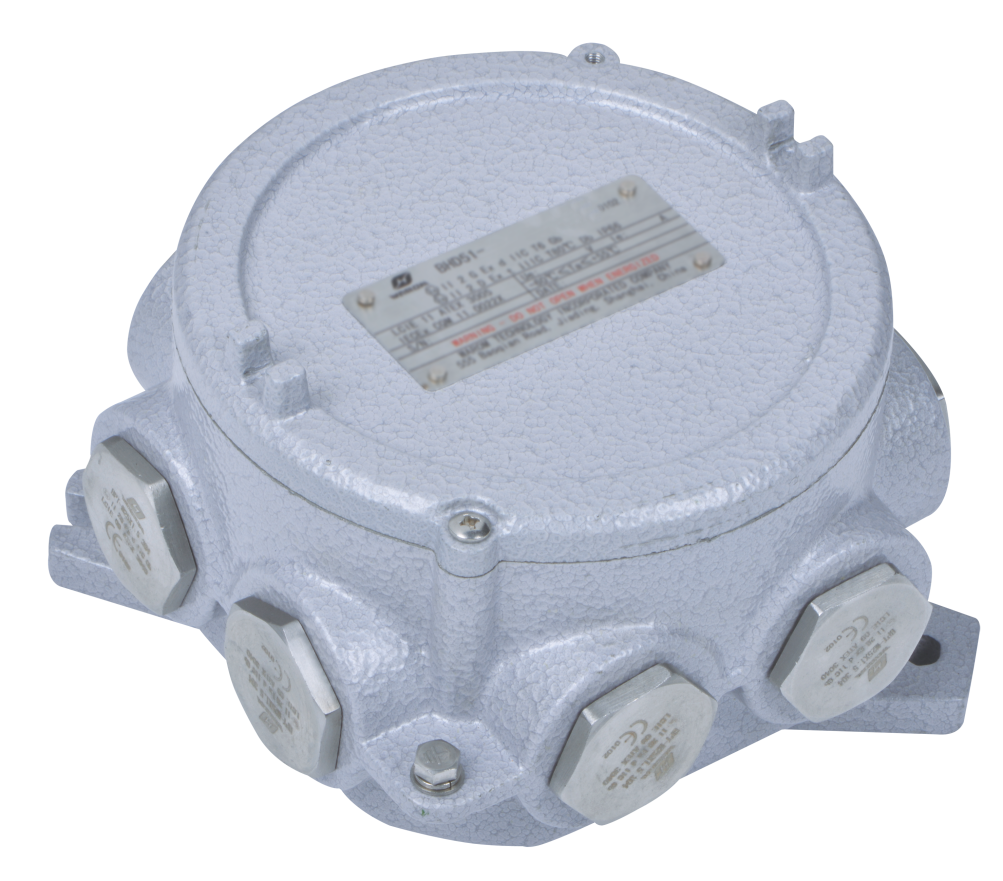
Heat Load and Thermal Sizing for VFD Enclosures
Why the Drive Heat Loss Figure Comes First
Heat rejection is the most common reason a Zone 2 VFD enclosure never reaches the performance expected from the drive. A variable frequency drive does not convert every input kilowatt to motor output. The losses appear as heat at the rectifier, DC bus, and inverter stage, and they vary with switching frequency, motor load, cable length, and the drive’s own cooling design. The enclosure supplier can only size correctly if the project shares the full-load loss figure, not just the motor nameplate power. A 75 kW drive with a 3 percent heat loss produces roughly 2.25 kW of continuous heat, which is more than enough to overheat a small sealed cabinet on a summer day.
When Forced Ventilation or Pressurization Becomes the Better Choice
The thermal calculation must then account for ambient temperature, solar gain from adjacent equipment or direct sun, and the enclosure’s cooling method. The common Zone 2 approaches are natural convection through certified Ex ec or Ex nA enclosures, forced ventilation with an Ex e or Ex p fan, or an air-to-air heat exchanger. Air conditioning is usually unnecessary for a VFD in Zone 2 unless the ambient temperature exceeds the drive’s derating limit or the dust load makes open ventilation impractical.
If the drive’s heat loss curve has not been requested from the VFD vendor, that is the point to stop and fix the specification. Send the motor power, required carrier frequency, loading profile, cable length, and the maximum site ambient to gm*@***om.com, and we can check whether an Ex ec enclosure or an Ex p alternative fits the installation.
Cable Entry, Gland Interface, and EMC
Terminal temperature and flame path are only part of the cable interface. A Zone 2 VFD enclosure is connected to a high speed switching drive, so the cable screen must be terminated in a way that controls common mode noise and prevents circulating currents from heating nearby metal. I have corrected projects where the enclosure was certified, but the gland plate was packed with unarmored cable glands and the shield braid was left floating inside the terminal box. The drive ran, but it produced intermittent trips and accelerated bearing current at the motor.
The specification should call out the exact cable construction: armored or unarmored, screen type, conductor size, and gland material. If the cable carries a braided shield, use a gland that can terminate the screen without cutting away the protection. If the installation is in a coastal or marine environment, nickel-plated brass or stainless steel glands should be specified, not raw aluminum. This matches the same corrosion logic used for weatherproof equipment on port cranes.
Cable and gland selection for VFD enclosures in marine terminals has to account for salt spray and mechanical movement at the same time. <Weatherproof Products for Port Cranes: Ensuring Marine Reliability> covers the corrosion and vibration stresses that change enclosure and gland choices on quayside installations.
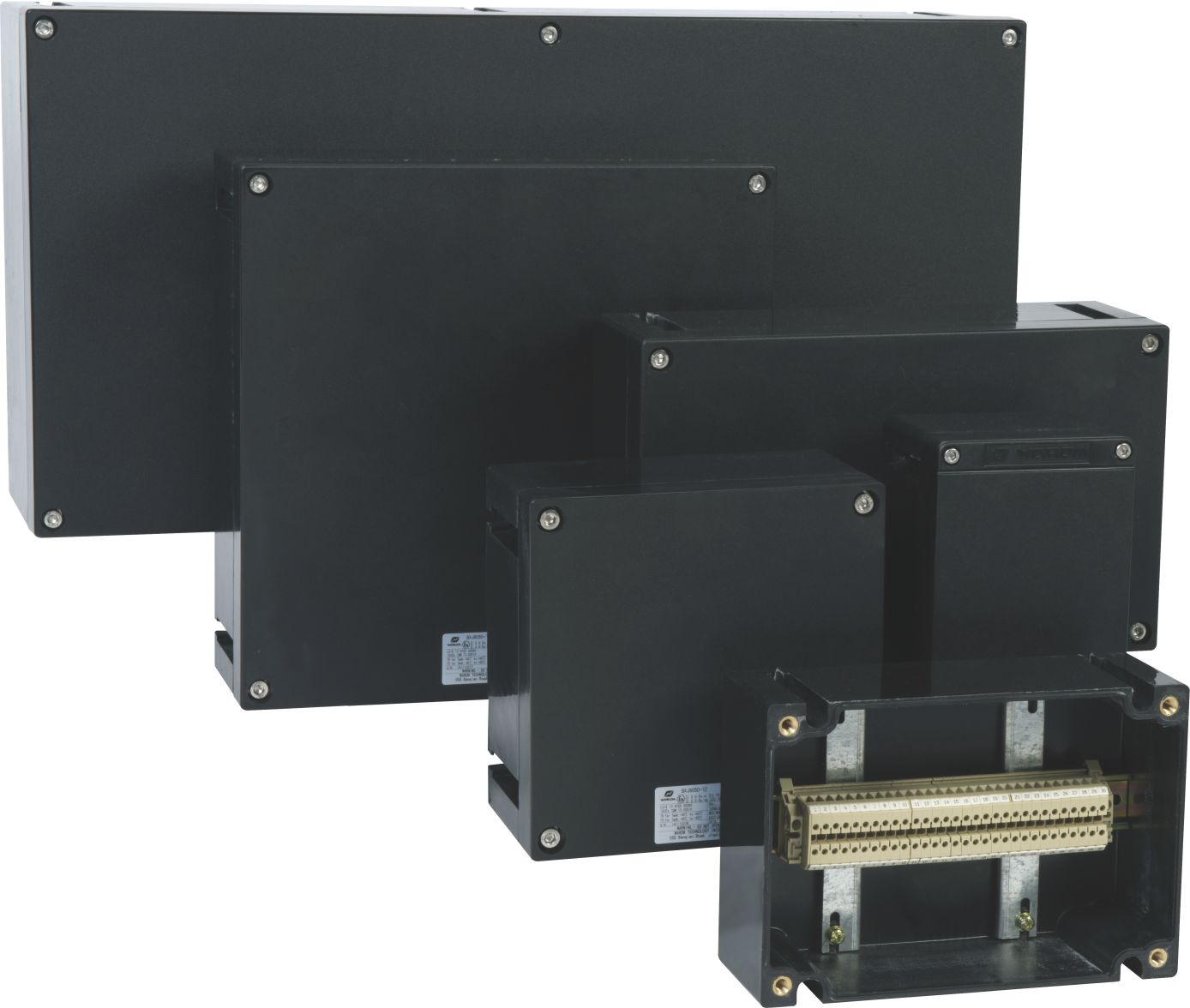
Access, Interlocks, and the Specification Checklist
Maintenance access is where many Zone 2 VFD enclosures stop being safe. If the drive must be reconfigured, inspected, or replaced, the certification must remain valid when the door is closed again. Flameproof enclosures require careful attention to flange gaps and bolt torque. Increased safety and non-sparking enclosures rely on the internal component certification and the absence of unauthorized modifications. A local isolator or door interlock can make maintenance safer, but it must be part of the certified assembly rather than added later.
Plan for the actual work sequence: who opens the door, what tools they need, and how the drive’s HMI or local controls are reached. I have approved enclosures with a hinged door and an internal viewing window because the commissioning team needed to change drive parameters without removing the front cover each time. The extra cost was small compared with the lost production from repeated access.
Before sending an RFQ to an enclosure manufacturer, I work through this list:
- Drive input and output ratings, full-load heat loss, and overload duty.
- Required protection method: Ex ec, Ex nA, Ex p, or Ex d, based on the drive certificate.
- Ambient temperature range, solar gain, and dust or corrosive exposure.
- Cable construction, conductor size, screen type, and gland material.
- Door access, viewing window, local controls, and maintenance sequence.
- Certificates: IECEx, ATEX, or local equivalents covering the complete assembly.
Warom’s engineering team applies the same sequence when building distribution panels and terminal boxes into hazardous area packages. The earlier the drive data is shared, the fewer unused spare gland plates and internal space allowances end up in the final enclosure.
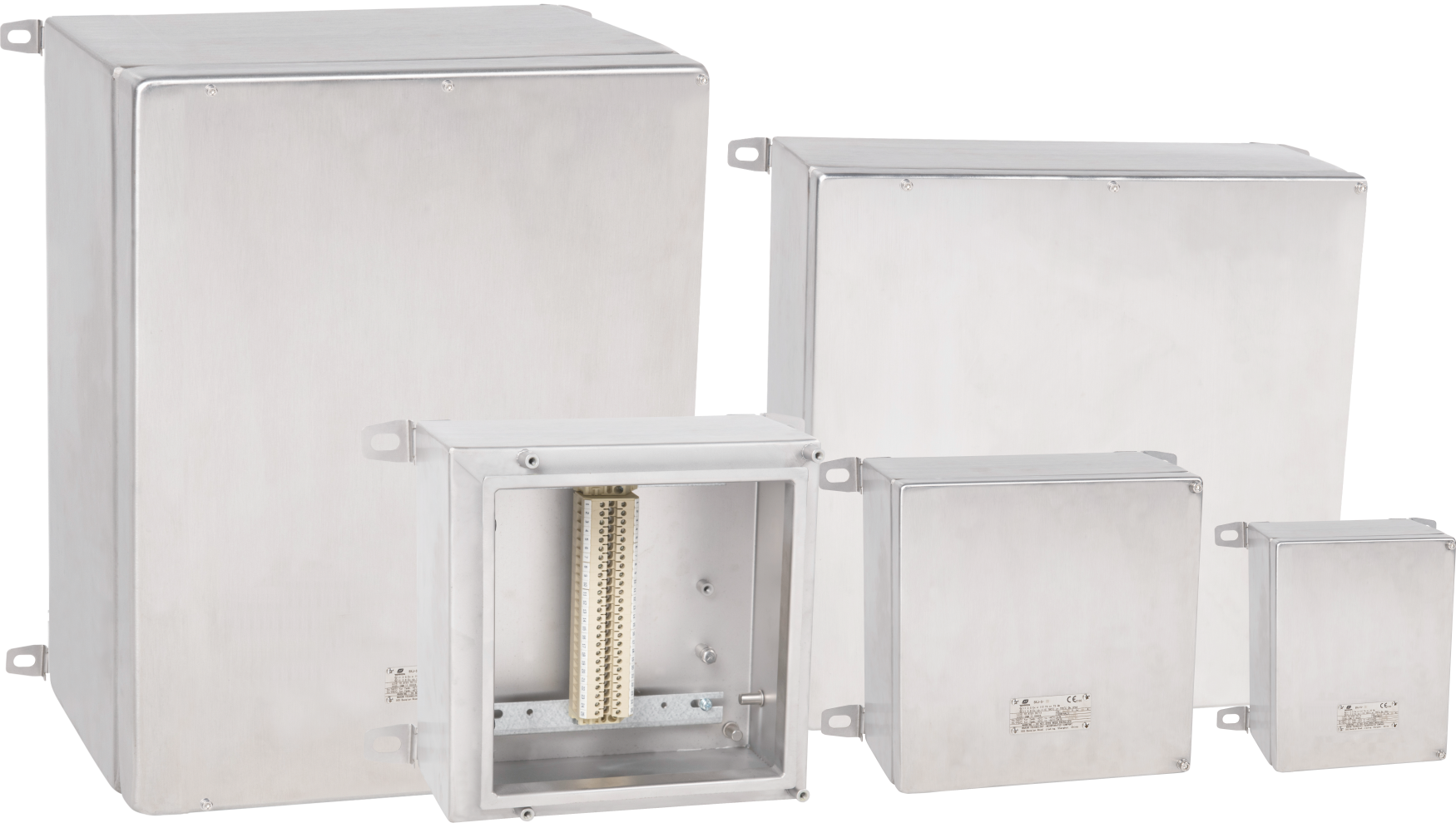
The Zone 2 VFD Enclosure Specification Path
Most Zone 2 VFD enclosure problems do not come from the drive; they come from incomplete information at the moment of enclosure selection. Heat loss is missing, cable construction is not fixed, or the maintenance sequence has not been considered. That turns a standard selection into a series of late changes. The clearer path is to send the drive data, the cable schedule, and the site ambient conditions together, and let the enclosure be sized around those inputs from the beginning. If you are preparing a Zone 2 VFD package, send the drive heat loss curve, the cable gland schedule, and your target ambient conditions to gm*@***om.com or call +86 21 39977076 or +86 21 39972657, and we will confirm the protection method and thermal sizing before the BOM is fixed.
Common Questions About Zone 2 VFD Enclosures
Can a standard industrial VFD go inside a Zone 2 enclosure?
A standard VFD can go into a Zone 2 enclosure only if the complete assembly has a valid certificate for the intended protection method, usually Ex p or, in some cases, an Ex ec or Ex nA design with the drive listed as an internal component. The VFD alone may not be certified for the hazardous area, but the enclosure and its cooling arrangement can create the acceptable conditions. The certificate must cover the drive model, the enclosure, and the cable entries as a system; a standalone enclosure certificate is not enough.
How much ventilation does a Zone 2 VFD enclosure need?
A common mistake is to assume the enclosure only needs enough airflow for the motor rating. The answer depends on the VFD’s heat loss, not the motor kilowatt number. The ventilation or cooling method must remove that heat while keeping internal temperatures within the drive’s rated range. For a sealed enclosure, natural convection may handle low heat losses only; for medium and large drives, forced ventilation or a heat exchanger is usually needed. If the environment includes dust or salt, closed-loop cooling is normally safer than drawing in outside air.
Is Ex d always better than Ex ec for a VFD enclosure?
It depends on what is inside the enclosure. If the VFD or braking unit has components that can arc or spark during normal operation and no certified non-sparking alternative exists, Ex d may be required. If the drive is type-tested and the assembly is certified Ex ec or Ex nA, that approach is usually lighter, easier to access, and cheaper. The right choice follows the drive’s certificate and the heat load first; the area classification alone should not force Ex d.
What documentation should I ask for before shipment?
In projects I have reviewed, the documentation set matters as much as the hardware. Request the IECEx or ATEX certificate for the complete enclosure and installed components, the thermal calculation for the rated heat load, the cable gland schedule, and the material certificates for stainless steel or GRP parts. If the enclosure includes a pressurization controller, request its functional test report and the purge flow setting. These records give the end user a defensible basis for local inspection and future maintenance. Send the drive model and enclosure drawing number to gm*@***om.com, and we can confirm which documentation package applies.
If you’re interested, check out these related articles:
Explosion Proof LED Lights: Ensuring Industrial Safety
Guide to Hazardous Location Lighting: Standards and Selection
Forge Ahead with Vigorous Spirit • Warom Starts the New Year with Grand Prosperity
With over a decade of experience, he is a seasoned Explosion-Proof Electrical Engineer specializing in the design and manufacture of safety and explosion-proof products. He possesses in-depth expertise across key areas including explosion-proof systems, nuclear power lighting, marine safety, fire protection, and intelligent control systems. At Warom Technology Incorporated Company, he holds dual leadership roles as Deputy Chief Engineer for International Business and Head of the International R&D Department, where he oversees R&D initiatives and ensures the precise delivery of design documentation for international projects. Committed to advancing global industrial safety, he focuses on translating complex technologies into practical solutions, helping clients implement safer, smarter, and more reliable control systems worldwide.

Qi Lingyi