
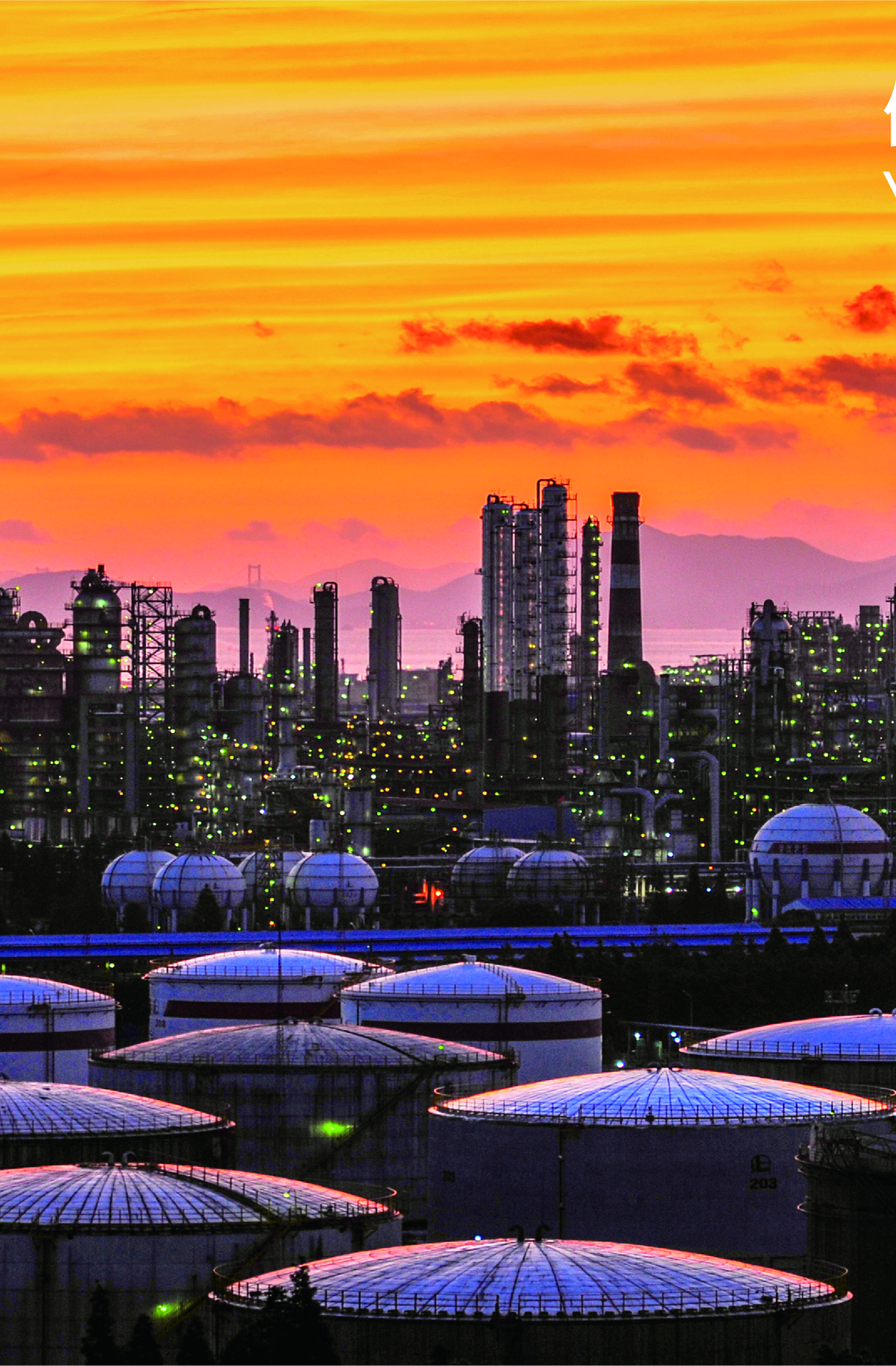
IP66 explosion proof light fittings for outdoor oil and gas duty carry three separate promises on a single label, and each one is proved by a different test. The IP code records how the enclosure performed against dust and water. The Ex marking records which explosive atmosphere the luminaire may be used in and at what surface temperature. The housing material and finish record how long the assembly survives salt, humidity and ultraviolet load at that particular site. Most specification problems begin when one of those three is asked to cover the other two.
What IP66 Covers on an Outdoor Fitting and What It Leaves Open
The IP code is defined in IEC 60529 [1]. The first digit, 6, means the enclosure is dust tight, with no dust entry under the specified test. The second digit, 6, means protection against powerful water jets, tested with a 12.5 mm nozzle delivering roughly 12.5 litres per minute from any direction for at least three minutes.
Both figures describe a new enclosure, assembled the way the manufacturer supplies it. Three consequences follow for a site installation.
The test is not an immersion test. A fitting that can sit in a sump, a bund or a drainage channel needs IP67 or IP68, where IP67 means temporary immersion to 1 m for 30 minutes and IP68 is agreed between buyer and supplier [1].
The test is run on the enclosure, not on the enclosure plus the gland a contractor fits later. A luminaire certified at IP66 with two M25 entries stays IP66 only while those entries are either closed with the correct plug or fitted with a gland matched to the cable.
Corrosion, ultraviolet ageing and internal condensation sit outside the IP code entirely. Two fittings can both be labelled IP66 and differ by several years of service on a coastal site, because the difference lives in the gasket elastomer, the coating thickness and the fastener grade rather than in the two digits.
| Claim on the label | What it is actually tested against | What it legitimately supports | What it does not support |
|---|---|---|---|
| IP66 | Dust-tight enclosure plus jet test to IEC 60529 [1] | Rain, hose spray and washdown on an exposed structure | Continuous immersion, or corrosion resistance of the housing |
| Ex db IIC T6 Gb | Flameproof enclosure in the most demanding gas group at 85 °C surface limit [3] | Use in the declared IIC gases within the certified ambient range | Approval for the specific zone at your site without checking the EPL |
| Ex tb IIIC T80 °C Db | Dust enclosure protection with an 80 °C surface limit [4] | Dust service where the certified layer and ambient conditions are respected | Unlimited dust build-up on the fitting |
| WF2 corrosion grade | Manufacturer-declared corrosion classification for the housing and finish | Comparative screening between products from the same supplier | Equivalence to a site corrosion category without the test basis |
| Ambient range, for example -60 °C to +60 °C | Manufacturer’s declared operating band on the certificate | Cold start and heat soak behaviour inside that band | Driver life at the top of the band, which is a separate thermal question |
| Toughened glass, 4 J impact | Impact test on the cover as supplied | Resistance to a defined mechanical impact | Resistance to a dropped tool or a scaffold tube strike |
Reading the Ex Marking Before the Datasheet
A dual marking for an outdoor oil and gas luminaire often reads Ex db eb IIC T6 Gb for gas and Ex tb IIIC T80 °C Db for dust. Every element of that string carries a decision, and the datasheet usually repeats it without explaining it.
Ex db is flameproof protection: the enclosure contains an internal ignition and quenches the flame through a defined joint before it reaches the surrounding atmosphere [3]. Ex eb is increased safety, a construction that removes sparks and hot surfaces instead of containing an explosion. Ex tb is dust protection by enclosure with a stated maximum surface temperature [4]. Many modern luminaires combine two of these, using an Ex e enclosure with flameproof internals, which is why the string lists both.
IIC is the gas group covering hydrogen and acetylene, the most demanding subdivision, while IIB covers ethylene and IIA covers propane and methane. T6 is a surface temperature class of 85 °C. Gb is the equipment protection level accepted for Zone 1, with Ga corresponding to Zone 0 and Gc to Zone 2 [2]. The dust half works the same way: IIIC covers conductive dusts, T80 °C is the surface limit, and Db corresponds to Zone 21 [2].
Two inferences are worth blocking early. A gas group match does not confirm zone suitability, because the equipment protection level and the certificate scope decide that. And the ambient temperature range on the certificate is part of the certification, not a marketing figure. Running a T6 fitting above its certified ambient invalidates the temperature class it was bought to provide [2].
Selection and erection rules sit in IEC 60079-14 [5], which is also where a third-party inspector will look once the luminaires are bolted to the steel.
A protection concept only holds while the conditions it was certified for are respected on site. <Explosion Proof LED Lights: Ensuring Industrial Safety> covers the wider industrial safety case behind explosion proof LED lighting in process plants.
Where IP66 Fittings Fail First on an Oil and Gas Site
Field failures on outdoor lighting rarely start at the lens. They start at the cable entries, the gasket line and the driver compartment, and each of those can be checked before the luminaire goes up.
Cable entries cause the majority of early water ingress. A gland sized for a wide jacket range cannot seal on a thin cable, an armoured cable needs a gland with an armour clamp rather than a simple compression seal, and metric and NPT threads are not interchangeable without an adapter. Unused entries are the quietest failure of all: a plastic blanking plug from a site store is not an Ex-rated closure, and it will pass water long before the gasket does.
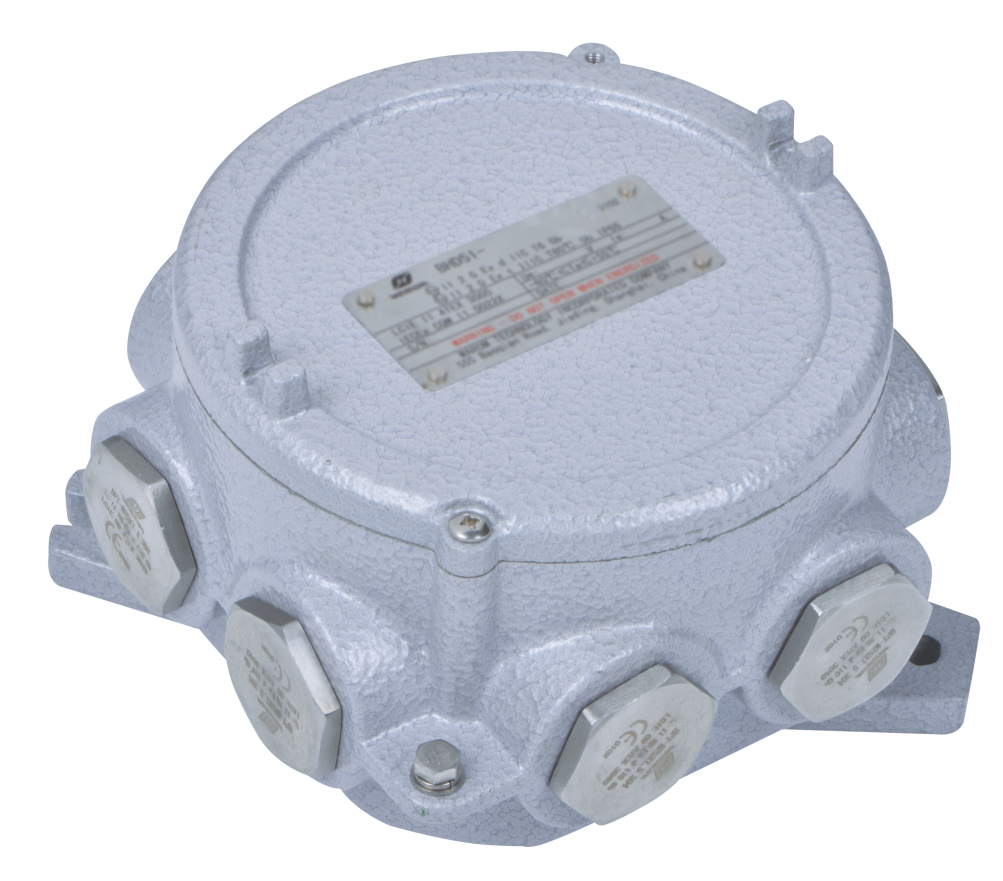
A junction box built for the same duty shows what that looks like in hardware. The BHD91 series uses a copper-free aluminium alloy enclosure with anti-loosening stainless fasteners, an IP66 rating and a stated ambient range of -60 °C to +60 °C, with entries supplied as metric threads or NPT on request.
Gaskets fail in a different way. Compression set is permanent, so a gasket that has been over-torqued at the cover bolts will not recover when the cover is reopened for maintenance. Paint, grit or a trapped cable strand on the sealing face creates a capillary path that no IP66 test on a clean factory sample would ever reveal.
Coatings fail where they are damaged. A scratch through the powder coat during transport or installation becomes a corrosion initiation point on a coastal site, and the fastener grade matters as much as the housing itself, because a stainless screw in an aluminium body creates a galvanic pair unless it is isolated or protected.
The fourth failure mode is thermal and often misdiagnosed as water. A driver running near its case temperature limit will fail with the same flicker or dark output as one that has taken water. Recording compartment temperature during commissioning separates the two.
| Symptom on site | First check | Why it decides the outcome |
|---|---|---|
| Droplets inside the diffuser after rain | Gland size against the actual cable jacket, then unused entries | A gland outside the jacket range cannot compress, and an unrated plug is not a seal |
| Flicker or dark output after a storm | Driver case temperature record against the ambient at that point | Water and heat produce identical symptoms but different corrective actions |
| Rust streaks at fasteners within a year | Fastener grade, coating damage at installation, galvanic isolation | Corrosion at the fastener is usually a handling or material pairing problem |
| Gasket standing proud of the cover line | Cover bolt torque and gasket compression set | Over-torque flattens the gasket permanently and creates a leak path |
Enclosure Materials and Finishes for Salt, Humidity and UV
The housing material decides how the fitting behaves over ten years far more than the light engine does, and the choice is not a simple ranking.
Copper-free aluminium alloy with a powder coat is the most common choice for Ex d and combined Ex d/Ex e luminaires. It conducts heat well, which matters for LED life, and it can be cast into complex flame path geometries. Its weakness is the coating: any breach becomes a corrosion cell, so handling and touch-up discipline on site matters more than the datasheet figure. Copper-free alloy is also the usual specification where acetylene is present, because copper and its alloys are restricted in that service.
GRP, glass fibre reinforced polyester, does not corrode in the way metal does and is light enough to install without lifting equipment. It brings its own requirements: antistatic treatment for hazardous areas, a lower continuous service temperature than metal in many designs, and a need to check UV stabilisation of the resin if the fitting faces direct sun for years.
316L stainless steel is the choice for the most aggressive coastal and offshore locations, at a cost and weight penalty. It still needs correct earthing and isolation from aluminium structures to avoid galvanic attack, and its thermal path to the LED module is usually managed through a separate heat sink.
| Housing material | Corrosion behaviour | Handling and thermal behaviour | Where it fits | Where to avoid |
|---|---|---|---|---|
| Copper-free aluminium alloy, powder coated | Good while the coating is intact; coating breaches become corrosion sites | Light, excellent thermal path, casts complex flame paths | Refinery, gas plant and general outdoor process areas | Acetylene service if the alloy is not confirmed copper-free; heavy salt with damaged coating |
| GRP, glass fibre reinforced polyester | Does not rust; resin and gel coat govern long term behaviour | Light enough for one-person installation; lower thermal conductivity | Corrosive chemical atmospheres, coastal structures, lighter supports | High ambient mounting points where the resin temperature limit binds |
| 316L stainless steel | Best long term performance in salt and chloride | Heavy; needs correct supports and galvanic isolation | Offshore platforms, jetty heads, splash zones | Weight-limited structures and where budget dominates the decision |
A floodlight such as the BAT86 illustrates the combined statement an outdoor specification should demand: IP66 ingress protection, a declared WF2 corrosion grade, a copper-free construction with powder-coated finish, a stated ambient range down to -60 °C, and a wide-voltage driver covering 100 to 277 V AC and 130 to 250 V DC. Each of those is a separate claim, and each needs to appear on the certificate rather than only in the brochure.
Salt loading offshore is a different duty from an inland refinery, and it changes the housing specification more than it changes the light output.
Salt spray, splash zones and deck washdown change the housing specification more than the photometric one. <Explosion-Proof Marine Products for Drillships & Jack-Up Rigs> covers how marine-rated explosion proof equipment is specified for drillships and jack-up rigs.
Temperature Class and Ambient Rating Are Two Separate Limits
These two numbers are frequently confused, and the confusion produces installations that pass a document review and fail a site audit.
The temperature class describes the highest surface temperature the apparatus may reach in service, and it is chosen against the ignition temperature of the gas present. The classic values are fixed by IEC 60079-0 [2].
| Temperature class | Maximum surface temperature |
|---|---|
| T1 | 450 °C |
| T2 | 300 °C |
| T3 | 200 °C |
| T4 | 135 °C |
| T5 | 100 °C |
| T6 | 85 °C |
The ambient rating is a different statement: it is the surrounding temperature range within which the certified temperature class still holds. A T6 luminaire certified for -40 °C to +40 °C is not a T6 luminaire when it is mounted at 55 °C under a hot pipe rack, because the surface temperature rises with the ambient and the certification no longer describes the installation. This is why the ambient figure must be read from the certificate for the exact variant, not from a family brochure.
The practical constraint is almost always the driver. A higher temperature class at a given wattage needs a larger thermal path, more surface area or reduced output, and a narrow linear luminaire has less room for that than a floodlight body.
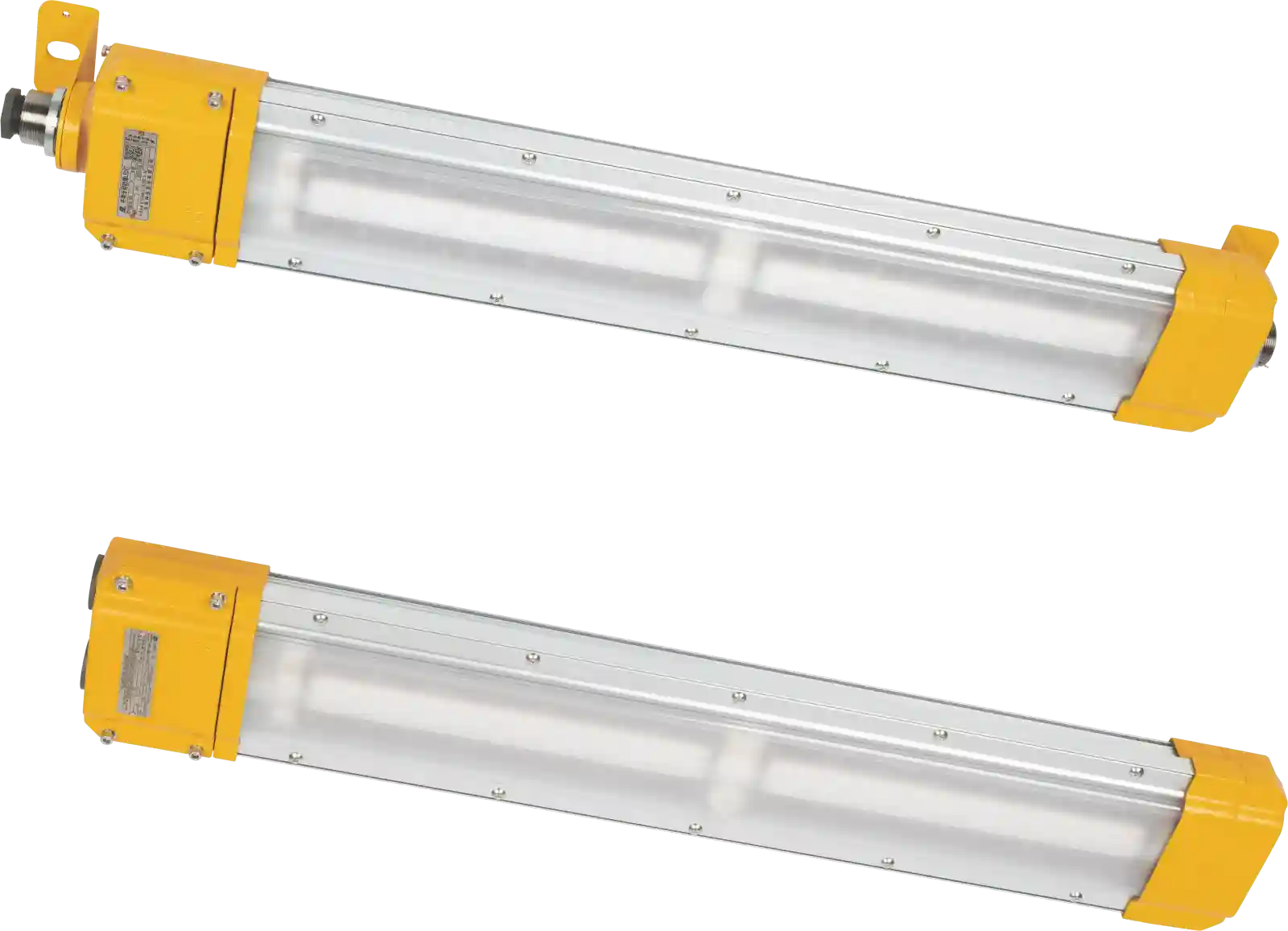
On a hot structure, work from the mounting point rather than from the plant average. Record the ambient at the highest and most enclosed position where a fitting will sit, add the effect of nearby hot surfaces, and then check that the certified ambient on the selected variant covers it with margin. Where the margin does not exist, the honest options are a lower wattage, a different housing with better thermal behaviour, or a different mounting position.
Light Distribution, Mounting and Maintenance Access
Outdoor lighting on an oil and gas site usually covers three distinct duties, and they should not be specified with one product family out of convenience.
Area and perimeter lighting is a floodlight task. Narrow beam angles at height give the reach, but aim matters more than lumens: a floodlight aimed across a boundary creates light trespass, and one aimed too steeply leaves dark ground beneath the pole.
Walkways, pipe racks and stair towers suit linear or pendant luminaires with a wider distribution and low glare. A pendant fitting needs headroom and a fixing point that will not be used as a handhold, while a linear fitting needs a bracket that tolerates vibration from compressors and pumps without loosening the flame path joints.
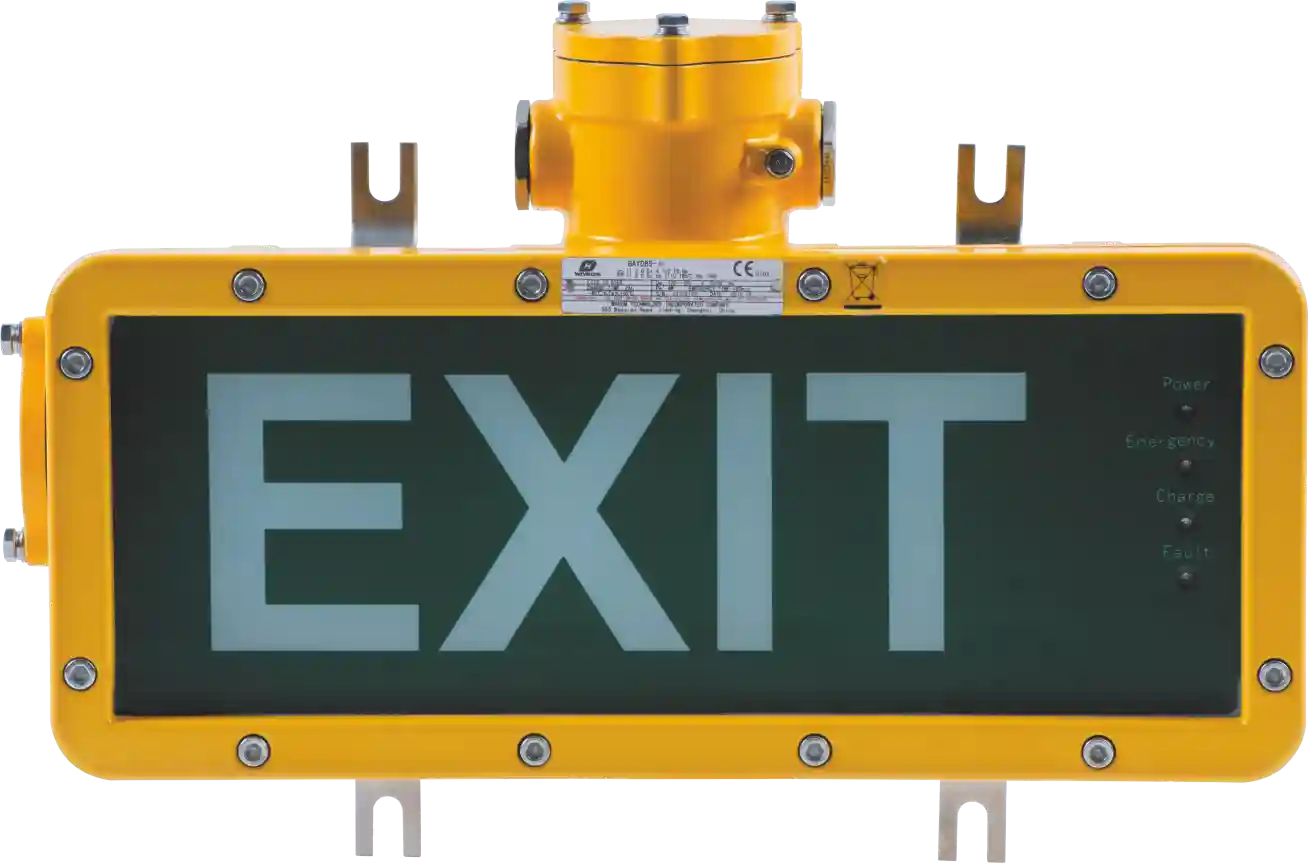
Egress lighting is a separate circuit requirement. Exit and emergency luminaires need their own certified variants, their own battery or central supply arrangement and their own inspection routine, and they should not be treated as ordinary fittings with an accessory added later.
Maintenance access is where the purchase price stops being the deciding number. A luminaire that needs two people and a scaffold to open will be maintained late, and a late-maintained gasket is a leaking gasket. Hinged covers, captive fasteners and a driver that can be replaced without disturbing the entry glands all reduce the cost of ownership on a site where access permits are slow.
On the Tilenga project in Uganda, where wellpads, a central processing facility and pipelines sit partly inside Murchison Falls National Park, the lighting and electrical package had to satisfy environmental requirements alongside the safety case. According to the project record, the installation was completed with zero safety incidents and low maintenance demand under extreme conditions, which is the outcome that access planning and thermal margin are meant to produce.
RFQ Fields That Get an Accurate Quotation
An RFQ that asks for an IP66 explosion proof LED floodlight at a given wattage will produce quotations that cannot be compared, because each supplier will fill the gaps with its own assumptions on gas group, temperature class, ambient range and entries.
| RFQ field | What to state | Why it changes the answer |
|---|---|---|
| Protection concept and marking | Required string, for example Ex db eb IIC T5 Gb and Ex tb IIIC T80 °C Db | Determines the housing family, not just the certificate paperwork |
| Gas or dust group and zone | The group and zone from the area classification drawing | Sets the equipment protection level and rules out cheaper variants |
| Ambient range at the mounting point | Lower and upper limits measured or engineered, not the plant average | Drives derating, wattage and in some cases the housing material |
| Ingress protection and washdown | IP66 as a minimum, IP67 where standing water is possible | Changes the sealing concept and the entry accessories |
| Material and finish | Housing alloy, coating system, fastener grade, corrosion grade | Separates coastal and inland offers that otherwise look identical |
| Entries and cable schedule | Thread type, quantity, gland range against actual jacket diameters | Prevents glands that cannot seal, and NPT or metric mismatches on site |
| Electrical and photometric data | Voltage and frequency, DC backup if used, wattage, colour temperature, CRI | Confirms the driver variant and the emergency arrangement |
| Certification and documentation | Standard, certificate number for the exact model, test reports, nameplate marking | Makes the offer verifiable before the purchase order |
Two lines are worth rewriting. Reject an RFQ line that reads “20 x IP66 explosion proof LED floodlight, 100 W, ATEX” and replace it with “20 x LED floodlight, Ex db eb IIC T5 Gb and Ex tb IIIC T80 °C Db, IP66, copper-free aluminium alloy with WF2 powder coat, 100 to 277 V AC, 100 W, 5000 K, CRI 70 minimum, ambient -40 °C to +55 °C, two M25 entries with Ex d glands for 12.5 to 20.5 mm cable, bracket mount, ATEX and IECEx certificates issued for this exact variant”.
Certificate, Nameplate and Factory Test Checks Before Shipment
The certificate is only useful if it describes the unit in the crate. Three checks close most of the gap.
First, match the certificate number on the nameplate to the certificate document, then read the certificate’s scope: model code, ambient range, gas group, temperature class, ingress protection and equipment protection level. A certificate for the family does not necessarily cover the higher wattage variant, the stainless housing or the pole-mounting option.
Second, separate type tests from routine tests. The IP66 jet test and the explosion tests are design type tests carried out on representative samples. IEC 60079-1 also sets a routine overpressure test applied to each flameproof enclosure, which is a per-unit check on the casting, not a repeat of the design approval [3]. Asking which tests are routine and which are type tests tells you what a factory acceptance test can actually demonstrate.
Third, confirm who witnessed the test and against what. A test report from an accredited laboratory with the sample identification recorded is worth more than a certificate of conformity signed by the seller.
A test record only carries weight when the laboratory behind it is accredited for the test in question. <Warom Testing Center successfully passed the CNAS National Laboratory Accreditation Re-evaluation Audit> covers the CNAS re-evaluation audit of one such testing centre.
None of this replaces the site approval process. A valid ATEX or IECEx certificate supports the equipment selection, while installation, inspection and sign-off remain governed by IEC 60079-14 [5] and by whatever the local authority and insurer require.
Send the Site Details for a Specification Review
Send the area classification for each mounting point, the gas or dust group and temperature class you have been assigned, the measured ambient range where the fittings will sit, the mounting height and layout, the voltage and circuit arrangement available, and the certification standard your inspector will accept. If the cable schedule is already fixed, include the cable type and jacket diameter so the entry glands and the luminaire entries are matched before anything is manufactured. Email gm*@***om.com or call +86 21 39977076 or +86 21 39972657 and ask for Wang Lei at Warom Technology Incorporated Company. A quotation that skips the ambient range and the gas group is a quotation you will have to renegotiate after the first inspection.
FAQ
Is an IP66 rating enough for an outdoor oil and gas light fitting?
No, and it is not meant to be. IP66 only states that the enclosure resisted dust and powerful water jets in a type test. It says nothing about which gas or dust group the luminaire is certified for, what surface temperature it reaches, or whether the housing survives salt and ultraviolet exposure. An outdoor oil and gas specification needs the Ex marking, the ambient range and the material and finish to sit alongside the IP code, and each of those should be traceable to a certificate rather than a brochure.
Can I use a weatherproof IP66 luminaire in a Zone 1 area?
No. A weatherproof fitting without explosion protection is not permitted in a hazardous area regardless of its ingress protection. Zone 1 requires equipment at protection level Gb, which in practice means a certified flameproof, increased safety or combined design [2]. Ingress protection and explosion protection answer different questions, and only one of them appears in the hazardous area register.
Which temperature class should I specify for a refinery or gas plant?
It follows from the ignition temperature of the gas in the area classification, not from preference. T4 at 135 °C covers a wide range of hydrocarbon service and is a common minimum, while T6 at 85 °C is needed for gases with low ignition temperatures such as carbon disulphide. Raising the class narrows the product options and usually forces a lower wattage or a larger thermal path, so confirm the requirement with the process safety engineer before writing T6 into the datasheet.
Do sealed IP66 luminaires need a breather to stop internal condensation?
It depends on the temperature cycling and the entry arrangement. A fully sealed enclosure that heats and cools daily can draw moisture through imperfect entries and then hold it, and a breathable membrane can equalise pressure while limiting liquid water. The trade-off is real: every added opening is a potential ingress path, and the breather itself must be rated for the area. Where condensation risk is high, a membrane element is usually easier to defend than a drilled drain plug.
How much does the corrosion grade change the specification?
It usually changes the housing, the fasteners and the coating system rather than the light engine. On a coastal or offshore site, the difference between two fittings with identical photometric data often comes down to the alloy, the powder coat and the fastener grade, and that difference decides whether the cover bolts can still be removed after five years. Ask for the corrosion grade, the coating system and the fastener material on the certificate or the test report, not only in the sales text.
References
[1] IEC 60529, “Degrees of protection provided by enclosures (IP Code),” IEC, 2013.
[2] IEC 60079-0, “Explosive atmospheres. Part 0: Equipment. General requirements,” IEC, 2017.
[3] IEC 60079-1, “Explosive atmospheres. Part 1: Equipment protection by flameproof enclosures ‘d’,” IEC, 2014.
[4] IEC 60079-31, “Explosive atmospheres. Part 31: Equipment dust ignition protection by enclosure ‘t’,” IEC, 2013.
[5] IEC 60079-14, “Explosive atmospheres. Part 14: Electrical installations design, selection and erection,” IEC, 2013.
If you’re interested, check out these related articles:
WAROM at 2024 CASPIAN OIL AND GAS EXHIBITION
General Manager’s 2025 Chinese New Year Message
Weatherproof Products for Port Cranes: Ensuring Marine Reliability
With over a decade of experience, he is a seasoned Explosion-Proof Electrical Engineer specializing in the design and manufacture of safety and explosion-proof products. He possesses in-depth expertise across key areas including explosion-proof systems, nuclear power lighting, marine safety, fire protection, and intelligent control systems. At Warom Technology Incorporated Company, he holds dual leadership roles as Deputy Chief Engineer for International Business and Head of the International R&D Department, where he oversees R&D initiatives and ensures the precise delivery of design documentation for international projects. Committed to advancing global industrial safety, he focuses on translating complex technologies into practical solutions, helping clients implement safer, smarter, and more reliable control systems worldwide.

Qi Lingyi