Class 1 Division 1 explosion proof lights carry a UL listed mark to confirm that the complete luminaire can contain an internal ignition. The mark is gas group specific and temperature class specific. It is not a generic safety label, and that distinction causes more procurement errors than any lack of product availability. In North American hazardous area projects I have supported, the fixture usually passes photometric review and then stalls at the submittal stage because the nameplate was matched against the wrong Class 1 group or ambient condition. The checks below are the ones I ask for before a fixture is accepted into a paint booth, tank farm, or gas processing area.
What Does UL Listing Mean for Class 1 Division 1 Light Fittings?
UL listing for a Class 1 Division 1 luminaire falls under UL 844, with explosion proof enclosure requirements drawn from UL 1203. The listing application covers the complete fixture: housing, lens assembly, cable entries, lamps or LED modules, driver, and the specific mounting arrangement. A listed luminaire has gone through representative testing for flame path integrity, pressure containment, surface temperature limits, and mechanical strength. The listing also ties the product to documented production controls, so an unapproved material substitution later erases that status.
A UL listing does not automatically mean the fixture can be installed anywhere. The installation still has to match the marking exactly. A fixture listed for Class 1 Division 1 Groups C and D cannot be used in a hydrogen process area unless the nameplate also includes Group B. A fixture listed with a T4 temperature class cannot be used where the gas requires T5 or T6. When an inspector rejects a fixture, the usual issue is not that the manufacturer failed to obtain a listing. The installer selected the wrong listing parameter for the area classification.
How Do You Read a Class 1 Division 1 Nameplate Correctly?
Start with the Class, Division, Group, and T-code. A typical Class 1 Division 1 mark may read Class 1, Division 1, Groups C,D, T5, with a temperature rated ambient range. The gas groups are not sorted by severity alone; they represent different ignition properties. Group B covers hydrogen, Group C covers ethylene, and Group D covers propane. Many industrial luminaires are listed only for Groups C and D. If the site has acetylene or hydrogen, the fixture list narrows quickly.
The temperature class is the other field that can invalidate a purchase. A T5 fixture can operate at a maximum surface temperature of 100°C under rated conditions. A T6 fixture is limited to 85°C. The lower autoignition temperature of the gas now sets the limit. A fixture that works under T4 in one part of the plant may not be acceptable in the same plant when process temperatures rise or the gas group changes.
The nameplate also carries ambient temperature limits, voltage and frequency, and usually a wet locations or marine rating when applicable. If the site is above 40°C or 45°C, or the fixture is installed near a process line, that ambient number matters. Heat from an adjacent vessel reduces the margin between the listed maximum surface temperature and the actual surface temperature.
| NEC Class 1 group | Representative substance | Common light fixture mark |
|---|---|---|
| Group B | Hydrogen | Class 1, Division 1, Group B, T6 |
| Group C | Ethylene | Class 1, Division 1, Group C, T5 |
| Group D | Propane | Class 1, Division 1, Group D, T4 |
Hydrogen and acetylene locations often fall outside standard luminaire ranges, so confirm group availability before the design is fixed.
Which Construction Details Cause Most Site Rejections?
Three areas generate the most site rejections in my experience. The first is conduit sealing. On a Class 1 Division 1 installation, seal fittings go into the conduit run close to the fixture entry, normally within 18 inches for an explosion proof enclosure receiving a seal. If the seal is missing, the conduit can channel burning gas into the fixture. If the seal is poured incorrectly, the listing still fails inspection even when the fixture itself is correct.
The second is field modification. Drilling a new cable entry or swapping in a non-approved gasket voids the listing because the flame path and cable entry sealing are part of the certified design. Use factory-machined entries, certified glands, and listed stopping plugs. The third is paint and lens replacement. A powder coated surface tested by the manufacturer should not be repainted with a thick generic coating that changes heat dissipation. Replacement globes must match the impact and temperature characteristics of the original. A site that keeps good photos of the nameplate and installation fitting numbers avoids most of these failures.
The same discipline applies on floating production systems, where the hazardous area drawing, the fixture listing, and the inspection record have to stay aligned. <Explosion Proof Equipment: FPSO Topsides Safety & Compliance> covers how markings, material choices, and installation checks are handled together on topside electrical systems.
If your Class 1 Division 1 area has hydrogen or an ambient temperature above 45°C, confirm the T-class and gas group against the fixture nameplate before the submittal is locked. Send the area classification drawing and fixture count to gm*@***om.com as part of the check.
How Do Fixture Types Match Hazardous Area Operations?
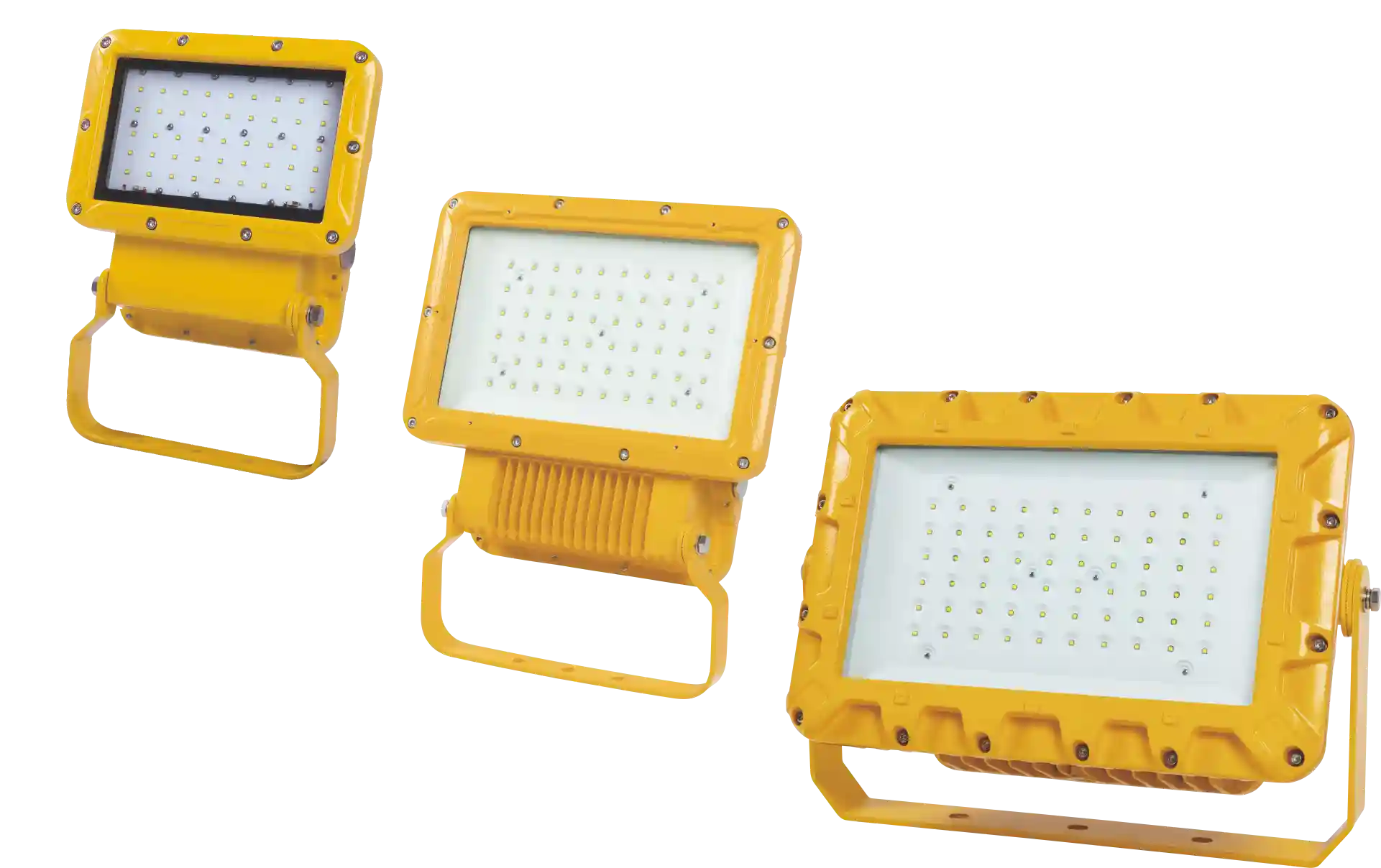
Fixture selection follows the task. Linear LED fittings work in process corridors, skid edges, and paint booths where the light pattern must follow the geometry of the workspace. In these locations, mounting length, light distribution, and emergency backup matter more than raw lumen output. LED floodlights cover tank farms, loading racks, and perimeter areas where a broad beam and long spacing create fewer poles. Warom’s BAT86 floodlight platform, for example, uses a copper-free aluminum enclosure with an IP66 rating, WF2 corrosion protection, and an ambient range up to 60°C.
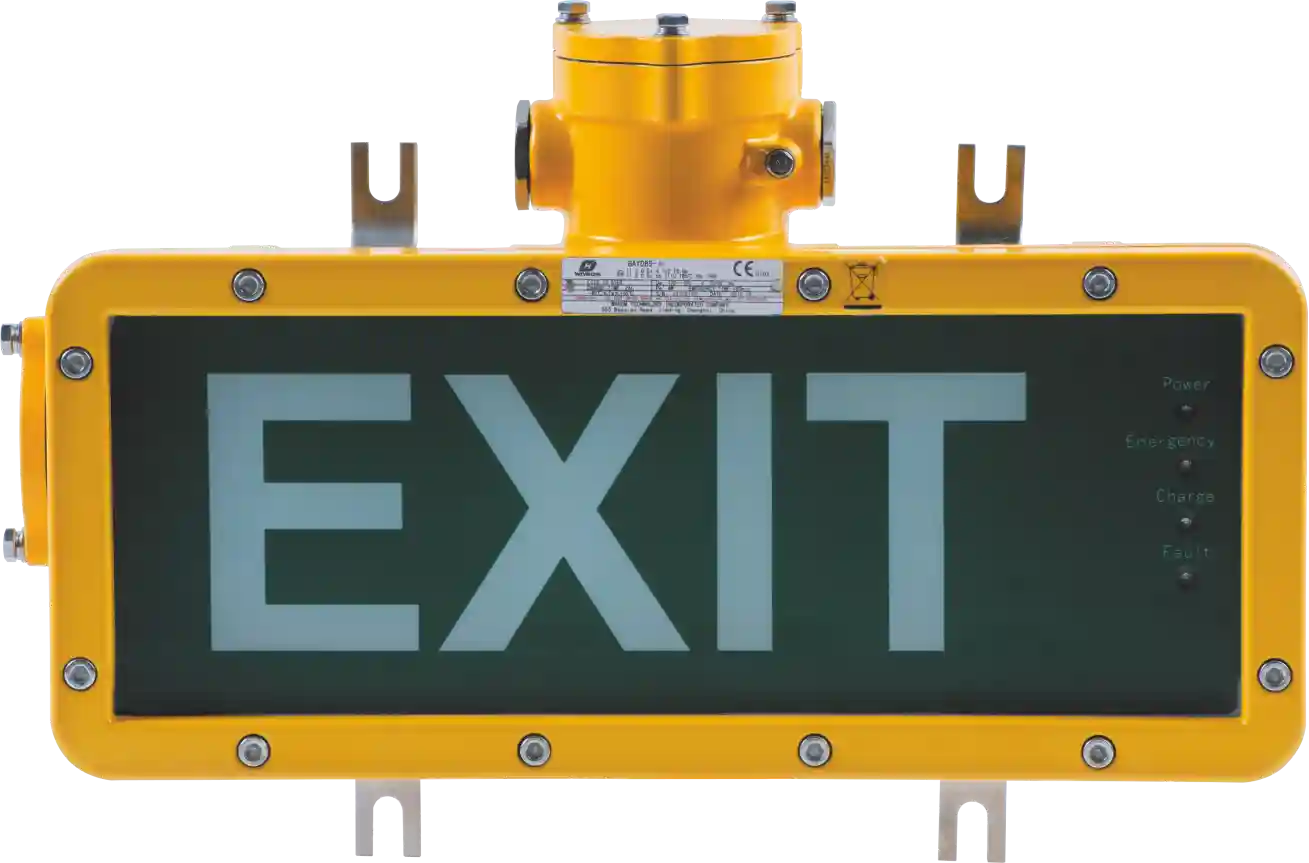
Where egress is the issue, an emergency exit or egress fixture must hold its illumination for the required duration after power loss. Many industrial projects specify 90 or 120 minutes. The battery, charger, and self-test can be fitted inside the same Class 1 Division 1 enclosure, but the emergency function must be integrated by the manufacturer to keep the listing intact.
Handlamps and caution spotlights serve inspection and temporary work. These fixtures need lower operating voltage or proper cord ratings, plus impact-resistant globes and secure hanging arrangements. Contractors often treat them as general site tools and forget that a Class 1 Division 1 handlamp is still part of the area classification.
| Fixture type | Typical Class 1 Division 1 use | Main submittal check |
|---|---|---|
| Linear LED | Process corridor, paint booth, skid edge | Mounting length, T-code, emergency function |
| LED floodlight | Tank farm, loading rack, perimeter | Beam spread, pole or bracket mount, ambient maximum |
| Emergency exit | Egress path with battery backup | 90 or 120 min duration, self-test |
| Handlamp or spotlight | Inspection, confined space entry | Operating voltage, cord rating, impact guard |
For offshore and drilling locations, corrosion and thermal cycling add another layer of performance variation beyond the listing. <Oil Rig Lights Tested: Which Explosion Proof Lighting Performs Best?> compares fixtures under the conditions that make rig lighting unreliable.
For egress systems, the fixture listing and emergency control wiring have to be evaluated together. <Explosion Proof Emergency Exit Light Fittings for Industrial Safety> details how the emergency function, battery duration, and hazardous area marking combine in one fitting.
What Should You Send When Requesting a UL Listed Fixture Quotation?
Quotes without a rating package usually produce the wrong temperature class, gas group, or cable entry configuration. The request should include the hazardous area classification drawing, the Class and Division for each location, the specific gas group and T-class requirement, the maximum ambient temperature, the mounting method, and the number of fixtures by type. If the fixture location includes marine or washdown exposure, add that requirement to the same inquiry. Warom can then cross-check the UL listed fixture family against the area classification and mark any exceptions before commercial pricing is issued. Send the area classification, gas group, and fixture schedule to gm*@***om.com or call +86 21 39977076 or +86 21 39972657.
What Else Do Buyers Ask About Class 1 Division 1 Light Fittings?
Are Class 1 Division 1 and Division 2 light fixtures interchangeable?
No. A Division 1 fixture is built to contain an internal explosion, while a Division 2 fixture relies on the assumption that flammable gas is not present under normal conditions. Installing a Division 2 fixture in a Division 1 area understates the risk. Installing a Division 1 fixture in a Division 2 area may be acceptable if rated and marked, but the cost and construction go beyond the requirement.
Does a UL listed fixture cover all Class 1 gas groups?
A common assumption is that a UL listing covers any gas group. It does not. The listing covers only the gas groups and temperature classes that appear on the nameplate. Many Class 1 Division 1 luminaires are listed for Groups C and D, which fit ethylene and propane atmospheres. If hydrogen is present, the applicant must select a Group B fixture. If acetylene is present, Group A equipment is required and standard lighting products are often unavailable.
Can I retrofit an existing fixture with LED tubes and keep the UL listing?
If the manufacturer offers a documented LED retrofit kit tested for that exact fixture, the listing path may remain valid. If the field crew replaces a fluorescent tube with a general LED product, the listing is void. The heat path, lamp envelope, and ignition source change, so the fixture must be evaluated as a complete system.
What documentation should the supplier include with the fixture?
The more precise question is what evidence a local inspector will accept. A complete submittal includes the UL listing document or certification number, the nameplate drawing, the installation manual, the temperature class and gas group statement, and the cable entry specification. For export projects, the inspector may also expect the NRTL mark and the documentation to be reconciled with the project’s area classification drawings. If your Class 1 Division 1 package includes multiple mounting positions, share the area classification and fixture schedule with gm*@***om.com and Warom can confirm which marks apply before shipment.
If you’re interested, check out these related articles:
The Neftgaz exhibition came to a successful conclusion
Warom has become the first in the explosion-proof industry!
With over a decade of experience, he is a seasoned Explosion-Proof Electrical Engineer specializing in the design and manufacture of safety and explosion-proof products. He possesses in-depth expertise across key areas including explosion-proof systems, nuclear power lighting, marine safety, fire protection, and intelligent control systems. At Warom Technology Incorporated Company, he holds dual leadership roles as Deputy Chief Engineer for International Business and Head of the International R&D Department, where he oversees R&D initiatives and ensures the precise delivery of design documentation for international projects. Committed to advancing global industrial safety, he focuses on translating complex technologies into practical solutions, helping clients implement safer, smarter, and more reliable control systems worldwide.
Qi Lingyi