
SOLAS compliant explosion proof marine equipment is not defined by a single certificate on the nameplate. It is the alignment of three document sets: the Ex certificate under IEC 60079, the marine type approval from a classification society, and the flag state acceptance record. A supplier can ship an IECEx certified floodlight with the wrong ambient rating or cable gland detail, and the class surveyor will reject it at the quayside. In thirty years of marine project work, I have seen more delivery delays from documentation mismatch than from equipment failure. That is why pre-shipment verification matters.
SOLAS Explosion Proof Marine Equipment Scope and Application
SOLAS is not a product standard. It is the vessel safety framework adopted under IMO, and its electrical requirements sit mainly in Chapter II-2. For hazardous areas on oil tankers, chemical carriers, gas carriers, FPSO topsides, and offshore support vessels, the detailed zone classification usually follows IEC 60092-502 and the rules of the flag state and classification society. In practice, this means a piece of equipment is not accepted because it is certified for hazardous areas in general. It is accepted when its Ex certificate, marine product certificate, and installation details align with the vessel’s zone schedule.
Certification Layers for Marine Explosion Proof Equipment
Marine projects run on three certification layers. The base layer is the Ex certificate under IEC 60079, usually IECEx, ATEX, or both. This confirms the protection method, equipment group, gas group, temperature class, and any special conditions for safe use. The second layer is marine type approval from a classification society such as DNV, BV, or CCS. This is not the same document. It confirms the equipment suits marine installation conditions: vibration, salt atmosphere, ambient temperature, mounting, and cable entry practice under IEC 60092. The third layer is flag state acceptance, which may be covered by the class approval or may require additional documentation for a specific owner.
The Ex protection method matters here because many land-based packages use Ex d flameproof or Ex e increased safety designs that are technically valid but not listed for the vessel. A DQM-III cable gland may carry IECEx TUR 22.0035X and Ex db IIC Gb, but the installation still has to match the approved cable entry arrangement in the marine type approval. The “X” suffix on a certificate is easy to ignore until a surveyor asks for the fitting details behind it.
Ex markings are easy to misread when the vessel package mixes protection methods and certificate schemes. <Explosion Proof Definition: Essential 2025 Safety Facts> covers how Ex marking connects to specific protection methods and what inspectors verify before equipment enters a hazardous area.
Class Society Approval and Documentation Verification
Class surveyors usually start with the nameplate, not the datasheet. They check that the model number, serial number, gas group, temperature class, ambient range, and IP rating on the equipment match the certificate exactly. A mismatch between the certificate and nameplate is the most common reason for a hold point. After that, they check the marine type approval certificate and the installation drawing against the hazardous area schedule. If the cable glands are not covered by the Ex certificate, or if the entry thread differs from the approved drawing, the package can be rejected even though the equipment itself is sound.
| Document | What it confirms | Common gap |
|---|---|---|
| Ex certificate under IECEx or ATEX | Protection method, gas group, T class, special conditions | Model or serial mismatch |
| Marine type approval | Class acceptance for vessel installation | Approval missing for product variant |
| Nameplate record | Ex marking, ambient range, IP rating | Data differs from certificate |
| Cable gland certificate | Entry thread, cable range, flame path | Glands not covered by Ex approval |
| Installation drawing | Zone, T class, cable entry assignment | Site-assembled without approval |
At this point in an order review, I stop when the package mixes IECEx and ATEX items and the vessel class is already assigned. A missing marine type approval is cheaper to correct before fabrication than after the equipment is on board. Send the class society name, flag state, and equipment list to gm*@***om.com and we will map the required certificate set before the survey.
Marine Zone Selection and Saltwater Environmental Factors
Zone selection is only the first step. A Zone 1 pump room with IIC gas requires a different protection approach from a Zone 2 deck area with IIB vapour. The temperature class must also stay below the ignition temperature of the gas or liquid, which is why T4, T5, and T6 choices need to be fixed from the hazardous area schedule rather than copied from a datasheet. In marine service, the environment becomes part of the certification decision. Salt spray, humidity, vibration, and frequent thermal cycling attack enclosures faster than the Ex protection concept does.
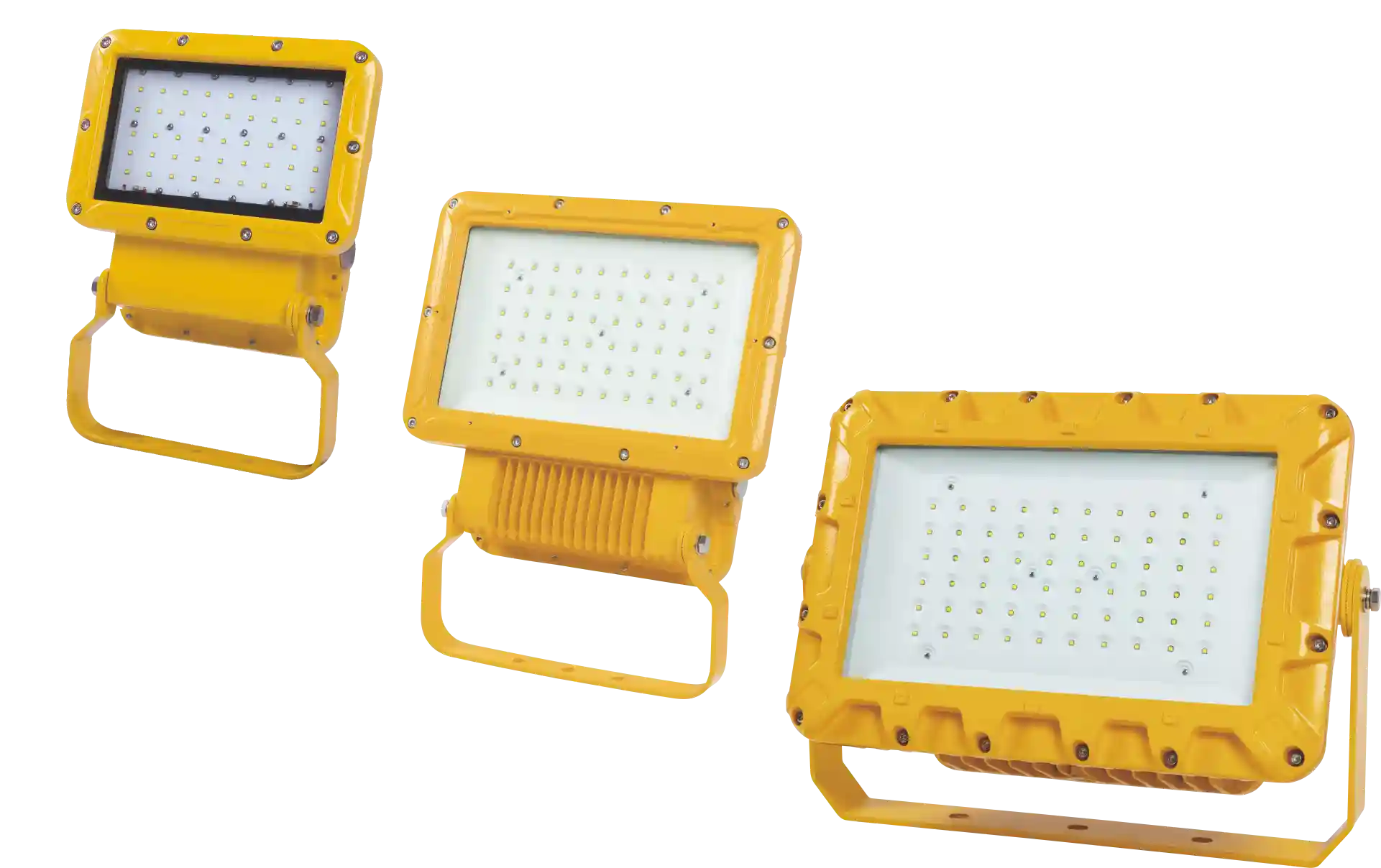
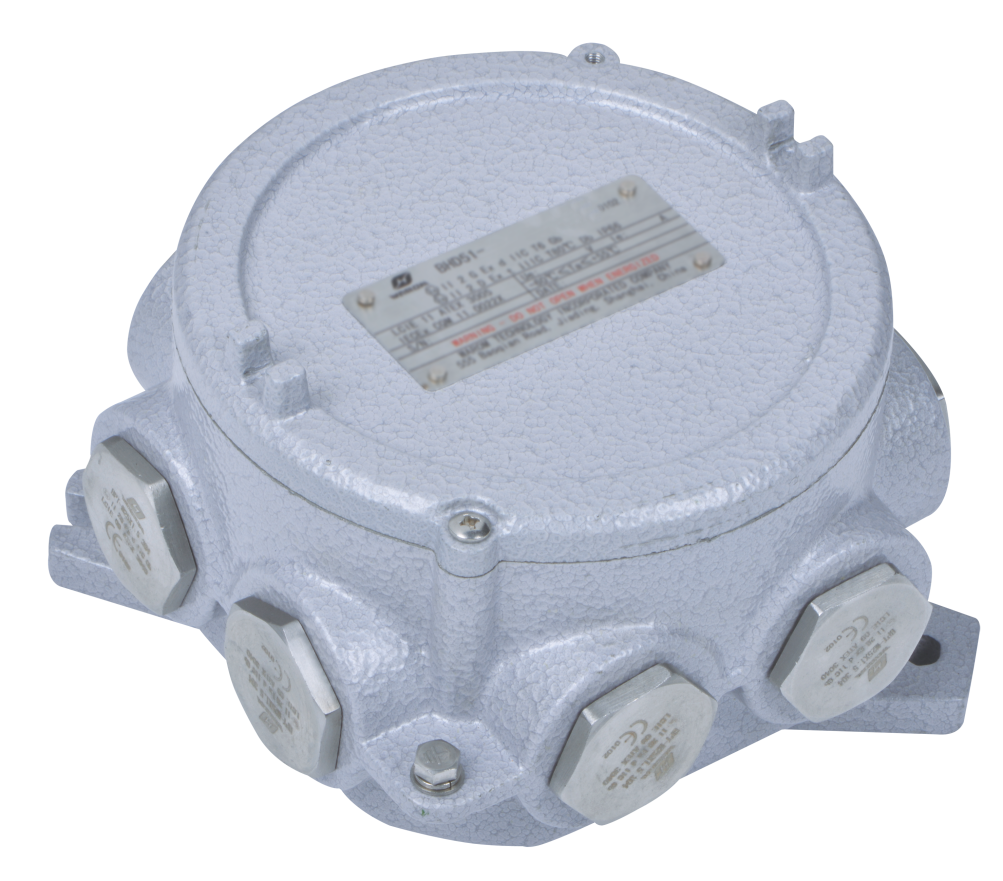
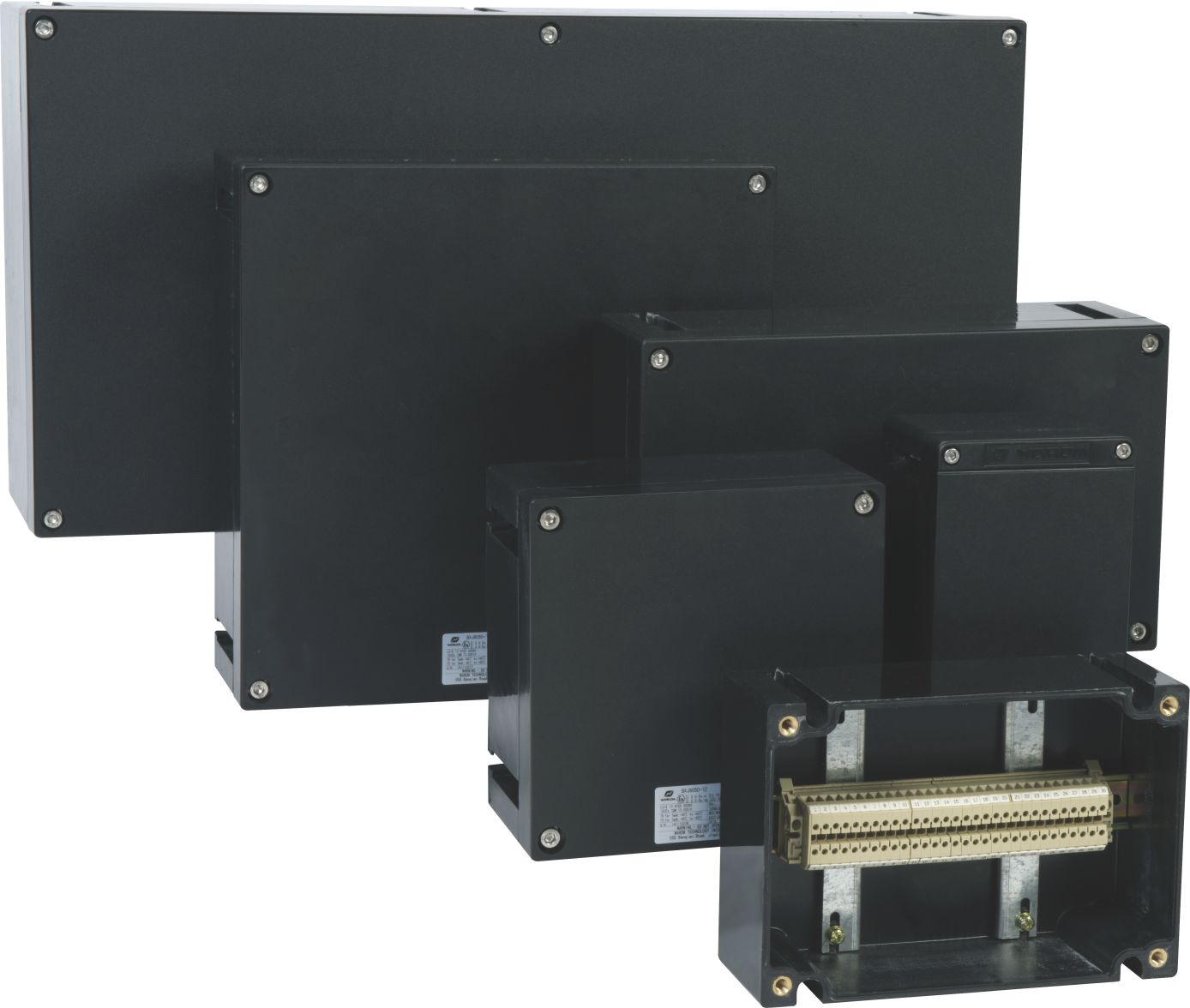
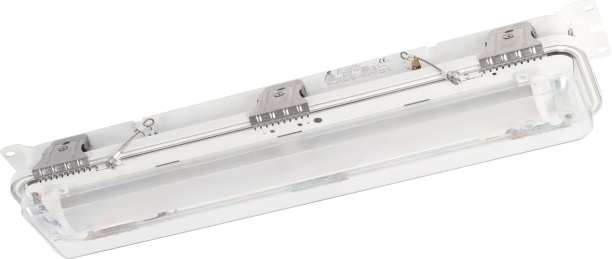
For deck and topside installations, I look for copper-free aluminum or marine grade aluminum with a powder-coated surface, stainless steel fasteners, and WF2 corrosion proofing. Junction boxes need at least IP66 and an ambient range that covers the voyage profile. BAT86 floodlights, for example, are built to IEC 60079 and EN 60079 with a CCS standard option, IP66, and a wide ambient range. Helideck systems are a separate case because they need dual-power switching and deck-level visibility, not just Ex protection.
For pump rooms and lower deck compartments, zone classification is only part of the selection. <Choosing Confined Space Lighting for Hazardous Areas: A Guide> covers mounting position, temperature, and inspection access for restricted spaces where the wrong light fitting creates a safety problem before the Ex certificate is even checked.
Pre-Shipment Verification for SOLAS Equipment
The most expensive rework I have seen on marine projects is not failed equipment. It is the gap between the Ex certificate, the marine type approval, and the shipyard’s cable schedule. An IECEx certified light fitting can be rejected because the class-approved mounting requires a different gland thread, or because the ambient range on the nameplate does not match the project’s Arctic or Middle East route. Those details are not visible on a purchase order. That is why our team reviews the documentation set before the equipment leaves the factory.
Send the equipment list, hazardous area schedule, class society name, and flag state to gm*@***om.com or call +86 21 39977076. I will check the Ex certificates, marine approvals, ambient ratings, and gland selections against the class requirements so the surveyor sees a matching package at the quayside, not an expensive open item.
Common Questions About SOLAS Explosion Proof Marine Equipment
Does SOLAS require IECEx or ATEX certification for marine equipment?
SOLAS does not name a single certification scheme. It requires equipment in hazardous areas to meet the safety level accepted by the flag state and classification society. In practice, most marine projects use IECEx as the international baseline and add ATEX for European flag or European shipyard work, then require a classification society marine type approval. A product with an IECEx certificate and no class or flag acceptance is not automatically approved for vessel installation.
What is the difference between an Ex certificate and a marine type approval?
A common misunderstanding is that the Ex certificate covers marine use. It does not. An Ex certificate confirms the protection method, gas group, temperature class, and special conditions under IEC 60079. Marine type approval confirms the equipment suits vessel installation under SOLAS and IEC 60092, including vibration, ambient temperature, mounting, cable entry, and salt atmosphere. The two certificates have different jobs, and both are needed for most hazardous area packages on board.
Can a standard explosion proof fitting with an IECEx certificate be installed on a vessel?
It depends on the installation area, flag state, and classification society. If the fitting is listed in the vessel’s hazardous area schedule and has marine type approval or class acceptance, it can be installed. If it only has a land-based IECEx certificate, the surveyor may reject it because marine installation adds vibration, salt spray, cable gland, and ambient temperature requirements. Some flag states permit limited acceptance after additional survey, but that should be confirmed before purchase.
What documentation should the shipyard handover package contain?
In projects we have supported, the handover package includes the Ex certificate, the marine type approval certificate, the nameplate record, the cable gland certificate, and the installation drawing marked with zone and temperature class. It should also include the factory test report and serial number traceability. Missing records, particularly the special conditions behind an “X” marking, create delays during class inspection. If your package is incomplete, send the equipment list and class requirements to gm*@***om.com and we will confirm which documents are missing.
If you’re interested, check out these related articles:
Choosing IP68 Outdoor Junction Boxes: A Buyer’s Strategic Guide
WAROM Explosion-proof 2023 Summer Marketing Conference a Complete Success
With over a decade of experience, he is a seasoned Explosion-Proof Electrical Engineer specializing in the design and manufacture of safety and explosion-proof products. He possesses in-depth expertise across key areas including explosion-proof systems, nuclear power lighting, marine safety, fire protection, and intelligent control systems. At Warom Technology Incorporated Company, he holds dual leadership roles as Deputy Chief Engineer for International Business and Head of the International R&D Department, where he oversees R&D initiatives and ensures the precise delivery of design documentation for international projects. Committed to advancing global industrial safety, he focuses on translating complex technologies into practical solutions, helping clients implement safer, smarter, and more reliable control systems worldwide.
Qi Lingyi