
Explosion proof equipment for offshore wind service operation vessels has to satisfy two different safety systems at once: hazardous area protection and marine classification. A flameproof enclosure that passes a land based gas test can still fail onboard review when saltwater corrosion, vibration, and documentation gaps emerge. In my review work, the decisive factor is rarely the Ex d rating itself; it is how the equipment is verified for vessel service. Buyers who align product selection with class rules, cable gland practice, and corrosion expectations early avoid most commissioning and survey delays. This article details that process.
Hazardous Zones on an Offshore Wind Service Vessel
Offshore wind service operation vessels carry diesel, lubricating oil, hydraulic oils, and increasingly large battery banks for hybrid and electric positioning. The fuel system and associated tank vents create gas hazards in enclosed spaces such as tank compartments, cofferdams, and some machinery spaces. Battery rooms introduce hydrogen during charging, and hydrogen moves the gas group to IIC and lowers the ignition energy. Paint lockers and chemical stores add a separate flammable atmosphere risk, often treated as Zone 1 or equivalent depending on the vessel arrangement and flag state rules. Open decks around ventilation outlets and fuel transfer stations may be Zone 2. The zone drawing, not a product catalogue, defines where explosion proof equipment is required. Owners who treat the whole vessel as hazardous either overspend without a safety benefit or miss the actual confined space risks. I have reviewed SOV specifications in which battery room equipment was ordered to the same specification as deck lighting, and the battery room units had to be replaced before sea trials because the gas group did not match.
Why Battery Rooms Drive Different Requirements
Battery charging releases hydrogen, so the gas group moves to IIC. Equipment marked IIB only is not automatically acceptable. Temperature class, enclosure material, and cable entry seals all need to be checked against the charger and ventilation arrangement.
Reading the SOV Area Plan
An SOV area plan normally marks only the spaces close to vents, flanges, or storage rooms as hazardous. A buyer should not specify from a general arrangement drawing alone. The marked zone schedule and the gas group list must follow the drawing to the supplier, or the quotation will contain incorrect assumptions.
Explosion Proof Equipment Selection for Wind SOVs
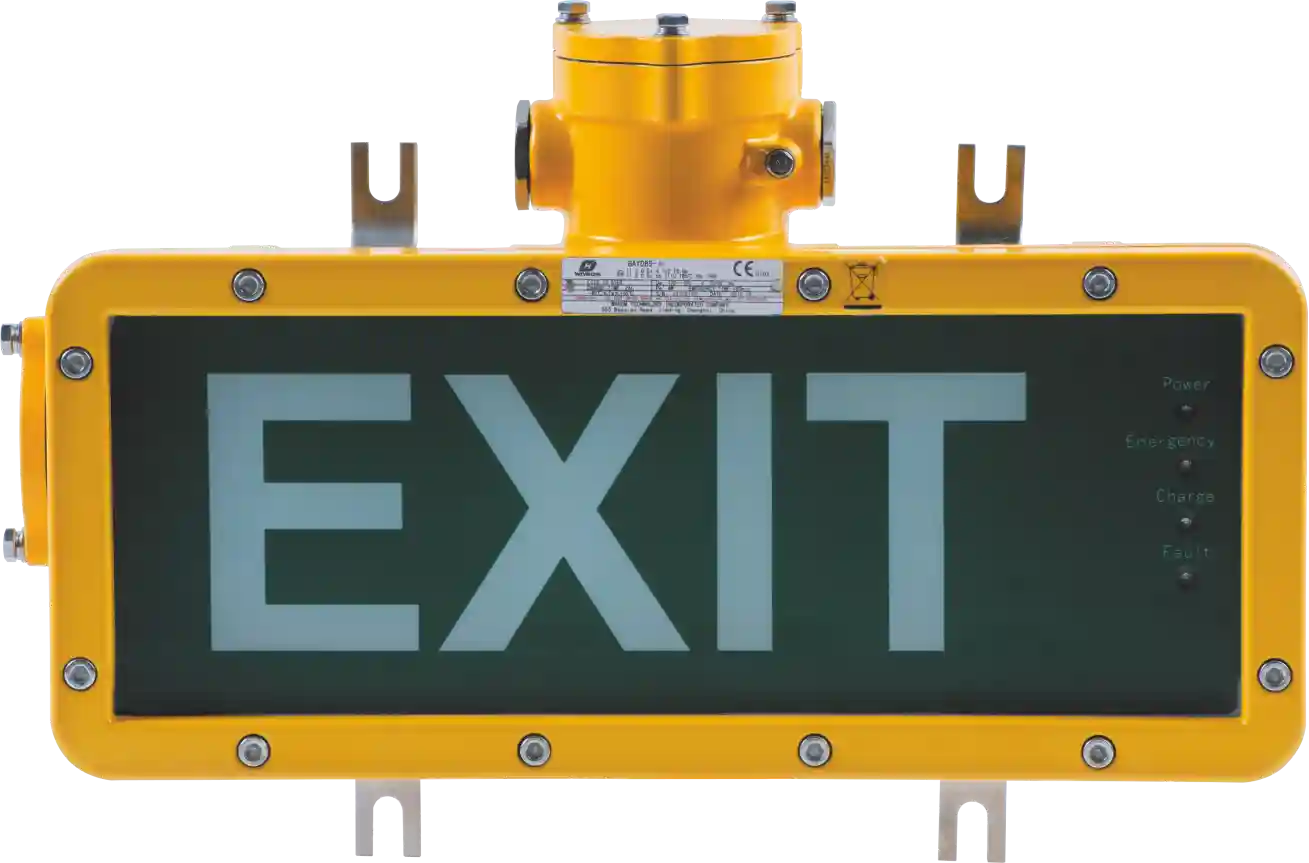
Fixed lighting on an SOV is usually decided by three questions: how often the space is entered, whether the fitting is exposed to green water, and what emergency mode the flag state requires. For open deck and boat landing areas, LED floodlights with IP66 and WF2 corrosion protection, such as the BAT86 range, handle spray and temperature cycling without routine enclosure replacement. Interior escape routes and machinery spaces need linear or fluorescent fittings with emergency operation, while exit doors need dedicated emergency exit lighting. The table below lists equipment types that appear repeatedly in SOV specifications.
| Vessel area | Typical equipment | Specification that matters |
|---|---|---|
| Open deck and crane zones | LED floodlight | IP66, WF2, wide temperature range |
| Escape routes and stairways | Emergency exit light | Emergency operation, clear egress marking |
| Cable junctions in hazardous spaces | Junction box | Ex d enclosure, IP66, stainless fasteners |
| Termination points | Terminal box | Ex e or Ex d, cable entry sizing, earthing |
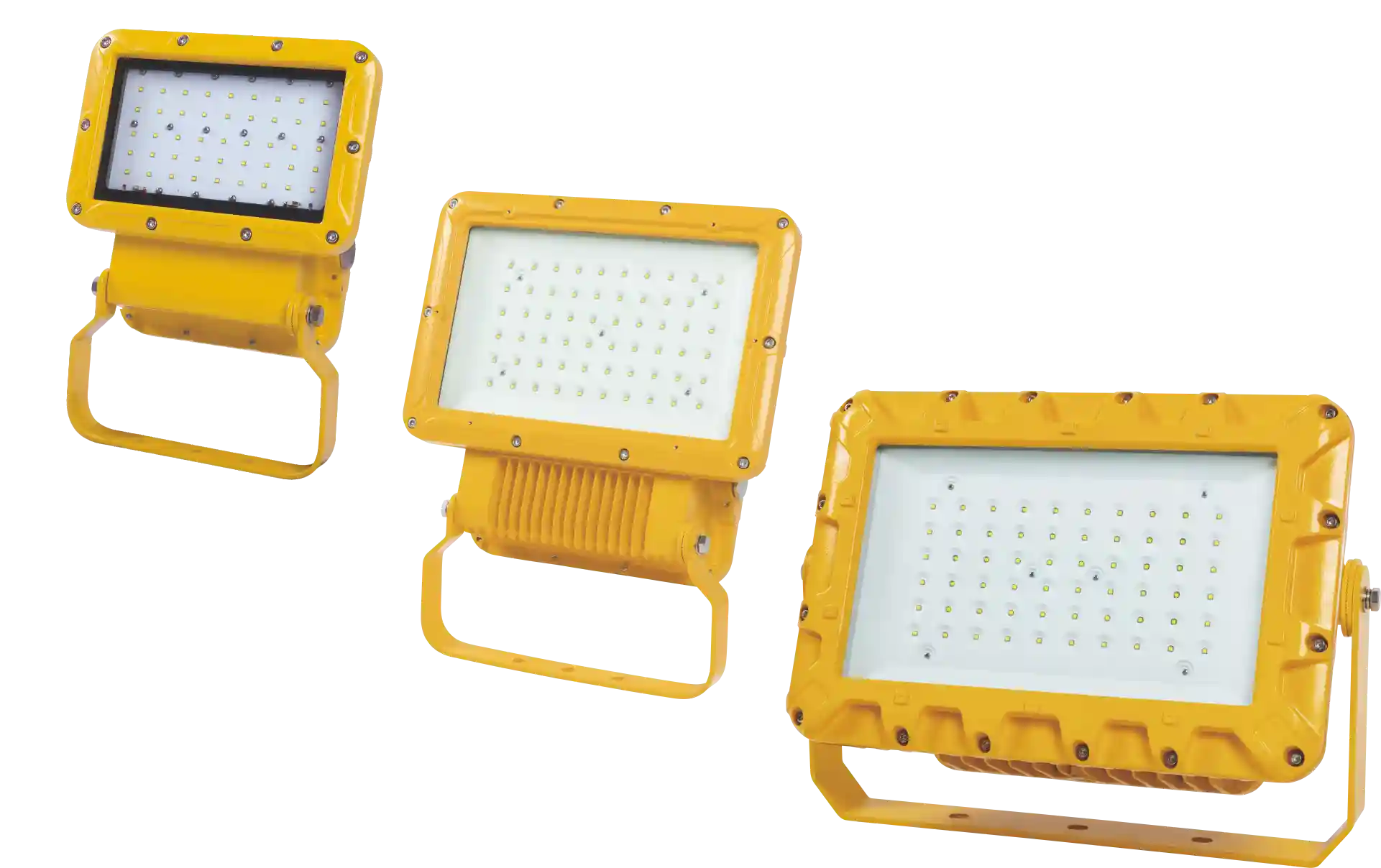
For vessel tanks, cofferdams, and enclosed maintenance spaces, <Choosing Confined Space Lighting for Hazardous Areas: A Guide> covers the choice between fixed and temporary task lighting and why using one lighting class for every space creates crew safety and inspection delays.
Matching Light Fittings to the Zone
Light fittings inside Zone 1 machinery spaces must match the gas group and temperature class. The same fitting may be acceptable for Zone 2 deck lighting but not battery room use. Always compare the equipment marking, especially gas group IIC and T class, against the latest zone drawing before release.
Why Deck Location Changes the Enclosure Choice
Exposed SOV decks put fittings under direct wave impact and constant salt mist. Aluminium enclosures are common, but stainless steel or high grade marine aluminium may be required for areas with heavy green water, helideck wash, or prolonged UV. The protection concept is not enough; corrosion class WF2 and the enclosure material are part of the purchase specification.
Marine Cable Glands and Termination Practice
Cable entry is the first place I recommend drawing review because it creates the largest number of field failures on marine projects. An explosion proof enclosure with an incorrectly selected cable gland or an unused entry not sealed to the correct standard loses its protection. For offshore wind SOVs, use only glands approved for the cable type: armoured marine cable, SWA, unarmoured, or shielded. The gland must match the cable outer diameter and armour range, and its material must survive salt exposure. We often specify nickel plated brass glands for saltwater environments where weight and cost are balanced against service life. Stainless steel is preferred for exposed areas or where deck cargo and service equipment create impact risk.
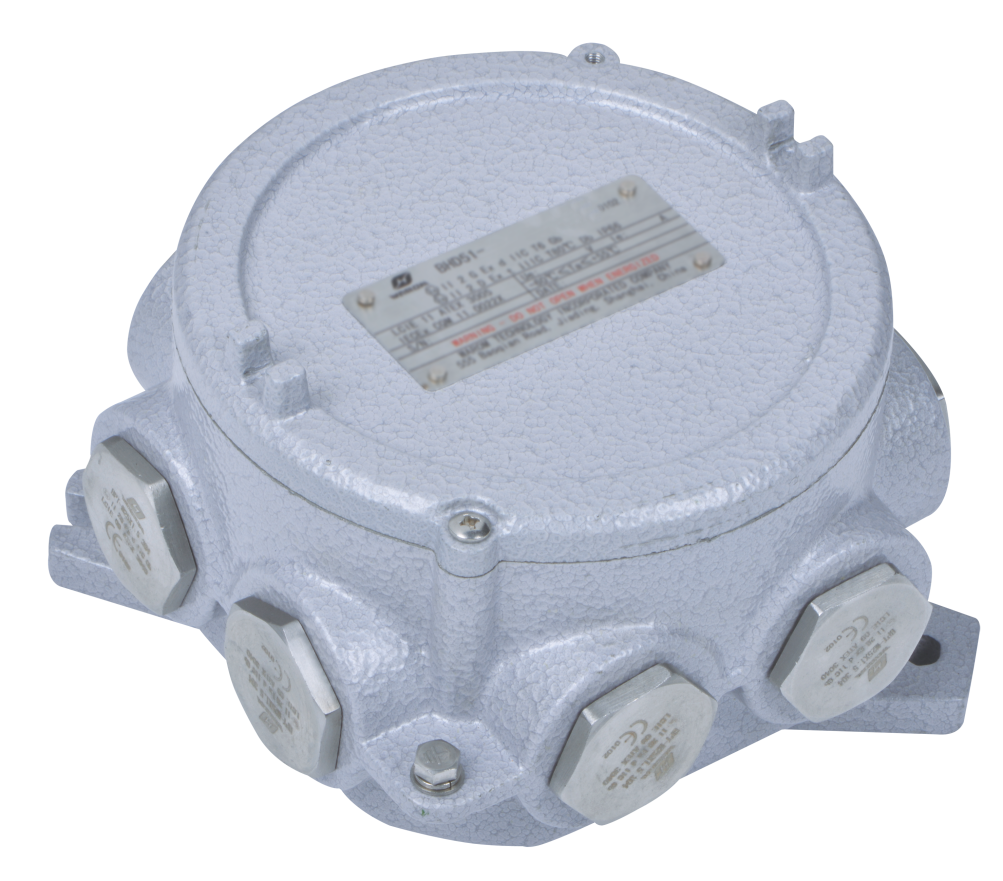
Terminal boxes and junction boxes need the same logic. BHD91 junction boxes and BXJ8050 terminal boxes are designed with IP66 protection, stainless fasteners, and anti-loosening hardware, and they accept DQM glands. The enclosure alone does not fix a poor termination schedule, so the cable schedule and entry plan should be reviewed before release.
Saltwater acts on the enclosure and gland as much as the atmosphere acts on the flamepath. <Explosion Proof Solutions for FPSO Vessel Safety> covers the same marine specification logic for FPSO topsides, where material choice and cable entry design decide whether equipment remains serviceable after the first inspection.
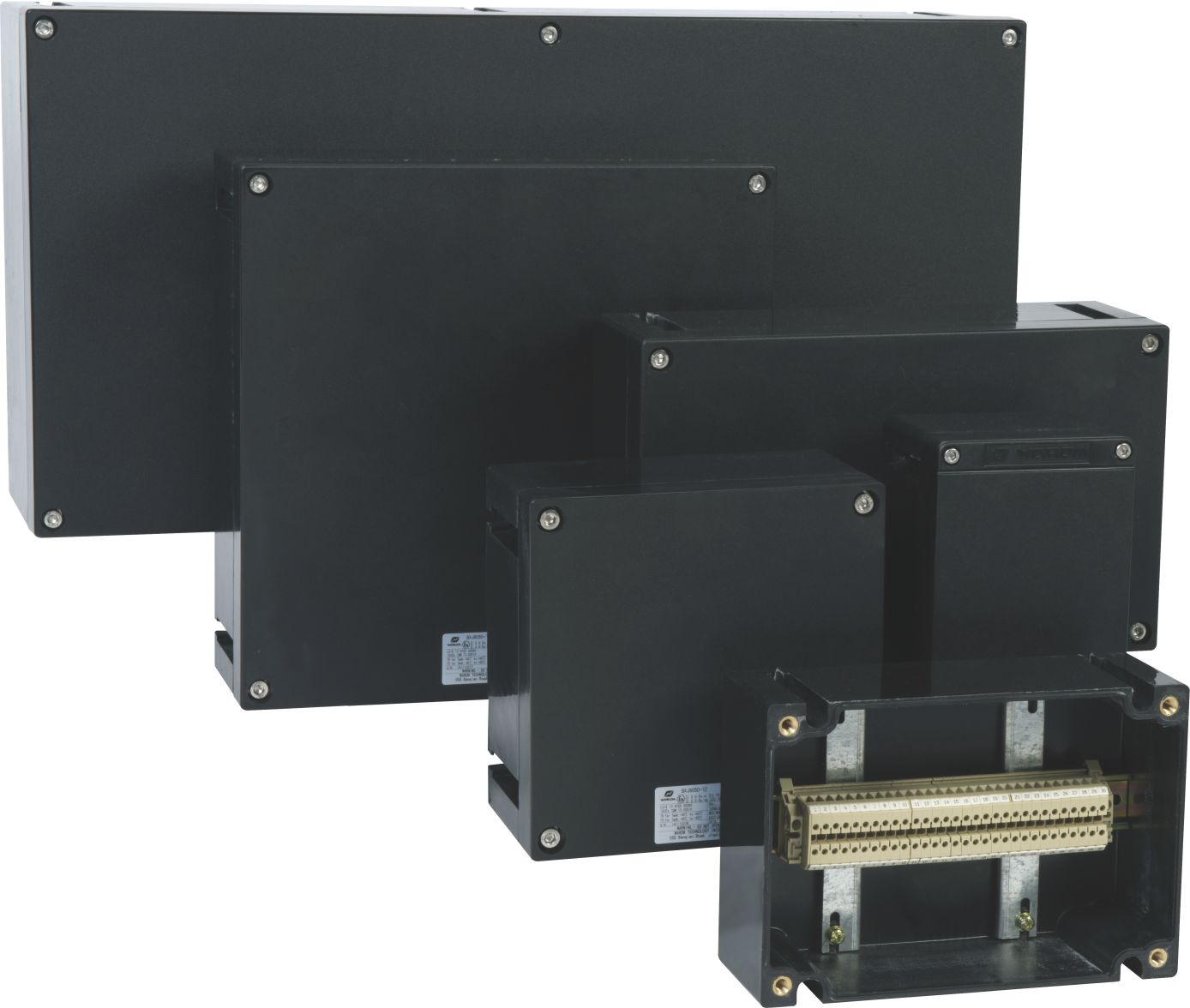
If your SOV program includes mixed Zone 1 and Zone 2 areas and you are still comparing site assembled panels, it is worth confirming the cable gland and termination schedule before the BOM is issued. Send a marked area plan and cable schedule to gm*@***om.com and we can check each entry against the enclosure certificate.
Certification and Documentation for SOV Compliance
An explosion proof equipment purchase for a wind SOV is a documentation package, not just hardware. Class surveyors and port state inspectors will ask for the same certificate trail: EC type examination certificate, production quality assurance notification, material traceability, and drawing references that tie the mark to the exact product delivered. IECEx and ATEX are the most common standards for European and international projects, while projects built for US flag or US class may use Class I Division 1 or Division 2. The buyer should also confirm whether the vessel classification society has a marine type approval requirement or accepts the IECEx or ATEX certificate with additional inspection.
The documents to request before shipment include:
- Nameplate photo from the actual unit
- Certificate schedule matching the model and equipment category
- Gland and accessory certification
- Factory inspection and routine test documents
- Installation instructions with the correct cable entry and maintenance limitations
If the project language shifts to North American classification, <Class 1 Division 1 vs Division 2 Lighting: 2025 Safety Guide> covers how the Class and Division system compares with zone terminology, which removes conversion errors on US built or US classed service vessels.
Specifying Explosion Proof Systems for the Project
Replacing a non-compliant light fitting or junction box after the vessel is in service is expensive and can interrupt crew transfer operations. Marine inspection points are fixed: the area plan, the cable schedule, and the certificate file. Address these three before delivery and the hardware selection becomes straightforward. We review SOV packages by checking the zone drawing and cable schedule first, then matching approved enclosures, glands, and light fittings to the vessel flag and class requirements. Send your hazardous area plan, cable sizes, and required quantities to gm*@***om.com. We confirm certificate compatibility and current delivery times before you commit. For a direct technical check, call +86 21 39977076.
Common Questions About Marine Explosion Proof Equipment
Are all areas on an offshore wind SOV considered hazardous?
No. Most accommodation, bridge, and general working spaces are outside the hazardous area schedule. The hazardous zones are usually limited to fuel tank compartments, adjacent vent spaces, battery rooms, and specific paint and chemical storage lockers. Assigning explosion proof hardware to every cabin or corridor adds cost and maintenance without adding safety. The correct starting point is the vessel zone and area classification drawing. If the drawing is missing or inconsistent, the supplier should pause the quotation until the hazardous area schedule is confirmed.
Does explosion proof mean the fitting is saltwater proof?
A common misunderstanding is that explosion proof and saltwater proof are the same thing. They are separate ratings. An Ex d enclosure protects against an internal ignition escaping to a surrounding gas atmosphere. Its corrosion resistance depends on the enclosure material, coating, corrosion class, and protection rating such as IP66. On an SOV, both are required. Land based enclosures with valid Ex certificates can fail quickly on deck when the hardware and coating were not selected for WF2 or marine exposure. Check the IP rating, corrosion class, and material in addition to the Ex marking.
Can IECEx equipment be used on a US classed SOV?
It depends on the flag state and the classification society. An IECEx certificate is accepted by most international flag states and may be accepted on a US classed vessel if the marine classification rules allow equivalence. Some projects still require NEC Class and Division markings, particularly when the vessel is US flagged or the insurance requirements demand North American notation. The safest route is to ask the classification society for a written position early, then request the supplier to confirm the equipment marking against that position. Do not assume a European certificate covers a US requirement.
How much spare equipment should be kept on board?
The better question is which items will stop the vessel when they fail. A failed navigation signal light or emergency exit light may require immediate replacement before normal operation can continue. Distribution panels and junction boxes rarely need spares if the original documentation and certificates are already onboard. Stock at least one complete set of emergency and navigation light fittings, plus spare cable glands and sealing plugs, because those are the parts most often damaged during maintenance or weather. Share your vessel route and spares list and we will confirm a practical minimum package.
If you’re interested, check out these related articles:
PETROLEUM ENERGY SHOW 2024
Vietnam ETE 2024 is underway
WAROM “INNOVATION” Unveils a New Era of Precision Medicine
With over a decade of experience, he is a seasoned Explosion-Proof Electrical Engineer specializing in the design and manufacture of safety and explosion-proof products. He possesses in-depth expertise across key areas including explosion-proof systems, nuclear power lighting, marine safety, fire protection, and intelligent control systems. At Warom Technology Incorporated Company, he holds dual leadership roles as Deputy Chief Engineer for International Business and Head of the International R&D Department, where he oversees R&D initiatives and ensures the precise delivery of design documentation for international projects. Committed to advancing global industrial safety, he focuses on translating complex technologies into practical solutions, helping clients implement safer, smarter, and more reliable control systems worldwide.
Qi Lingyi