Explosion proof light fittings for pharmaceutical clean rooms must satisfy two safety regimes at once. The first is hazardous area protection for rooms where solvents, alcohols, or process dusts can create an explosive atmosphere. The second is cleanroom contamination control, which requires smooth surfaces, effective sealing, and the ability to withstand repeated wipe-downs and disinfectants. The practical specification therefore starts with the room rather than the wattage: classify the area, understand the cleaning chemicals and frequency, and only then confirm the enclosure design, certification record, and light quality.
Where Explosion Proof Light Fittings Are Required in Clean Rooms
Pharmaceutical facilities usually require explosion proof light fittings in solvent dispensing, reactor charging, coating, granulation, and packaging areas where flammable vapors can be present under abnormal conditions. The requirement depends on the area classification drawing produced by the process safety study, not simply on whether the room is an ISO clean room.
A clean room classified as nonhazardous can use standard cleanroom luminaires. A solvent-handling room inside an ISO 7 envelope may still be Zone 1 or Zone 2. For that reason, the lighting specification follows the electrical area classification, not the particle count alone. Ask for the current zone drawing and check the fixture certificate against that zone and gas group before accepting a quotation.
Cleanability and Enclosure Construction for GMP Washdown Zones
Pharmaceutical clean areas require surfaces that operators can reach for cleaning and disinfection. A fitting chosen only for explosion protection may fail this requirement if it has exposed screws, sharp edges, open conduits, or recessed pockets where powder and micro-organisms can collect. The enclosure should be smooth, with ingress protection and a finish that tolerates the plant’s actual cleaning agents, including alcohols, hydrogen peroxide, or chlorine-based disinfectants.
IP66 is commonly specified because it protects against powerful water jets and keeps washdown liquid away from terminals. However, IP66 is not explosion protection. The IP rating answers whether the enclosure can exclude dust and water under defined conditions. The Ex certificate answers how the fitting prevents an internal ignition source from reaching the surrounding atmosphere. A fixture in a solvent zone must satisfy both requirements independently.
Pharmaceutical clean rooms often combine hazardous area protection with washdown-grade ingress protection. <Weatherproof IP66 Electrical Enclosures: Industrial Safety Imperatives> covers IP66 requirements for industrial safety applications.
The material selection also follows the cleaning procedure. Powder-coated aluminum or stainless steel enclosures may be suitable, but the coating must resist the actual disinfectant concentration and cleaning frequency. Gaskets need the same review because a seal that swells or cracks after repeated exposure to hydrogen peroxide becomes a contamination and ignition path.
Zone Classification, Gas Group, and Temperature Class
ATEX and IECEx schemes divide gas hazards into Zone 0, Zone 1, and Zone 2. North American projects may use Division 1 and Division 2. Most solvent-handling clean rooms fall into Zone 1 or Zone 2, because a flammable release is expected only under upset or abnormal conditions rather than continuously. Zone 0 is reserved for areas where the explosive atmosphere is present for long periods.
The fixture marking must also carry the correct gas group, such as IIA, IIB, or IIC, and a temperature class that remains below the auto-ignition temperature of the solvent. Gas group and T class are not cosmetic labels. They describe the ignition energy and hot-surface limits that a specific process solvent can tolerate.
Selection should be confirmed against the following items:
| Selection item | What to confirm | Why it matters |
|---|---|---|
| Area classification | Zone or division for each room | Determines whether an Ex fitting is required |
| Protection concept | Ex d, Ex e, or Ex n marking | Affects installation and maintenance limits |
| Gas group | IIA, IIB, or IIC | Matches the ignition properties of the process solvent |
| Temperature class | T class below the solvent auto-ignition temperature | Prevents a hot surface from becoming an ignition source |
| Ambient range | Low room temperature or adjacent heat load | Keeps the fitting within its certified operating range |
The process safety study, not the lighting supplier, sets the final T class. A supplier can confirm whether a luminaire is available in the required class, but it cannot responsibly select a class without knowing the solvent.
Lighting Performance, Glare, and Visual Task Comfort
Pharmaceutical production includes inspection, label verification, color checking, and aseptic handling. The light fitting should therefore provide adequate color rendering and glare control. CRI of at least 80 and a color temperature in the range of about 5000 K to 5700 K are commonly specified for inspection and documentation tasks, but the final lighting design depends on task, room height, and workstation layout.
Uniform illumination avoids shadows around filling lines and benches. Glare from polished or angled fittings can make inspection harder. The position of the luminaire relative to laminar flow hoods also matters: recessed or flush-mount fittings are usually less disruptive to air flow than pendant or chain-mounted units.
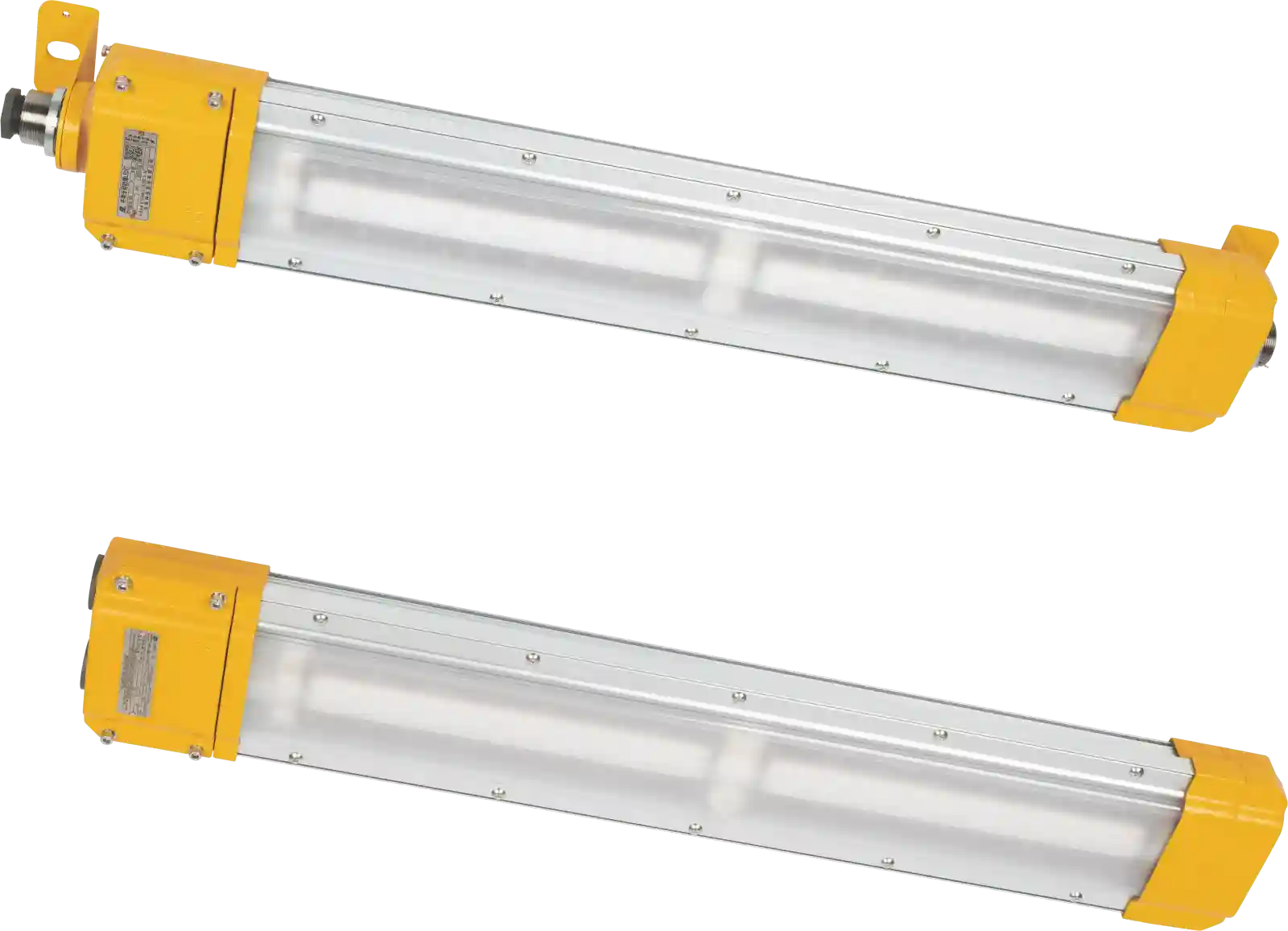
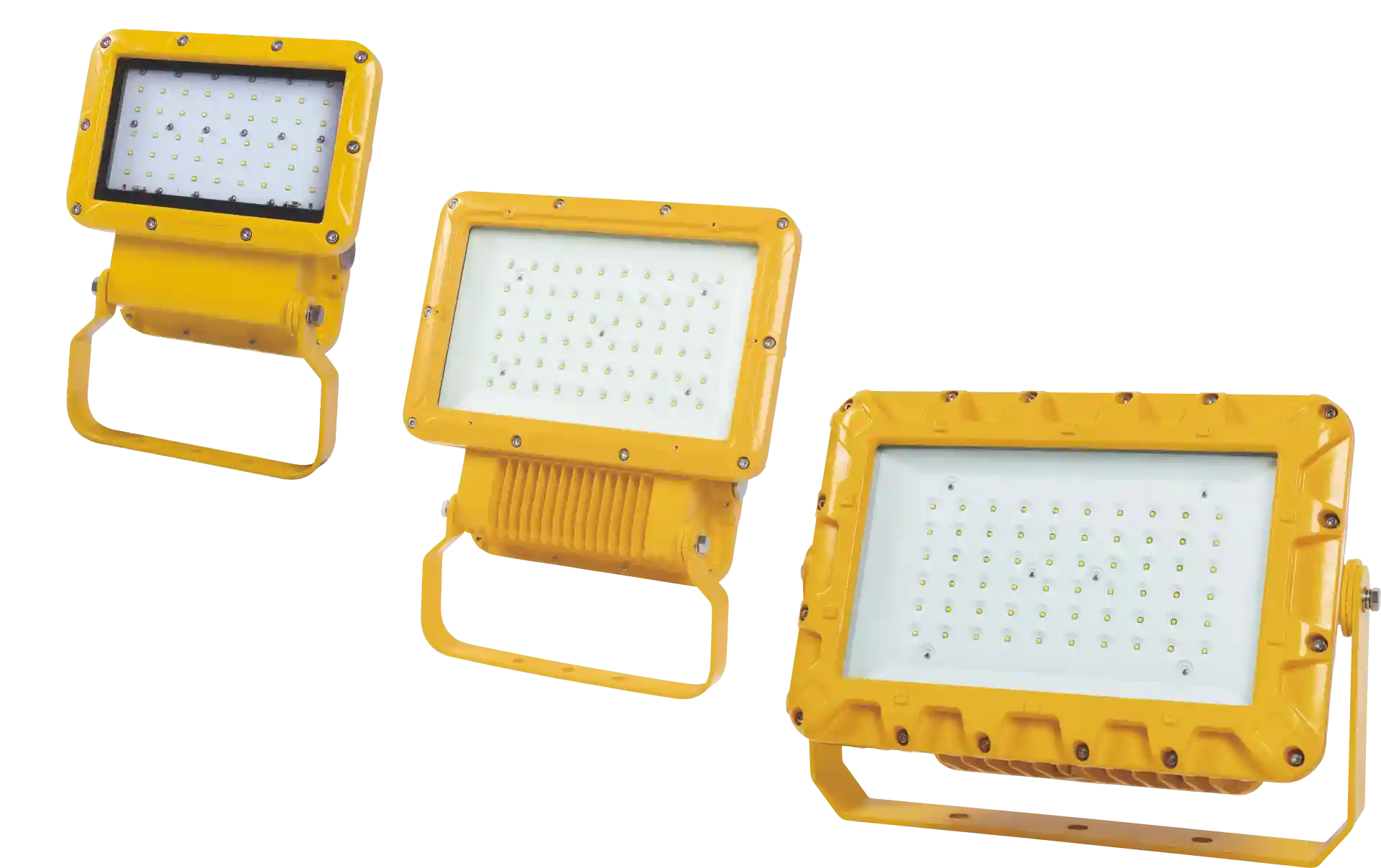
For tall process halls, solvent stores, or exterior transfer areas linked to the clean suite, high-output LED fittings may reduce the number of mounting points. They still require the same certificate and cleanability review when they penetrate the clean envelope.
Certification and Documentation Before Release
Every explosion proof fitting should be released only after its certificate matches the installed location. ATEX, IECEx, or UL certification is a starting point, not a substitute for checking the actual certificate number, model, manufacturer, zone marking, gas group, T class, and the product marking on the delivered fitting.
Request the certificate and compare the nameplate on the first received fixture with the certificate details. An old, worn, or modified sample can confirm visual identity, but it cannot alone prove that the delivered product line remains compliant. This screening is a first check before inspection and installation, not technical acceptance.
| Document | What it confirms | What it does not confirm |
|---|---|---|
| Ex certificate | Certified protection concept and marking | Correct installation and on-site condition |
| Nameplate | Delivered model and rating identity | Current certificate validity for the location |
| IP test report | Ingress protection under test conditions | Explosion protection performance |
| Cleaning compatibility data | Material resistance to specified agents | Seal behavior under an unlisted cleaning product |
Documentation should be requested before the fitting leaves the factory. A missing certificate or a nameplate that does not match the order is easier to resolve before the equipment arrives at the clean room.
Installation, Sealing, and Maintenance Requirements
Clean room light fittings should be installed so that cable entries remain clean and sealed. Use certified glands and plugs selected for the cable type, and do not leave unused entry holes open. Entry points are the most common places for both moisture ingress and contamination pockets.
Clean room cable entries must be specified rather than left to the installer. <NPT Explosion Proof Cable Glands for US & Middle East Projects> covers NPT thread selection for North American and Middle East installations.
Where the ceiling or air flow permits, pendant light fittings can be used in high-bay finishing or inspection rooms. Select a smooth enclosed pendant without open reflectors, and verify that the suspension hardware can be cleaned around and above the fitting.
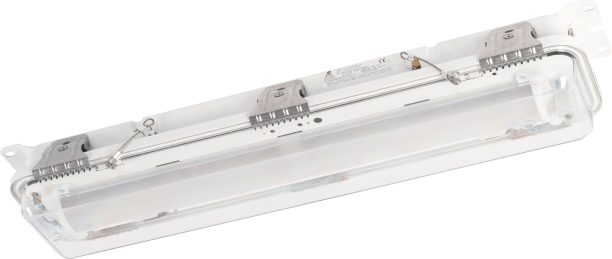
Maintenance should be planned around the cleaning schedule. Before opening a fitting, isolate the power under permit, confirm the atmosphere is safe, and follow the manufacturer’s cover-closing instructions. Replace gaskets when they show cracks, swelling, or loss of elasticity. A fitting that passes an electrical test after the cover is misaligned is still not acceptable in a classified room.
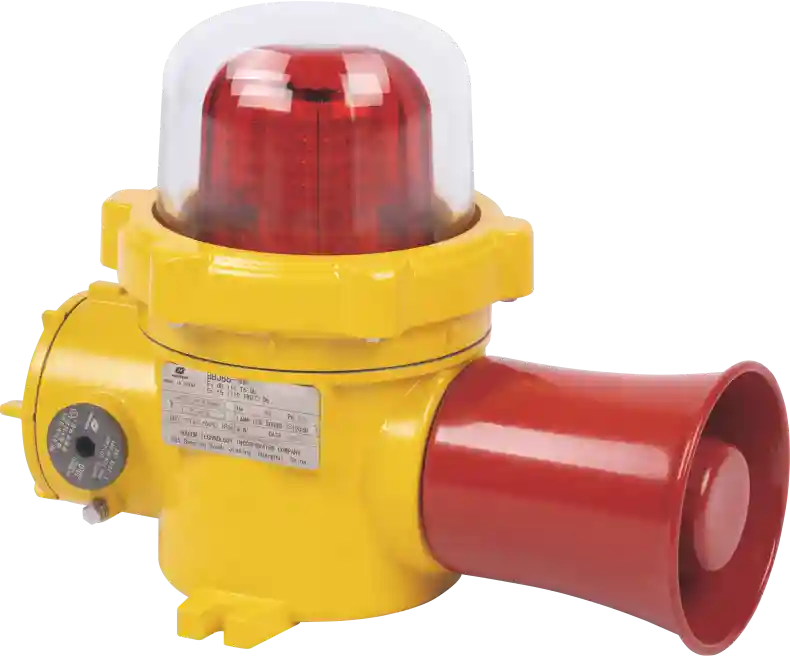
In solvent-handling rooms, a local visual or audible caution fitting may be part of the same safety system. It marks process status, alarm conditions, or entry restrictions for operators approaching the line.
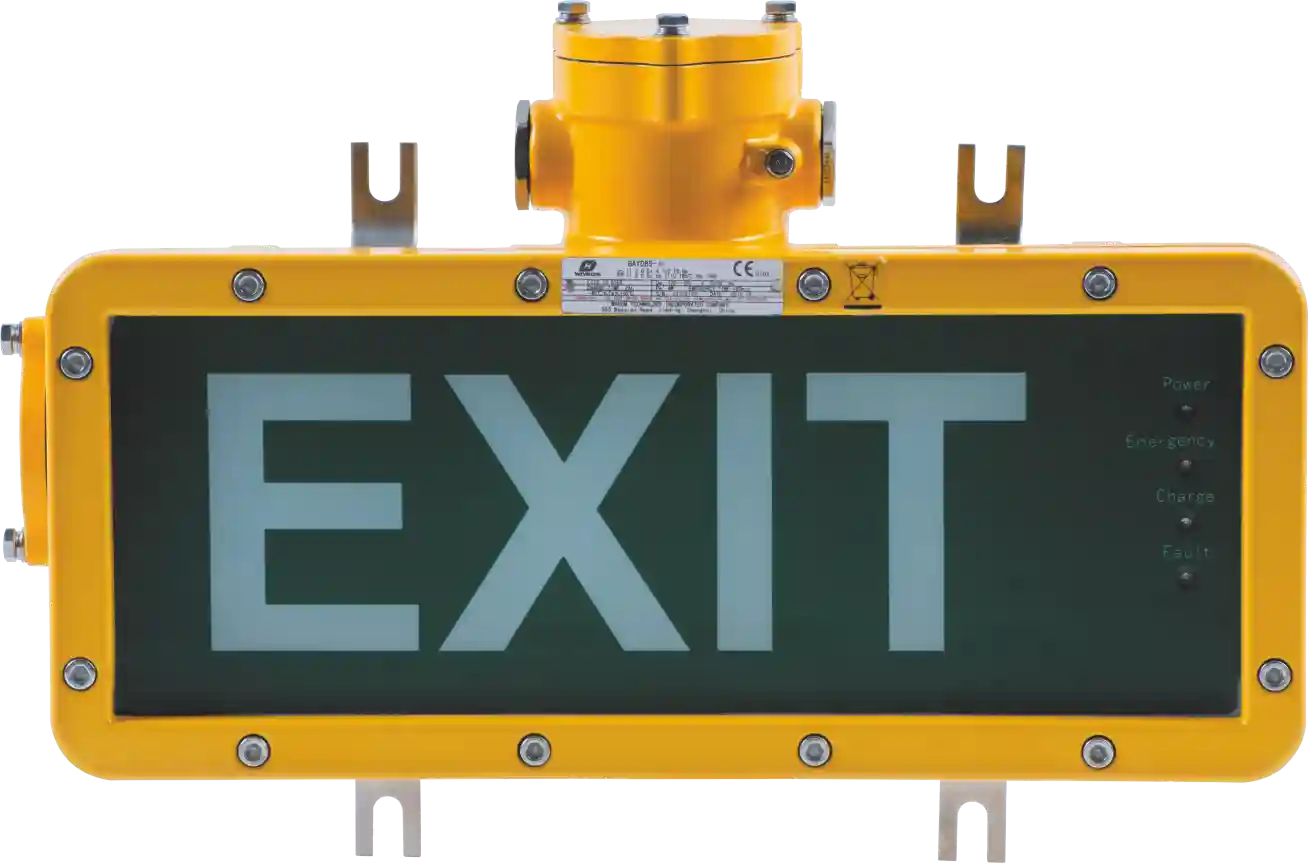
Emergency exit fittings in a classified corridor or changing room may also need explosion proof construction. Confirm whether the fitting is maintained or non-maintained and how it connects to the site emergency lighting supply.
Specify the Clean Room Lighting Package Before Installation
Send the area classification drawing, cleaning agent list, ceiling details, required illumination level, and any preferred certification scheme to the project team. A useful specification names the zone, gas group, T class, IP rating, surface finish, cable entry type, and required documentation. Without those inputs, the supplier can only prepare an estimate, and the estimate may not survive the qualification review.
WAROM’s explosion proof light fittings and electrical packages are designed for classified industrial and pharmaceutical applications. Contact Wang Lei at gm*@***om.com or +86 21 39977076 / +86 21 39972657 to review a clean room lighting specification before installation.
FAQ
Is an IP66 fitting automatically explosion proof?
No. IP66 describes dust and water ingress protection. Explosion proof certification describes how the fitting controls ignition risk. A cleanroom luminaire can be IP66 and non-Ex. A fitting used in a hazardous clean room must carry both the required Ex certificate and the required IP rating when washdown is present.
Can a clean room be classified if it is an ISO 7 room?
Yes. Cleanroom classification is not the same as hazardous area classification. A room can be ISO 7 for particle control and Zone 2 for solvent vapor under abnormal conditions. The electrical area classification drawing decides the lighting rating, while the cleanroom class decides surface finish, cleanability, and air flow compatibility.
What should I check on the certificate before accepting the fitting?
Check that the delivered fixture nameplate matches the certificate, including the model, zone, gas group, temperature class, and protection concept. A certificate photocopy without a matching nameplate does not verify the delivered goods. After that match is confirmed, inspection and installation follow the site permit and testing procedure.
How does cleaning chemistry affect the light fitting?
Disinfectants can swell, crack, or etch gaskets and coatings. Specify the cleaning agents and frequencies to the supplier, then confirm the enclosure material and gasket grade. If the cleaning procedure changes after installation, recheck the seal condition and confirm that the new chemistry is compatible with the certified fitting.
If you’re interested, check out these related articles:
IPTC 2024
Warom Technology Shines CSSOPE 2024
What is Portable Explosion Proof Lighting? An Expert Guide
With over a decade of experience, he is a seasoned Explosion-Proof Electrical Engineer specializing in the design and manufacture of safety and explosion-proof products. He possesses in-depth expertise across key areas including explosion-proof systems, nuclear power lighting, marine safety, fire protection, and intelligent control systems. At Warom Technology Incorporated Company, he holds dual leadership roles as Deputy Chief Engineer for International Business and Head of the International R&D Department, where he oversees R&D initiatives and ensures the precise delivery of design documentation for international projects. Committed to advancing global industrial safety, he focuses on translating complex technologies into practical solutions, helping clients implement safer, smarter, and more reliable control systems worldwide.
Qi Lingyi