IP ratings and explosion proof ratings sit side by side on the same nameplate, so it is easy to read them as a single qualification. They answer different questions. An IP rating describes how well the enclosure keeps out solid particles and water, protecting the equipment from its environment. An explosion proof rating describes how the apparatus is prevented from igniting the surrounding gas or dust, protecting the plant from the equipment. A product can hold either one without the other, and a strong number in one system says nothing about the other. This article separates the two systems, shows where they meet on a real label, and sets out what a buyer should verify before approving a hazardous-area installation.
What an IP rating measures and what it leaves out
The IP code comes from IEC 60529 and is written as two digits after the letters IP [1]. The first digit rates protection against solid foreign objects on a scale from 0 to 6, where 5 means dust protected and 6 means dust tight. The second digit rates protection against water: 1 through 6 cover dripping, spraying and jetting water, the letter K marks the higher-pressure jet tests, and 7, 8 and 9K cover temporary immersion, continuous immersion and high-temperature washdown.
The digits are separate characteristics rather than one combined score, and the difference matters most at the top of the water scale. IPX7 sets a defined temporary immersion test. IPX8 is defined by agreement between manufacturer and user, so two products marked IP68 can carry entirely different depth and duration limits, and neither is obliged to match the other. A fitting marked IP69K may survive a hot, high-pressure wash and still have no declared immersion limit at all.
Depth and duration behind an IPX8 mark are declared rather than fixed by the standard, so the figure alone says little until the conditions are known. <Choosing IP68 Outdoor Junction Boxes: A Buyer’s Strategic Guide> covers how buyers can compare IP68 outdoor junction boxes before committing to a specification.
What the code does not do is address ignition. IP6X means dust does not enter in a quantity that would harm the equipment inside. It says nothing about whether the surface of that equipment can ignite a cloud of combustible dust around it, which is assessed under a different set of rules. The rating also applies to the enclosure as tested, with the gaskets and cable entries fitted at the time. That number does not automatically survive a change of gland, a damaged seal, or years of ultraviolet exposure and vibration.
What an explosion proof rating actually controls
Explosion proof is not one universal category. In North America it is the term used under the National Electrical Code for equipment built to contain an internal explosion in Class I locations, and it is tied to the Division classification. In the IEC and ATEX world the same general aim is split into types of protection, each with its own letter, as set out in the IEC 60079 series [2]: flameproof d, increased safety e, intrinsic safety i, encapsulation m, pressurisation p, and dust protection t.
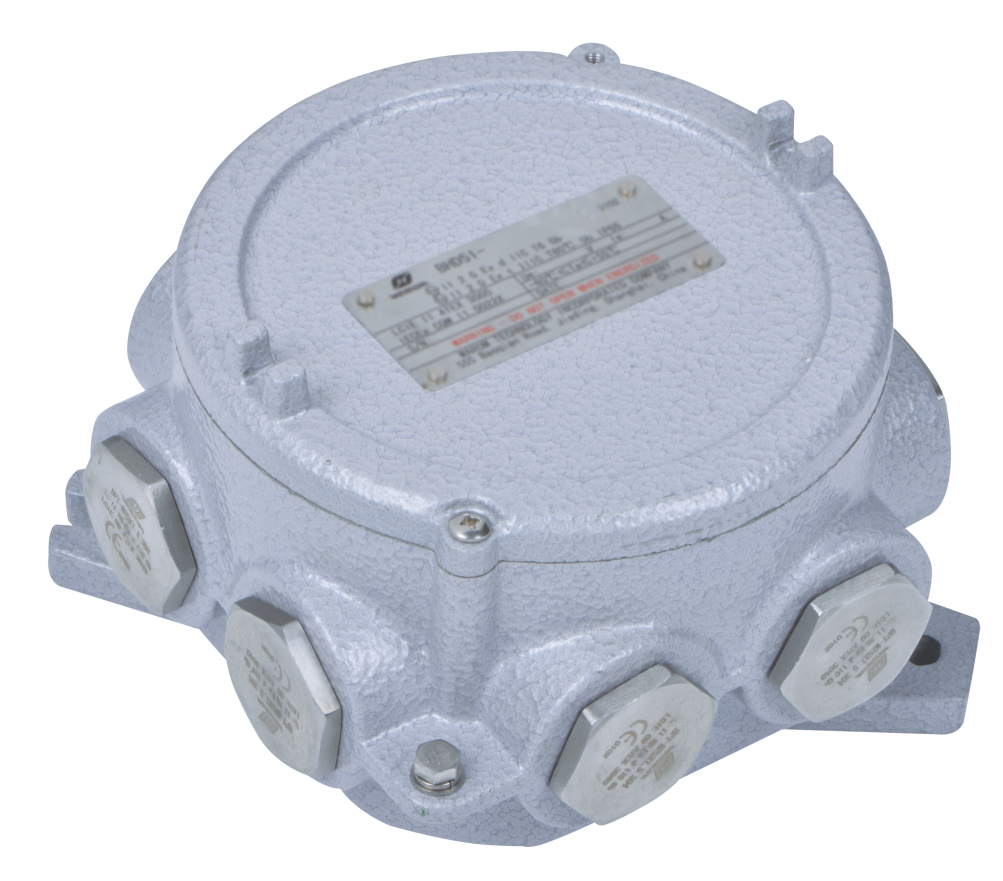
Every one of those letters answers the same question. How is this apparatus kept from becoming an ignition source? Two mechanisms do most of the work. Flameproof enclosures [3] let an internal explosion occur and contain it, routing hot gases through a flame path narrow enough and long enough to cool them below the ignition temperature of the surrounding gas. Increased safety and intrinsic safety work the other way, avoiding arcs, hot surfaces and stored energy in the first place. Dust protection takes a third route, limiting dust ingress and controlling surface temperature, and it is governed by its own part of the series [4].
The rating is a statement about the whole apparatus, which is why the marking carries more than a protection letter. A typical string, Ex db IIC T6 Gb, states the protection type (db), the gas group assessed (IIC, the group that includes hydrogen and acetylene), the maximum surface temperature class (T6, 85 °C), and the equipment protection level (Gb), which ties the unit to Zone 1 or Zone 2 service. The certificate also fixes the ambient range and names the cable entry devices covered. Change any one of those inputs and the marking no longer describes what you have.
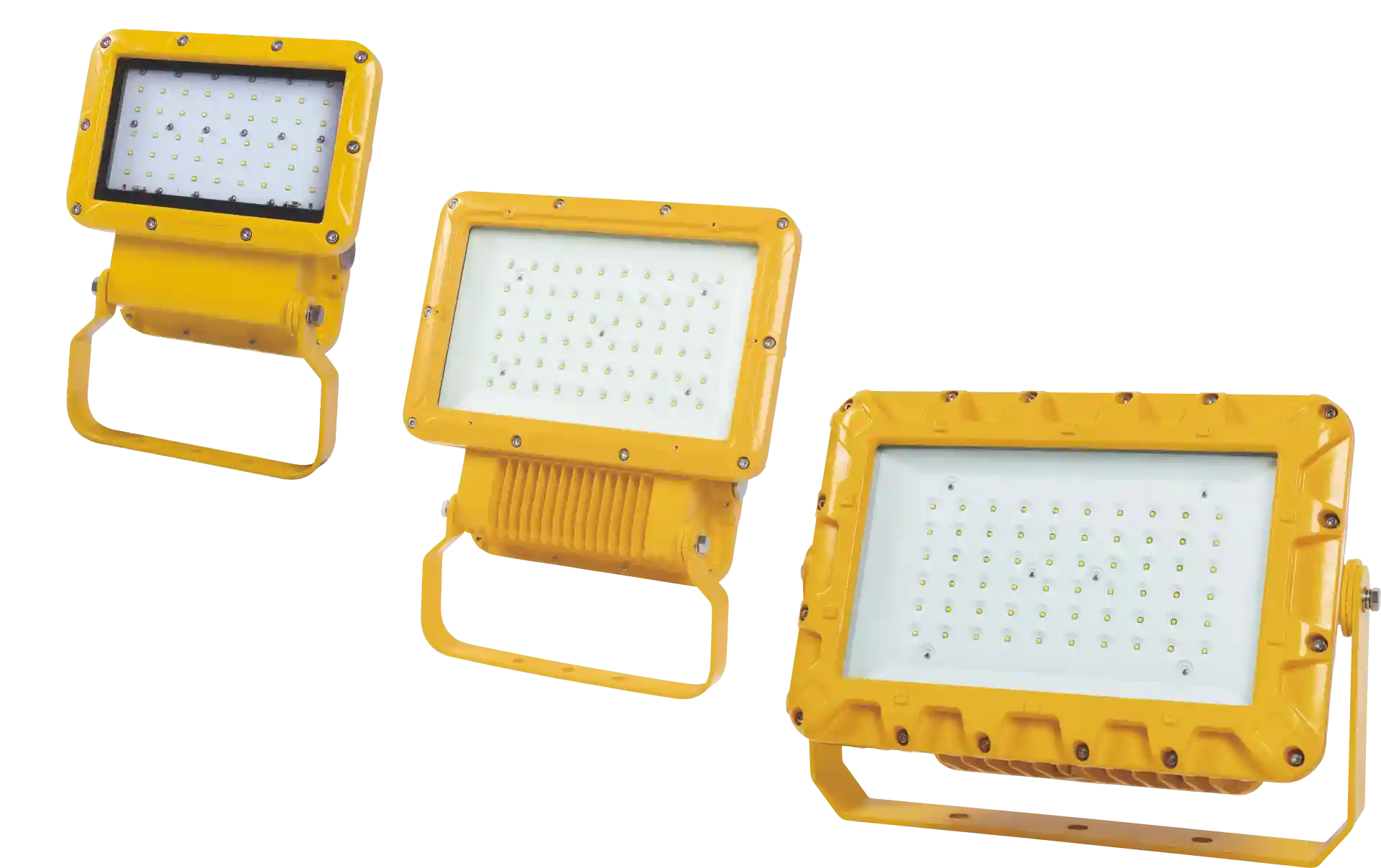
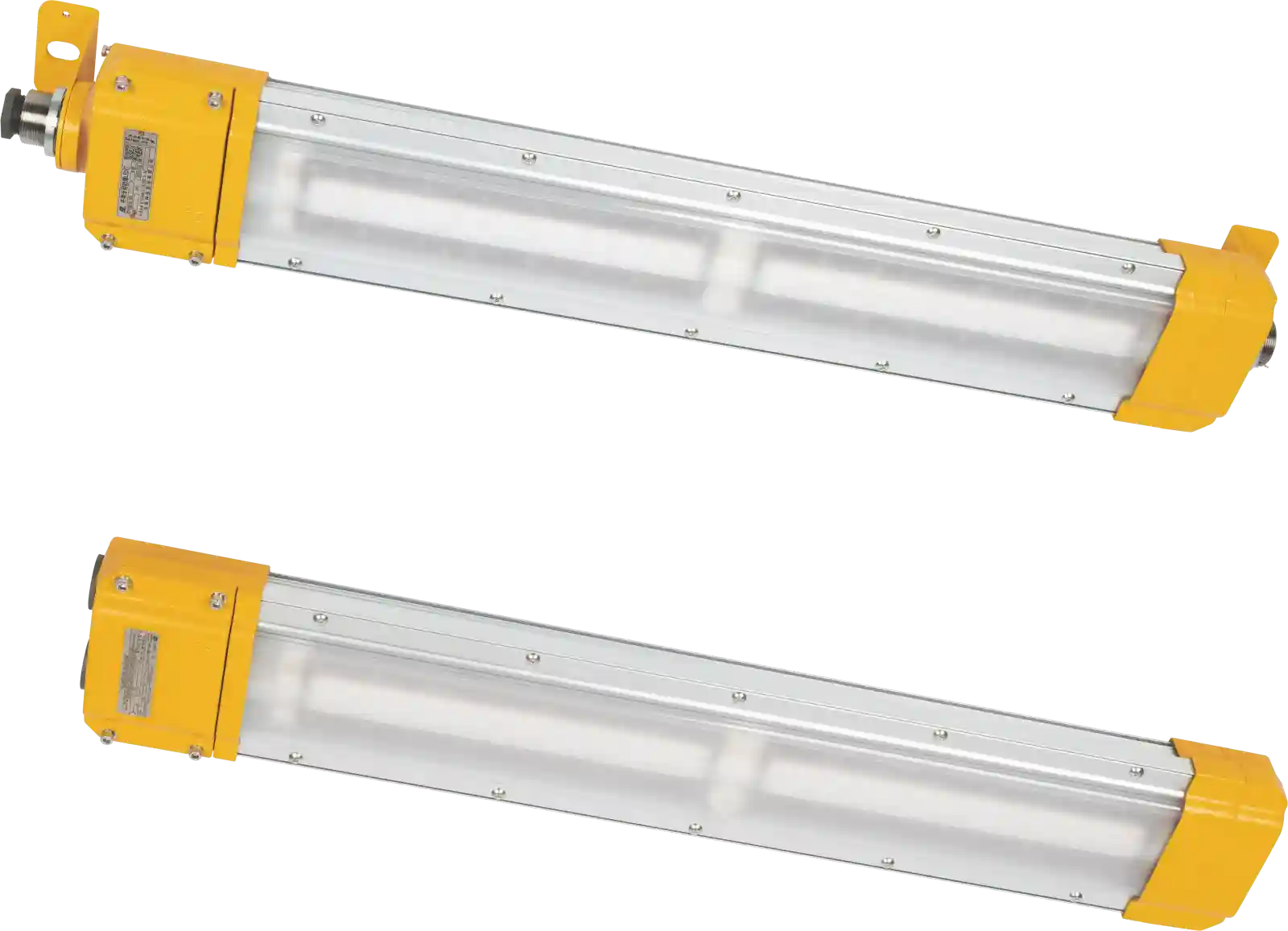
A floodlight specification shows the pattern well: an enclosure material, a lamp power, an ambient window and a corrosion classification appear as separate entries alongside the Ex statement and the IP code. They are not variations of the same claim, and each has to be satisfied on its own terms.
Where the two ratings meet on a nameplate
On a properly marked hazardous-area product the two systems appear as separate clauses on one label, for example II 2 G Ex db IIC T6 Gb, IP66. The first clause gives the ATEX equipment group and category, the second is the explosion protection statement, and the third is ingress protection. They are read independently and certified together.
The explosion protection clause
This clause carries the group, the protection type, the temperature class and the equipment protection level. It tells you where the unit may be installed and under what gas or dust conditions. It does not describe resistance to water, and it does not promise that the housing is dust tight in the IEC 60529 sense, even where the same enclosure happens to achieve both.
The ingress protection clause
This clause states the IP code assessed for that product. It tells you how the housing behaves against particles and water under the test conditions, and it holds only with the entries and seals covered by the assessment. What it does not tell you is whether the internal circuit can ignite anything.
| Dimension | IP rating | Explosion protection rating |
|---|---|---|
| Question it answers | Can the environment get into the equipment? | Can the equipment ignite the environment? |
| Governing documents | IEC 60529, plus national enclosure systems such as NEMA 250 | IEC 60079 series, ATEX 2014/34/EU, NEC Articles 500 to 506 |
| How the marking looks | IP66, IP66/IP68, IP69K | Ex db IIC T6 Gb, or Class I Division 1 Group B C D T6 |
| Who assesses it | A test laboratory, against the enclosure as submitted | A certification body, against the complete apparatus and its entries |
| What changes the result | Seals, gaskets, entries, surface condition, age | Internal components, entries, ambient range, gas or dust group |
| What it says about the other system | Nothing | Nothing |
The practical consequence is that both columns have to be satisfied at once. A pump area on an open jetty needs a valid Ex statement for the gas present, a temperature class compatible with that gas, and an IP rating that matches the weather and washdown the housing will actually face. Approving a product because one column looks strong is how unsuitable equipment reaches site.
Why a higher IP number is not an Ex approval
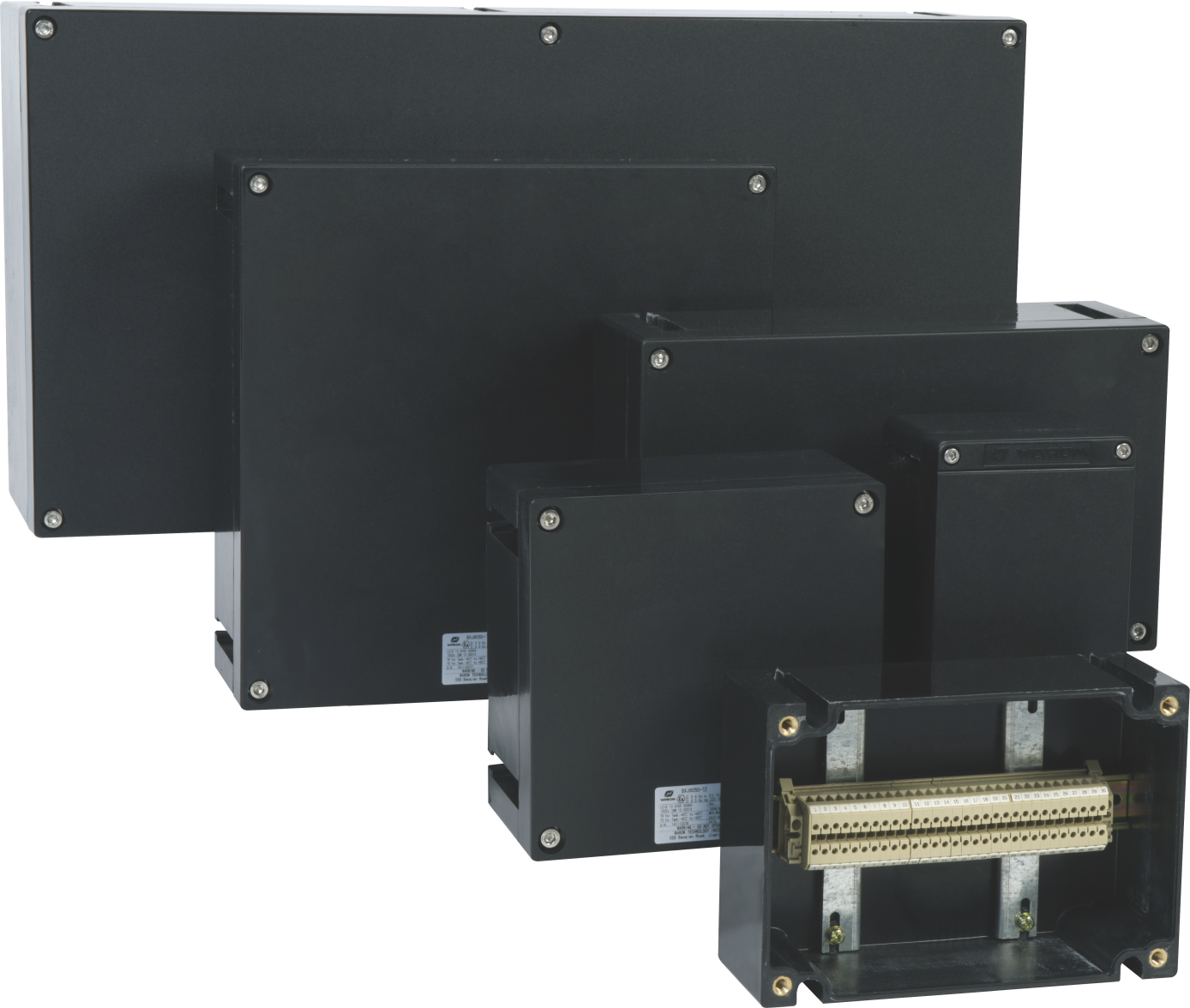
Two assumptions cause most of the trouble. The first is that a sealed enclosure is a safe enclosure: if water and dust cannot get in, the reasoning goes, nothing can get out either. Ignition protection does not work that way. A flameproof enclosure is designed to let an internal explosion happen and to control what escapes, and sealing it completely would change the pressure and temperature behaviour the certification was based on. In the other direction, an enclosure can be perfectly sealed and still run a surface hot enough to ignite the gas around it.
The second assumption is that an Ex certificate implies a weatherproof product. It does not. Ex certificates are issued with whatever IP rating was assessed, and equipment rated IP54 is legitimately installed in sheltered hazardous areas. Where the same unit also goes outdoors, the IP clause has to be checked against the site, not against the best case on the certificate.
The cable entry is where both assumptions meet, and where approvals most often come apart. The entry device is part of the certified apparatus. Fit a gland of a different type or size from the one named in the certificate and the Ex approval no longer describes the assembly, whatever the IP figure on the gland’s own label says. That seal is also where water enters after a few seasons of vibration and thermal cycling, which is why a failed ingress test on an Ex product usually traces back to the entry rather than the housing.
The entry device is named in the certificate because the gland’s own flame path and seal carry part of the approval. <Explosion Proof Cable Glands for SWA Armored Cable Safety> covers how armoured cable termination affects the safety of the whole assembly.
| Marking or claim | What it legitimately supports | What to check instead |
|---|---|---|
| IP66 on the datasheet | Dust tightness and resistance to powerful water jets | The Ex marking and certificate number for the same model variant |
| IP6X dust tight | Dust does not enter in a quantity that harms the equipment | Zone 21 or 22 suitability, which needs dust ignition protection and a surface temperature |
| IP68 | Continuous immersion under the manufacturer’s declared conditions | The declared depth and duration, and whether the entries are covered |
| Explosion proof in the catalogue | The certification the certificate actually names | Whether that scheme matches the code governing your site |
| Ex marking on an installed unit | The certification held when it was manufactured | Present seal and gland condition, and the replacement record |
Checking the certificate rather than the datasheet
A datasheet is a marketing document with technical content. The certificate is the controlled record, and the checks that matter are made against it.
Start with the scheme. An IECEx certificate supports IEC-based installations, an ATEX certificate supports the European directive [5], and a UL listing supports North American Class and Division work. Where a site is governed by one code and the offer is certified to another, the equipment is not automatically acceptable, and asking the supplier to explain the equivalence is not a formality.
Then confirm that the label matches the certificate. The certificate number, the marking string, the ambient range, the IP rating and the entry devices should agree line for line. Read the ambient range carefully, because it is often narrower than the enclosure’s own rating suggests, and a unit certified to +55 °C is not covered on an unshaded roof deck that runs hotter. Check the temperature class against the ignition temperature of the actual gas rather than a generic assumption. Confirm that the IP rating listed is the one the location demands, including immersion conditions where they apply. Keep corrosion resistance separate from both: a WF2 classification describes performance in a corrosion test, not water ingress or ignition protection.
Ambient windows are worth reading in both directions, because the low end governs seal and cable behaviour as much as the high end does. <Weatherproof Enclosures for Arctic Conditions: Design Essentials> covers enclosure design for cold-climate installations.
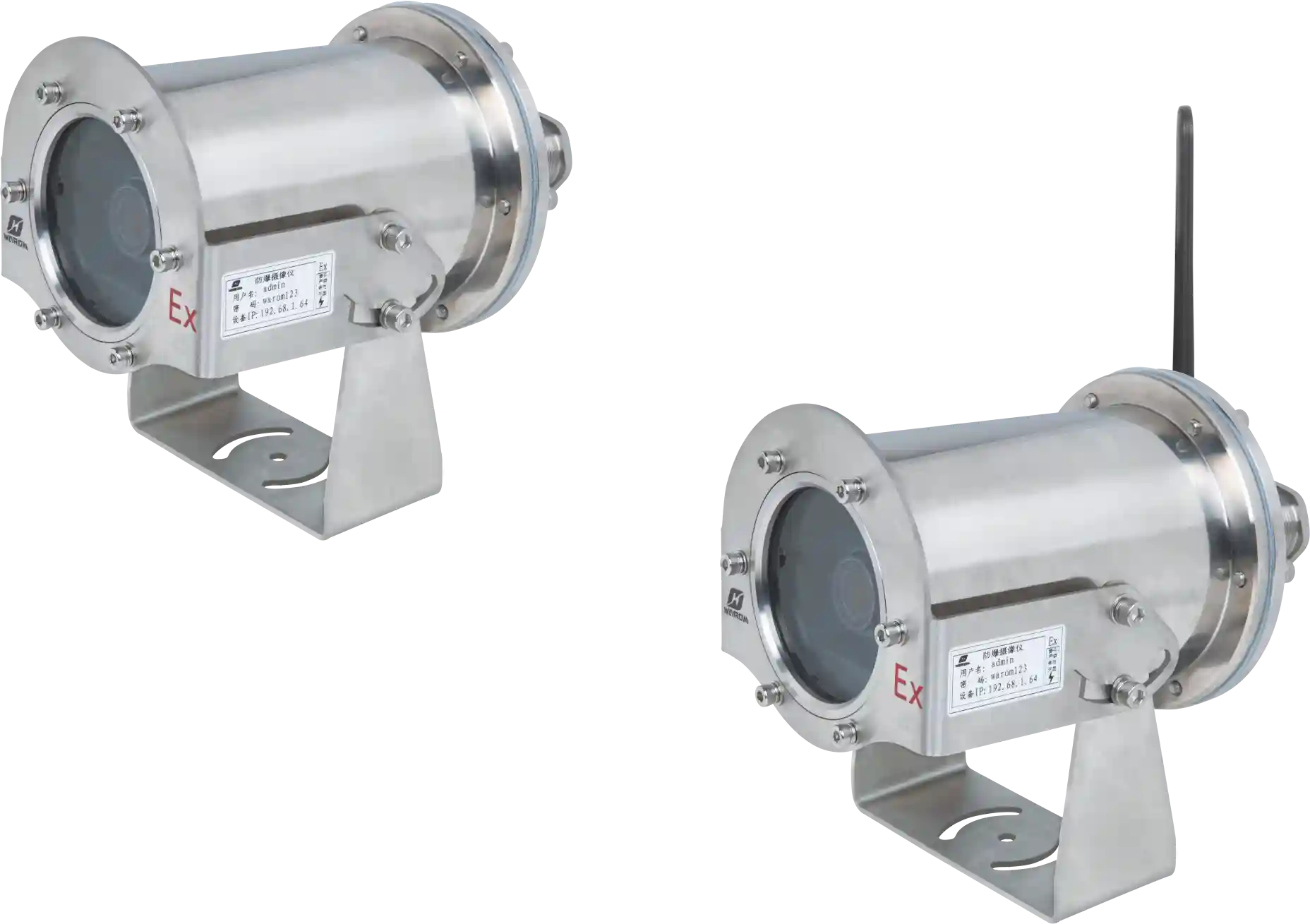
Surveillance housings show why the pairing needs checking rather than assuming. A camera may be published with both IP66 and IP68 in the same specification, which means the buyer has to ask which mounting condition each figure describes. The Ex statement covering Zone 1, 2, 21 and 22 is a third, separate entry, and none of the three substitutes for another.
What to specify in an RFQ so quotes come back comparable
Most quotes that cannot be compared come from a vague requirement rather than a weak supplier. The enquiry sets the ceiling on what can be confirmed, so fix both rating systems in writing before asking for price.
State the hazardous area first: zone, gas or dust, group, and the temperature class derived from the actual material. Then state the environment: indoor or outdoor, maximum and minimum ambient, washdown or immersion, salt exposure, and the corrosion class expected. Ask for the certificate number with the offer, together with a marked copy showing the variant being quoted. Ask which cable entry devices the certificate names and whether the supplied glands are on that list. Where immersion is involved, ask for the declared depth and duration behind the IPX8 claim rather than accepting the code alone. Where the site code and the certification scheme differ, ask the supplier to state plainly which approvals the offered model holds and which it does not.
At the factory acceptance stage the checks are physical: the label against the certificate, each entry device against the named list, gasket and seal condition, fastener tightness, and marking legibility. That is the last point where a mismatch is cheap to correct.
Send the Area Classification With the Enquiry
Send the enquiry with the area classification, the gas or dust group, the temperature class, the ambient range, the IP rating the location demands, the cable type and entry size, and the certification scheme your site accepts. With those items a supplier can confirm which models are covered by an existing certificate rather than which ones look close on a datasheet.
Warom Technology Incorporated Company
Email: gm*@***om.com
Tel: +86 21 39977076 / +86 21 39972657
FAQ
Is IP66 the same as explosion proof?
No. IP66 is an ingress protection rating from IEC 60529 describing dust tightness and resistance to powerful water jets. Explosion protection describes how the apparatus is prevented from igniting the surrounding atmosphere, and it is certified under IEC 60079 or the National Electrical Code. A product can hold IP66 with no explosion protection at all. In a hazardous area both statements have to appear on the same certification for the same model, and neither one can be inferred from the other.
Can a higher IP rating replace an Ex rating in Zone 2?
No. Zone 2 reduces the likelihood of a flammable atmosphere being present, but it does not remove the requirement for suitable Ex equipment with the correct group and temperature class. A higher IP number changes environmental performance and says nothing about ignition risk. What Zone 2 usually changes is the permitted equipment protection level, for example Gc rather than Gb, and that decision is made from the certification, not from the IP code.
If an enclosure is IP6X dust tight, can it be used in Zone 21?
Not on that basis alone. IP6X confirms that dust does not enter in a quantity that would harm the equipment inside. Zone 21 concerns combustible dust outside the enclosure and requires dust ignition protection, normally Ex tb marking with a stated maximum surface temperature. Many dust-protected products are also IP6X, but the dust-tight figure supports the approval rather than replacing it.
Does an IP68 rating include the cable entries?
Only the entries fitted for the test. An enclosure rating applies to the assembly as assessed, and a gland, blanking plug or conduit entry that differs from the tested configuration leaves the immersion claim unsupported. Ask which entry devices the certificate names, then check the delivered unit against that list before installation.
References
[1] IEC 60529, “Degrees of protection provided by enclosures (IP Code),” International Electrotechnical Commission, 1989.
[2] IEC 60079-0, “Explosive atmospheres – Part 0: Equipment – General requirements,” International Electrotechnical Commission, 2017.
[3] IEC 60079-1, “Explosive atmospheres – Part 1: Equipment protection by flameproof enclosures ‘d’,” International Electrotechnical Commission, 2014.
[4] IEC 60079-31, “Explosive atmospheres – Part 31: Equipment dust ignition protection by enclosure ‘t’,” International Electrotechnical Commission, 2013.
[5] Directive 2014/34/EU of the European Parliament and of the Council of 26 February 2014 on the harmonisation of the laws of the Member States relating to equipment and protective systems intended for use in potentially explosive atmospheres, Official Journal of the European Union, 2014.
If you’re interested, check out these related articles:
Shanghai Emergency Management Bureau expert bank electrical explosion-proof safety professional group learning seminar was held in Warom.
WAROM Shines at CSSOPE 2025
The “Canton Fair” blooming “WAROM” style
Warom Technology “International IECEx explosion-proof technology Thailand special symposium” was successfully held
With over a decade of experience, he is a seasoned Explosion-Proof Electrical Engineer specializing in the design and manufacture of safety and explosion-proof products. He possesses in-depth expertise across key areas including explosion-proof systems, nuclear power lighting, marine safety, fire protection, and intelligent control systems. At Warom Technology Incorporated Company, he holds dual leadership roles as Deputy Chief Engineer for International Business and Head of the International R&D Department, where he oversees R&D initiatives and ensures the precise delivery of design documentation for international projects. Committed to advancing global industrial safety, he focuses on translating complex technologies into practical solutions, helping clients implement safer, smarter, and more reliable control systems worldwide.
Qi Lingyi