

Specifying explosion proof air conditioners for LNG carrier accommodation is a decision that affects crew safety, classification society compliance, and operational reliability for the vessel’s entire service life. These units must maintain cooling in tropical sea lanes, resist saltwater corrosion, and prevent any internal ignition source from reaching the external atmosphere, all while earning approval from the classification society that certifies the vessel. In more than thirty years of engineering explosion proof systems for marine and industrial projects, I have watched too many project teams treat accommodation HVAC as a late stage procurement item, only to face rework when the selected unit fails certification review. Getting the specification right at the front end avoids those delays.
Hazardous Area Requirements for Explosion Proof Air Conditioners on LNG Carriers
An LNG carrier is not a uniformly hazardous vessel. The cargo containment system, gas compressor rooms, vent mast areas, and bunkering stations carry Zone 1 or Zone 2 classifications under the IGC Code, but accommodation blocks are typically located aft and designed to sit outside classified zones. The complication is proximity. When accommodation air intakes are positioned within three meters of a Zone 1 or Zone 2 boundary, or when the accommodation structure itself adjoins a hazardous area, the HVAC equipment serving those spaces inherits the area classification.
For LNG carriers handling methane as the primary cargo, the gas group is IIA and the autoignition temperature of approximately 595°C places it well within Temperature Class T1. In practice, most explosion proof air conditioners supplied for these vessels carry a T4 or T5 temperature class because the same equipment gets deployed across multiple gas carrier projects with different cargoes and the incremental cost of building to a tighter temperature limit is small. I recommend specifying T4 minimum regardless of the theoretical T1 adequacy. It preserves flexibility if the vessel later carries cargoes with lower autoignition temperatures, such as LPG or ammonia.
The explosion protection method matters. For accommodation air conditioners on LNG carriers, Ex d flameproof enclosures remain the dominant approach for compressors and condenser sections. The flameproof design contains any internal explosion within the housing and cools the escaping gases below the ignition temperature of the surrounding atmosphere through controlled flame paths. Increased safety Ex e designs appear in terminal boxes and connection chambers, but the main refrigeration circuit components are almost always Ex d. A packaged unit that combines Ex d and Ex e sections within a single certified assembly is what most classification societies expect to see.
The electrical supply feeding these air conditioners runs through the same hazardous area cable routing as other essential services. Explosion proof cable glands with proper flamepath certification must terminate at each unit’s entry points. We have encountered projects where the air conditioner itself was correctly specified but the cable glands were sourced separately from a non marine supplier with no classification society type approval. The gland failure became the unit failure during inspection. Every component in the electrical supply chain to an explosion proof air conditioner on an LNG carrier needs its own certification trail.
Classification Society Certification for Explosion Proof Marine HVAC
An ATEX or IECEx certificate alone does not clear an explosion proof air conditioner for installation on an LNG carrier. Classification societies, including CCS, BV, DNV, ABS, and Lloyd’s Register, each maintain their own type approval processes that overlay the product’s existing hazardous area certification with additional marine specific requirements. The society wants to see vibration testing, inclination testing, salt spray corrosion data, and sometimes fire resistance documentation for electrical enclosures.
The sequence matters. A manufacturer that obtains classification society type approval after completing ATEX/IECEx certification will typically need six to twelve months, depending on the society’s review queue and whether the product requires physical witness testing. Starting the marine type approval process concurrently with ATEX testing shortens that timeline. I have seen projects where the air conditioner was selected based on an IECEx certificate alone, with the assumption that classification society endorsement would follow as a formality. When the society requested additional salt spray test data that the manufacturer had not prepared, the resulting delay pushed the equipment delivery past the vessel’s commissioning window.
The documentation package a buyer should request before purchase includes the ATEX EU Type Examination Certificate or IECEx Certificate of Conformity, the classification society type approval certificate, the manufacturer’s Declaration of Conformity, material certificates for the enclosure and critical internal components, and a certified dimensional drawing showing flamepath dimensions and cable entry locations. Do not accept a test report summary in place of the full certificate. Classification society surveyors will check the complete document trail during the vessel’s initial survey, and any gap at that stage means either rework or a condition of class, neither of which a project team wants to explain to the shipowner.
Cooling Capacity Calculations for LNG Carrier Accommodation
Sizing an explosion proof air conditioner for accommodation begins with the same cooling load calculation used for any marine HVAC system: crew occupancy, electrical equipment heat gain, solar radiation through windows and bulkheads, and ventilation air enthalpy. The difference is that explosion proof construction reduces heat rejection efficiency. A flameproof enclosure around the condenser coil restricts airflow more than a standard weatherproof housing, and the additional thermal mass of the thicker enclosure walls changes the heat transfer dynamics.
A unit that delivers 18,000 BTU per hour in a standard industrial enclosure may lose 8 to 12 percent of that capacity once the same compressor and coil set are installed inside an Ex d housing with flamepath baffles. The correction factor varies by manufacturer and enclosure design, so a capacity claim printed in a catalog without reference to the specific explosion proof configuration is not reliable. Request a certified performance curve that shows cooling output at the rated ambient temperature with the flameproof enclosure in place.
Ambient temperature assumptions need careful attention for LNG carriers trading to the Middle East, Southeast Asia, or northern Australia. Deck level ambient temperatures regularly exceed 45°C during summer loading operations, and the air conditioner’s condenser must reject heat into that environment. Specifying a unit rated at 35°C ambient when the vessel will spend months each year at 45°C and above produces an accommodation block that cannot hold target temperatures during the hottest part of the day. The crew will notice, and so will the charterer’s inspectors reviewing habitability conditions during a vetting inspection.
| Cooling Capacity Range | Suitable Accommodation Area | Typical Ex d Derating Factor | Recommended Ambient Rating |
|---|---|---|---|
| 12,000 to 18,000 BTU/h | Single officer cabin, small office | 0.88 to 0.92 | 45°C minimum |
| 24,000 to 36,000 BTU/h | Mess room, recreation room | 0.85 to 0.90 | 45°C minimum |
| 48,000 to 60,000 BTU/h | Multiple cabin zone, corridor loop | 0.83 to 0.88 | 50°C for tropical routes |
| 72,000 BTU/h and above | Central accommodation block | 0.80 to 0.86 | 50°C for tropical routes |
If the vessel’s intended service includes regular port calls in regions where ambient temperatures exceed 48°C, it is worth confirming the maximum operating ambient with the air conditioner manufacturer before finalizing the specification. Reach out at gm*@***om.com with your vessel’s route profile and accommodation general arrangement. We can run the derating calculations against actual tested performance data rather than generic catalog numbers.
Enclosure Material Selection for Explosion Proof Marine Air Conditioners
The enclosure material decision for an explosion proof air conditioner on an LNG carrier is a corrosion problem first and an explosion protection problem second. The flameproof enclosure’s mechanical strength, flamepath gap tolerances, and fastener integrity are all defined by the certified design. If corrosion compromises any of these features, the explosion protection fails regardless of how well the unit performs thermally.
316L stainless steel is the reference material for open deck installations and any location subject to direct salt spray or wave green water. It provides pitting resistance in chloride environments far beyond what coated aluminum delivers, and it does not rely on a surface treatment that can be scratched or abraded during installation and maintenance. The weight penalty is real, a 316L enclosure can add 40 to 60 percent to the unit’s mass compared to an aluminum equivalent, but on an LNG carrier the accommodation HVAC units are not being lifted repeatedly and the weight difference rarely affects the vessel’s trim or stability in any measurable way.
Copper free aluminum alloy with a marine grade powder coating remains a practical choice for units installed inside the accommodation block or in protected alcoves where direct salt spray exposure is limited. The aluminum alloy specified for explosion proof enclosures typically contains less than 0.4 percent copper to avoid galvanic corrosion when in contact with dissimilar metals in the presence of salt moisture. The powder coating should be tested to at least 1,000 hours of salt spray per ASTM B117 with no blistering or under film corrosion. At WAROM, our standard enclosure coating for marine explosion proof products is tested beyond 2,000 hours because we have seen what happens to insufficiently coated enclosures after two years in the Arabian Gulf.
GRP enclosures appear occasionally for air conditioner terminal boxes and connection chambers, particularly in projects where weight reduction and chemical resistance are both priorities. GRP cannot carry a flameproof rating for the main compressor or condenser enclosure because the material lacks the mechanical strength to withstand an internal explosion pressure test. Its role is limited to Ex e increased safety chambers where no internal ignition source is present.
Fastener material deserves its own line in the specification. All external fasteners on an explosion proof marine air conditioner must be 316 stainless steel, including the washers. We have serviced units on gas carriers where the enclosure body was correctly specified in 316L but the mounting bracket bolts were standard zinc plated steel. After eighteen months the bracket fasteners had corroded to the point where removing the unit for maintenance required cutting the bolts. The specification that catches this is simple: “All external fasteners, including mounting hardware, shall be A4-316 stainless steel.”
Supplier Qualification and Lead Time Management for LNG Carrier Projects
An explosion proof air conditioner for an LNG carrier is a project item, not a catalog selection. The unit must be built to the specific cooling capacity, enclosure material, and certification package that matches the vessel’s classification society and operating profile. Selecting a supplier means qualifying their engineering capability and their certification management process, not just their product range.
The factory audit is the most reliable qualification tool. Visit the manufacturer’s production floor and look for: in house CNC machining of flamepath surfaces with calibrated measurement records, a salt spray test chamber that is actively running samples with logged results, a pressure test station for enclosure integrity verification, and a document control system that links each unit’s serial number to its material certificates, test reports, and certification files. A manufacturer that subcontracts flamepath machining to an external shop without maintaining traceability on the machined dimensions is a risk for an LNG carrier project where the classification society surveyor will want to see the flamepath gap measurement records for each unit.
Typical lead times for a custom explosion proof marine air conditioner range from twenty to thirty weeks, depending on the cooling capacity and certification package complexity. The largest driver of lead time variance is the need for classification society witness testing. If the air conditioner model has not previously been type approved by the specific classification society named in the vessel’s specification, the manufacturer must schedule witness tests at the society’s convenience, and this alone can add eight to ten weeks to the delivery schedule. Always ask the supplier whether the proposed model already holds type approval from the relevant classification society before accepting a quoted lead time.
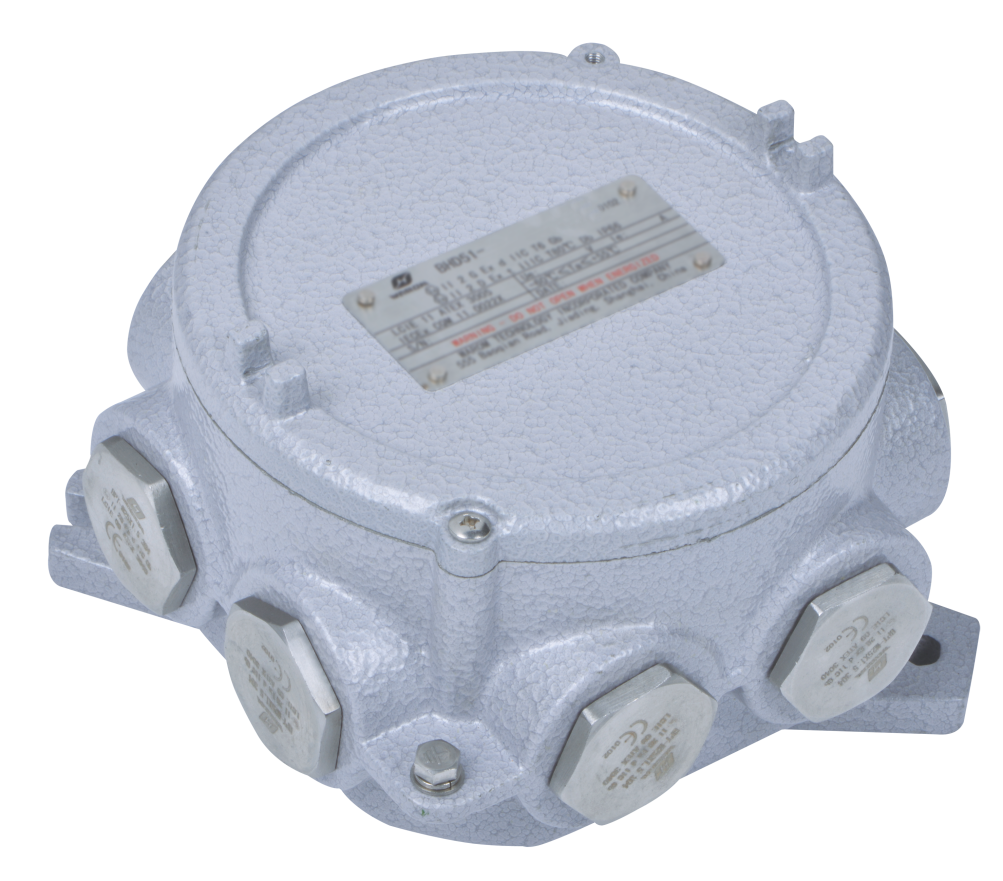
Requesting the complete certification package at the quotation stage, rather than at the purchase order stage, reveals which suppliers understand marine project delivery and which see the certification as an afterthought. A supplier that cannot produce a sample type approval certificate and a list of LNG carrier or gas carrier project references within a few days of the request is probably not structured to support a newbuild vessel project. At WAROM, we maintain a documentation library that allows us to respond to such requests within forty eight hours because we know procurement teams need to close their technical bid evaluations on schedule.
Installation, Commissioning, and Classification Society Inspections
Installing an explosion proof air conditioner on an LNG carrier is not the same as bolting a standard marine AC unit to a deck pad. Every cable entry, every gland termination, and every earthing connection is part of the explosion protection system and will be inspected accordingly.
Cable glands must match the entry thread type specified on the unit’s certified drawing. Metric M25 and M20 entries are standard on IEC equipment, but projects with a US or Middle Eastern specification heritage sometimes require NPT threads. The two are not interchangeable, and fitting an NPT gland into a metric entry, or vice versa, creates a non compliant flamepath that will be rejected during inspection. Confirm the thread standard at the quotation stage and specify it explicitly in the purchase order.
Each air conditioner requires a dedicated earthing conductor connected to both the internal and external earthing terminals. The external earth connection point on a marine explosion proof enclosure must be a stainless steel stud or bolt with a lock washer, and the connection must remain accessible for inspection without opening the flameproof enclosure. Surveyors will check earth continuity from the unit back to the vessel’s main earthing system, and they will look for paint or corrosion between the earth tag and the enclosure body.
Commissioning tests for explosion proof air conditioners on LNG carriers include insulation resistance measurement of the compressor and fan motor windings, earth continuity verification, functional testing of the gas detection interlock if the unit is connected to the vessel’s gas detection system, and a full load cooling performance run with the accommodation ventilation system operating at design conditions. The classification society surveyor will typically witness the insulation resistance and earth continuity tests and will review the remaining test results as part of the submitted documentation package.
One recurring issue I have encountered on gas carrier commissioning projects is inadequate access clearance around the air conditioner for flamepath inspection. The surveyor needs to open the flameproof enclosure, examine the flamepath surfaces for damage or corrosion, and measure the flamepath gaps with feeler gauges. If the unit is installed in a tight corner against a bulkhead with insufficient clearance to swing the enclosure door open fully, the inspection cannot be completed. A minimum clearance of 600 millimeters on all sides that require access is a practical rule that goes beyond what most installation drawings specify.
Making the Final Specification Decision
Choosing an explosion proof air conditioner for an LNG carrier means committing to a piece of equipment that must perform three distinct jobs without compromise: it must cool the accommodation reliably in some of the hottest sea lanes on the planet, it must contain any internal electrical fault within a certified flameproof enclosure for the vessel’s entire service life, and it must carry the paperwork that convinces a classification society surveyor that both of the first two jobs are being done correctly.
The specification decisions that matter most are the ones made earliest. Selecting the temperature class, the enclosure material, and the certification package before the purchase order goes out determines whether commissioning runs on schedule or stalls while missing documentation is chased across time zones. If your project’s timeline leaves no room for certification surprises, share your specification requirements and classification society details with us at gm*@***om.com or call +86 21 39977076. We will confirm which of our explosion proof marine products already hold the type approvals your project needs and provide a lead time that accounts for any additional witness testing. A specification review at the front end costs nothing. Replacing non compliant equipment at the commissioning stage costs both time and a reputation with the shipowner that is difficult to repair.
Common Questions About Explosion Proof HVAC for LNG Carriers
What is the difference between Zone 1 and Zone 2 explosion proof air conditioners?
Zone 1 equipment is designed for areas where an explosive gas atmosphere is likely to occur in normal operation, and it carries a higher protection level, typically Ex d or Ex e with additional safeguards. Zone 2 equipment is designed for areas where an explosive atmosphere is not likely to occur in normal operation and, if it does occur, will persist for only a short period. For LNG carrier accommodation, most units near the accommodation block perimeter are specified for Zone 2 because the accommodation itself is located outside the primary hazardous zones. If the air conditioner serves a space that directly adjoins a Zone 1 area, such as a gas compressor room boundary, Zone 1 certification is required. The enclosures look similar, but the Zone 1 unit has tighter flamepath tolerances and more extensive type testing. Installing a Zone 2 unit where Zone 1 is required will fail classification society inspection.
How long does classification society approval take for a new explosion proof air conditioner model?
For a manufacturer that already holds ATEX and IECEx certification for the base product, obtaining additional classification society type approval from CCS, BV, or DNV typically takes six to twelve months. The timeline depends on whether the society requires physical witness testing of the explosion protection features, which most do on a first time model review. If the air conditioner model has already been type approved by one classification society and the project requires approval from a different society, the second approval is usually faster, often four to six months, because the test data package is already compiled and only the review process needs to repeat. Projects operating on tight shipyard schedules should select equipment models that already hold type approval from the relevant classification society rather than assuming a new approval can be obtained within the procurement window.
Can a standard marine air conditioner be converted for use in LNG carrier hazardous areas?
No. Conversion of a standard marine air conditioner to explosion proof construction is not accepted by any classification society. The explosion proof certification is tied to the complete assembly as designed and tested, including the enclosure, the compressor, the condenser coil arrangement, the terminal box, the cable entries, and the earthing scheme. Modifying a standard unit with aftermarket flameproof components creates an uncertified assembly that will be rejected during the classification society survey. The only path to compliance is purchasing a unit that has been designed, manufactured, and certified as a complete explosion proof assembly from the start.
What maintenance do explosion proof air conditioners need during LNG carrier operations?
The maintenance schedule for an explosion proof marine air conditioner includes the same refrigeration circuit checks as any marine HVAC unit, refrigerant charge verification, coil cleaning, filter replacement, and compressor oil analysis, plus three explosion protection specific tasks. First, flamepath gap inspection: the gaps between the enclosure body and cover must be measured with calibrated feeler gauges and compared against the certified drawing tolerances at each maintenance interval. Second, fastener integrity: all flamepath cover bolts must be checked for correct torque and for any sign of corrosion or thread damage. Third, cable gland inspection: the gland body, seal, and armour clamping arrangement must be examined for corrosion, cracking, or loosening. Any flamepath surface that shows pitting, mechanical damage, or corrosion beyond the limits specified in the maintenance manual requires enclosure replacement, not repair. If your maintenance team does not have access to the manufacturer’s flamepath dimension data, request it now rather than waiting for the next dry dock. Share your unit serial numbers with us at gm*@***om.com and we will provide the as built flamepath records and recommended inspection limits for your specific equipment.
If you’re interested, check out these related articles:
WAROM Explosion-proof 2023 Summer Marketing Conference a Complete Success
Explosion-Proof SCADA Systems for Petrochemical Safety
With over a decade of experience, he is a seasoned Explosion-Proof Electrical Engineer specializing in the design and manufacture of safety and explosion-proof products. He possesses in-depth expertise across key areas including explosion-proof systems, nuclear power lighting, marine safety, fire protection, and intelligent control systems. At Warom Technology Incorporated Company, he holds dual leadership roles as Deputy Chief Engineer for International Business and Head of the International R&D Department, where he oversees R&D initiatives and ensures the precise delivery of design documentation for international projects. Committed to advancing global industrial safety, he focuses on translating complex technologies into practical solutions, helping clients implement safer, smarter, and more reliable control systems worldwide.

Qi Lingyi