
Explosion proof air conditioners for control panel cooling remove heat from sealed panels in areas where a flammable gas, vapor, or dust cloud may be present. The selection is not a catalog capacity check; it starts with the hazardous-area classification, the required internal air condition, and the actual heat rejected by the panel components. An air conditioner that cannot hold the panel below its certified operating temperature creates a second risk: drives, controls, and protective devices may age faster or fail in a way that shuts down the process.
The more reliable sequence is to establish the panel’s internal temperature requirement, calculate the heat load and ambient conditions, then match the cooling method, temperature class, and certificate to the installation. The guide below follows that order and gives you the checks to use when reviewing a quotation or specification.
What an Explosion Proof Air Conditioner Must Do
An explosion proof air conditioner is not simply a standard panel AC with a stronger cabinet. The complete unit, including the compressor, fan motors, controls, terminals, cable entries, and exposed surfaces, must be certified for the area in which it operates. General equipment requirements are set out in IEC 60079-0 [1], but the actual protection method can vary.
Cooling performance has to be managed without compromising the enclosure’s certified protection. The unit must maintain the supply air temperature needed by the installed electronics, remove heat generated inside the panel and heat entering through the walls, handle condensate, and remain within the temperature class for the gas or dust group. When those requirements conflict, the installation may need a larger unit or a different protection method rather than a simple capacity adjustment.
A supplier’s claim that the unit is explosion proof is not enough. The certificate and marking must state the protection concept, gas group, temperature class, ambient temperature range, and any conditions of use.
Calculating the Enclosure Cooling Load
Start with the heat load, because cooling capacity is referenced to a defined internal and ambient condition. The main inputs are the panel’s active heat sources, the enclosure surface area, the maximum ambient temperature, solar exposure, and the target internal air temperature.
| Cooling input | What to record | Why it matters |
|---|---|---|
| Continuously loaded drives | Rated output, load factor, and switching frequency | Drive losses become panel heat and can dominate the load. |
| Control transformers and power supplies | Input/output ratings, efficiency, or stated losses | The heat from each unit is smaller, but multiple units add materially. |
| Other heat sources | Contactors, relays, reactors, resistors, and braking modules | Surfaces can create local hot zones even when average panel temperature appears acceptable. |
| Ambient and solar | Maximum ambient temperature, sun exposure, panel surface area, and wall construction | The enclosure gains more heat on a roof or sun-facing wall than inside a shaded building. |
| Sealing and air exchange | Door gaskets, cable entries, drains, and ventilation status | A sealed panel retains heat; an unsealed opening can create pressure and contamination problems. |
| Target internal environment | Required maximum internal air temperature and humidity limits | Component ratings set the ceiling, and overcooling can cause condensation. |
Use the cooling input rather than a rough enclosure volume. A panel with a large drive may generate far more heat than a relay panel of the same dimensions. When in doubt, ask the panel builder for the component heat loss schedule.
Matching Zone, Division and Protection Method
The hazardous-area classification answers where the panel sits and how often a flammable atmosphere can be present. A Zone 1 or Division 1 area requires a protection method that can remain safe with a flammable atmosphere present during normal operation. Zone 2 or Division 2 permits methods designed for abnormal conditions.
For the cooling unit itself, the certificate may be based on flameproof Ex d, increased-safety Ex e, pressurized Ex p, or a combination of methods. Ex d contains an internal ignition and allows hot gases to cool below the ignition temperature. Ex e prevents arcs, sparks, and hot spots under normal conditions [2]. Ex p fills or purges the protected space with protective gas and interlocks the purge before power is applied [3].
The maximum surface temperature limits are set out in IEC 60079-0 [1].
| Temperature class | Maximum surface temperature | Check for panel cooling |
|---|---|---|
| T1 | 450 °C | Usually not limiting for ordinary cooling packages. |
| T2 | 300 °C | Still usually not limiting, but confirm compressor surfaces. |
| T3 | 200 °C | Review compressor shell, pipe work, and motor surfaces. |
| T4 | 135 °C | Check hot gas line, condenser, and compressor metal temperatures. |
| T5 | 100 °C | Requires close confirmation of all exposed surfaces. |
| T6 | 85 °C | Most restrictive; even warm surfaces near the panel must be evaluated. |
Do not infer that a T4 rating means the panel can operate at a 135 °C internal air temperature. The internal temperature must remain below the actual component and circuit limits.
Gas group and dust group must also match. A unit certified only for IIB or IIA should not be substituted into a hydrogen or acetylene IIC area on the assumption that a lower temperature class makes it acceptable. The certificate should state all conditions of use.
Power, Alarms, and Panel Integration
The cooling package must be read into the panel’s electrical design. Confirm the supply voltage, frequency, phase, overload protection, and starting current. The upstream circuit should be coordinated so that the air conditioner does not take down the panel supply during a locked-rotor start or overload condition. Alarm wiring is also part of the safety system: high internal temperature, compressor trip, fan failure, and low or high pressure should at least be annunciated locally and where the control room can respond.
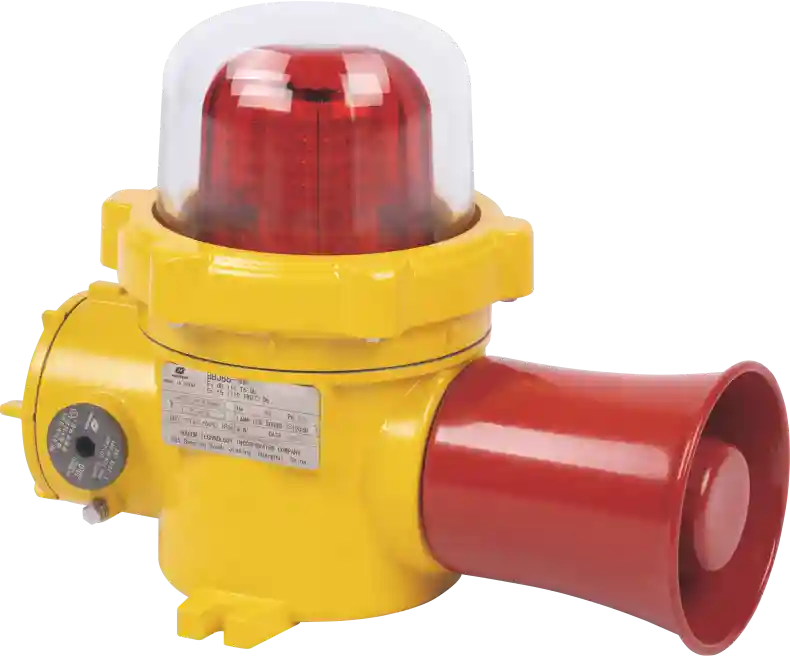
Where operators need to see a cooling-system alarm without opening the panel, an explosion proof audio and visual caution device can be grouped with the panel’s status indications.
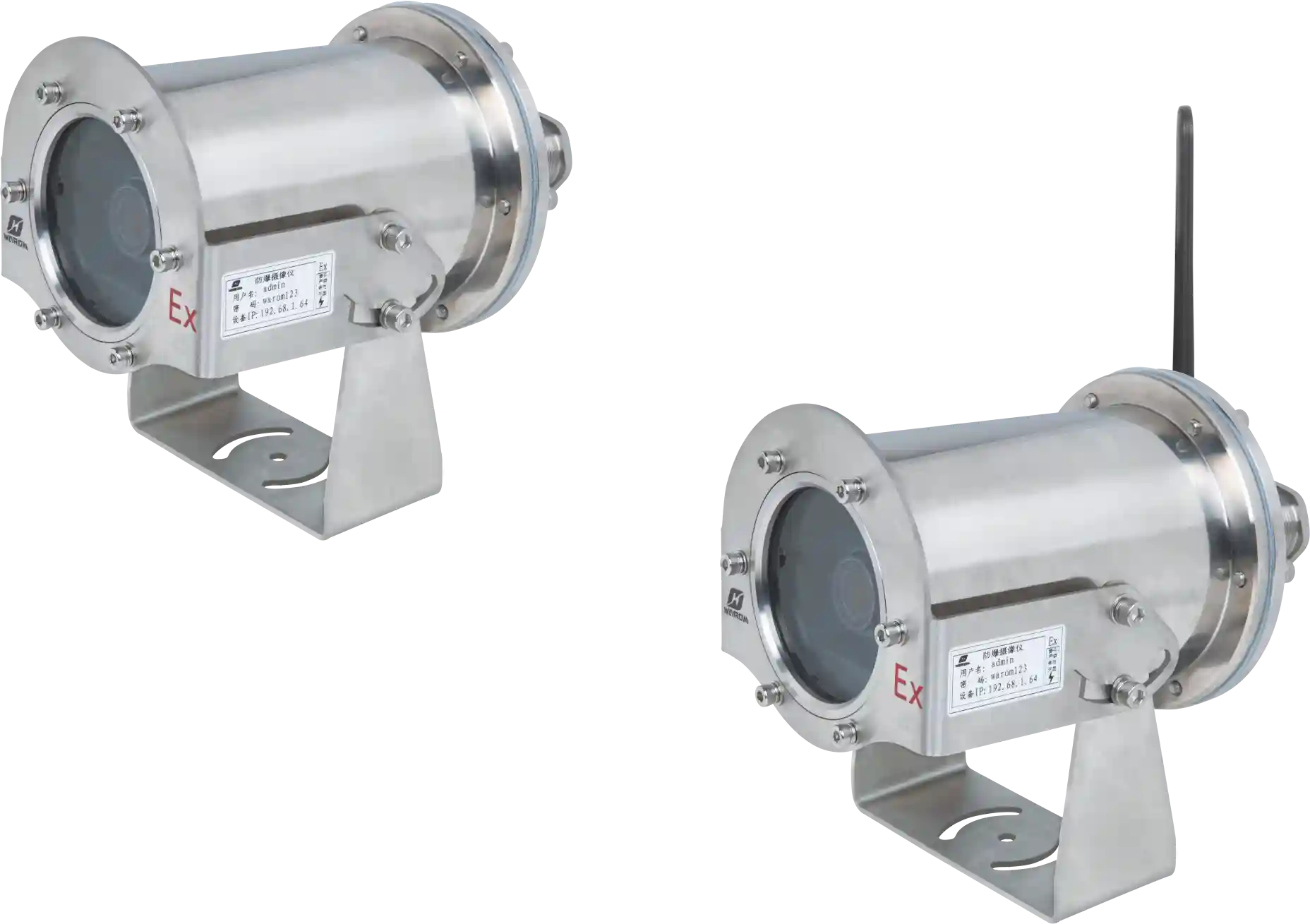
Remote monitoring can be useful for unmanned stations. An explosion proof camera or the plant’s existing monitoring system can observe the panel front, alarm lamps, and any visible ice or water, but it does not replace the dry contacts and alarm inputs.
For a pressurized panel or shelter installation, the air conditioner must be coordinated with the purge controller. The cooling circuit should not defeat the purge cycle, and pressure-loss or door interlocks must remain functional. The same applies to Ex p cooling units; verify the purge sequence, minimum overpressure, and alarm action with the manufacturer.
A dedicated supply and properly selected protection make the air conditioner a stable part of the panel system rather than an afterthought. <Expert Guide: Selecting Temporary Power Distribution Boxes> covers the distribution-side selection factors that also apply to permanent cooling circuits.
Installation, Sealing, and Cable Entry
Most field failures come from the installation boundaries, not the cooling circuit. Cable glands must be certified for the same protection method, matched to the cable outer diameter and armour type, and fitted with the correct sealing washer or compound. Installation, inspection, and maintenance requirements should follow IEC 60079-14 [4], including earthing and equipotential bonding.
Every field modification should be checked against the certificate. Drilling a new cable entry, replacing a gland with a different brand, or changing the wiring box can invalidate the certified assembly unless the modification is covered by the certificate or approved by the manufacturer.
Terminal enclosures should be treated as part of the same cooled system, with labeled connections and no loose copper strands.
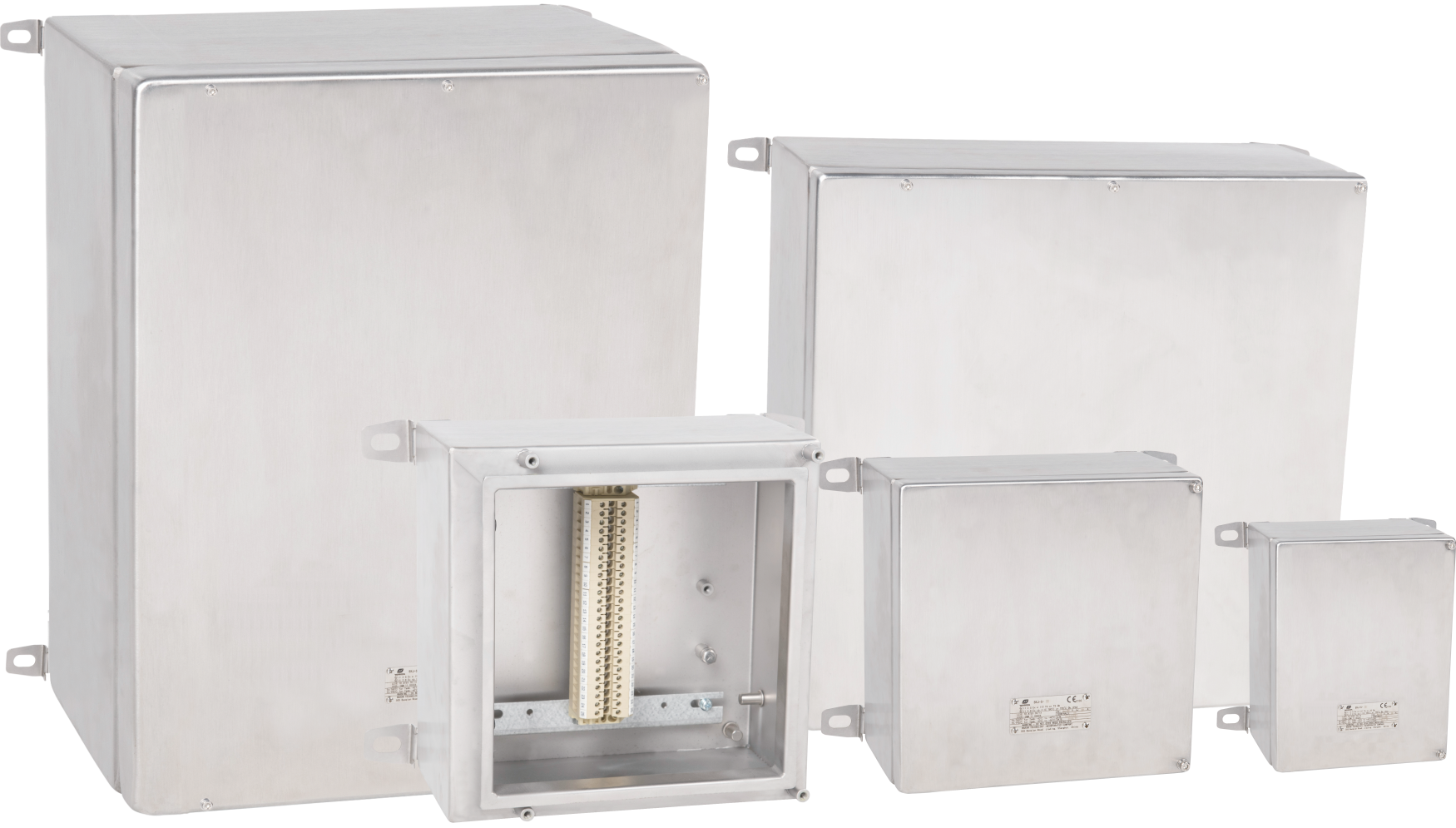
Junction boxes and terminal boxes must also maintain the appropriate IP rating and fastening torque.
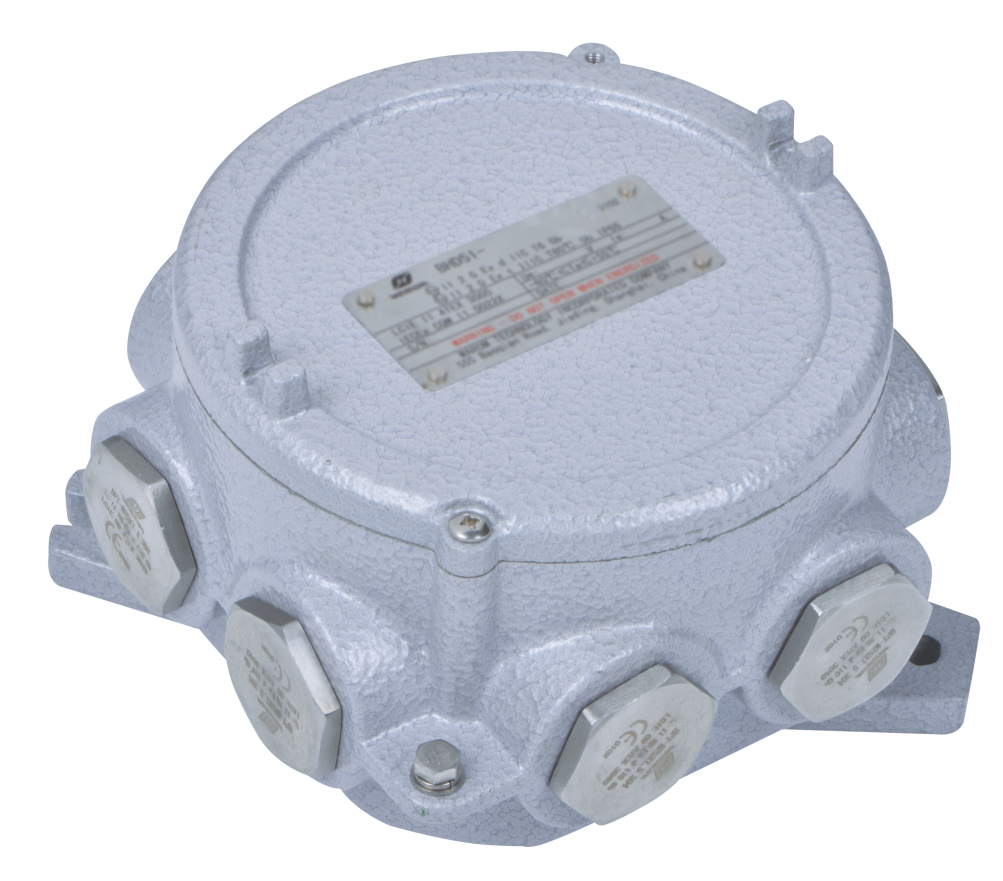
Where multiple circuits enter the panel, the termination should keep power, alarm, and control wiring separated so a single loose connection cannot fault the cooling circuit.
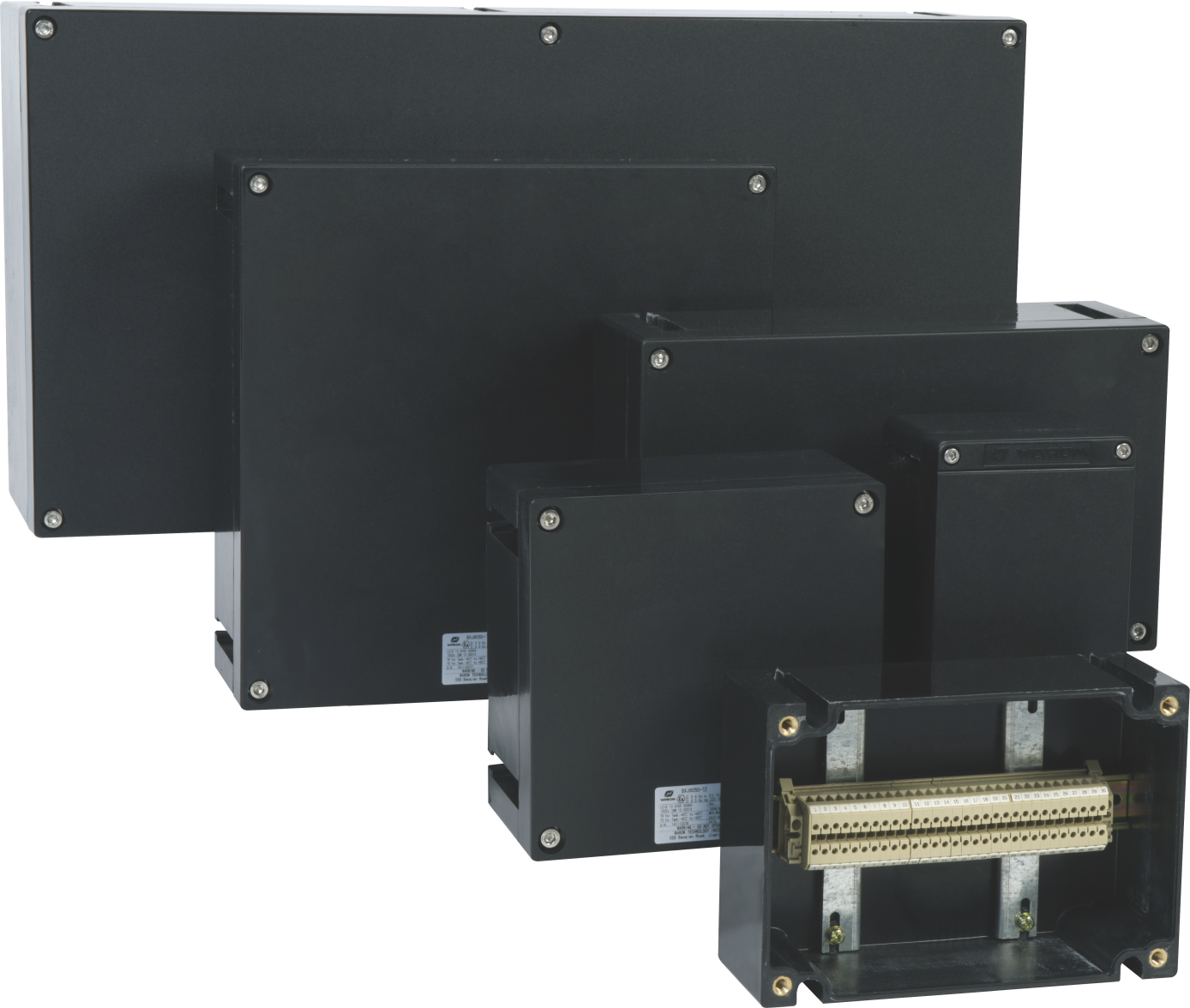
Connection quality at the point where the cooling unit enters the panel is part of the same hazardous-area wiring discipline. <Explosion Proof Terminal Boxes: Securing Instrument Cable Connections> covers terminal selection and cable connection methods that help preserve the certified enclosure.
Maintenance Checks That Preserve Cooling and Compliance
Set up the maintenance plan from the certificate conditions and manufacturer’s manual. A common mistake is to clean the filter but not inspect the alarm circuit, condensate drain, or door seal. The maintenance record should include the date, measured panel air temperature, ambient temperature, alarm test result, and any corrective action.
In coastal or corrosive environments, inspect the condenser coating, fasteners, and gasket surfaces. If the enclosure’s IP rating has degraded, water and dust can enter even though the air conditioner still cools. For outdoor panels, the weatherproofing boundary and the explosion-proof boundary are managed together.
Outdoor and corrosive locations add another layer of enclosure risk beyond the cooling circuit. <Weatherproof IP66 Electrical Enclosures: Industrial Safety Imperatives> covers the protection-level choices that affect long-term panel reliability.
Check refrigerant circuit performance only with the service procedures approved for hazardous areas. Pressure tests, leak checks, and refrigerant charging may require gas-free work permits, calibrated instruments, and an assessment of the area. Replace only with components and refrigerants permitted by the cooling unit certificate.
Documentation to Request Before Ordering
Before order, request the hazardous-area certificate, IECEx certificate of conformity where applicable, the nameplate data, and the schedule of limitations or conditions of use. Within the EU, the equipment must meet the ATEX requirements in Directive 2014/34/EU [5]. For China projects and certain export projects, request the applicable CNEX certificate or other local approval.
| RFQ item | What to request | Why it matters |
|---|---|---|
| Area classification | Zone or Division, gas group, dust group, temperature class, ambient range | Determines certification and cooling duty. |
| Cooling duty | Calculated panel heat loss, target internal air temperature, maximum ambient | Prevents undersizing and overcooling. |
| Power data | Voltage, frequency, phase, available fault current, alarm voltage | Confirms electrical integration and protective coordination. |
| Envelope | Panel dimensions, wall thickness, cutout, mounting | Confirms the unit fits without modifying a certified enclosure. |
| Environment | Solar exposure, humidity, salt spray, corrosive gas, dust, IP requirement | Determines materials, coating, and drain details. |
| Certificates and documents | ATEX/IECEx/CNEX certificate, drawings, manual, spare parts list, maintenance schedule | Lets the buyer verify marking and conditions before shipment. |
At Warom, the same information is used to check a quotation before order confirmation, because the certificate and cooling load both have to fit the same installation. A well-prepared RFQ typically gets a more accurate proposal and a clearer compliance answer.
A valid certificate proves the rated equipment satisfies the stated standard and conditions. It does not by itself prove that the unit is correctly sized, correctly installed, or suitable for a different gas group and ambient range. The installation review remains separate.
Specify Your Panel Cooling Requirements
For a hazardous-area control panel cooling application, send the panel heat load, target internal temperature, maximum ambient, area classification, gas group and temperature class, supply voltage, and panel dimensions. Warom’s engineering team can review the cooling capacity, protection method, certificates, and installation limits against your project. Contact: gm*@***om.com, +86 21 39977076 or +86 21 39972657.
FAQ
Can I use a standard industrial air conditioner on a sealed control panel in a hazardous area?
No. A standard industrial unit is not certified for the explosive atmosphere. Its compressor, fan motors, relays, terminals, and surface temperatures can become ignition sources. Sealing the panel does not remove those sources or make the installation compliant.
Is cooling capacity more important than temperature class?
They answer different questions. Cooling capacity controls the internal air temperature. Temperature class limits the maximum surface temperature of the complete equipment. A unit can have enough capacity but fail the temperature class, or meet the temperature class but be undersized for the panel load.
What is the difference between an Ex d and Ex p air conditioner?
Ex d uses a flameproof enclosure to contain an internal explosion and cool escaping gases below the ignition temperature. Ex p uses protective gas and an interlocked purge sequence to keep a flammable atmosphere away from live parts. The installation checks, purge requirements, and maintenance limits are different.
How do I verify an ATEX or IECEx certificate?
Check the certificate number, equipment marking, technical file reference, and schedule of conditions. Confirm the gas group, temperature class, ambient range, and protection method match the installation. Verify the certificate status with the issuing body or its public register before acceptance.
How often should the panel air conditioner be inspected?
Follow the certificate conditions and manufacturer’s manual. In practice, inspections usually include filters, coils, condensate drains, door seals, alarm operation, grounding, and any visible corrosion. Panels in hot, dusty, or coastal locations may need more frequent checks, supported by thermal imaging or temperature logging.
References
[1] IEC 60079-0:2017, “Explosive atmospheres – Part 0: Equipment – General requirements,” IEC, 2017.
[2] IEC 60079-7:2017, “Explosive atmospheres – Part 7: Equipment protection by increased safety “e”,” IEC, 2017.
[3] IEC 60079-2:2014, “Explosive atmospheres – Part 2: Equipment protection by pressurized enclosure “p”,” IEC, 2014.
[4] IEC 60079-14:2013, “Explosive atmospheres – Part 14: Electrical installations design, selection and erection,” IEC, 2013.
[5] European Union, “Directive 2014/34/EU on equipment and protective systems intended for use in potentially explosive atmospheres,” 2014.
If you’re interested, check out these related articles:
Warom at OMC MED ENERGY 2025
Warom at Australian Energy Producers Conference&Exhibition
Technical Specification for Explosion Proof Cabinets: A Guide
Warom has won Shanghai Jiading’s “Top 100 Comprehensive Strength” and “Top 100 Advanced Manufacturing Industry”
Stainless Steel Explosion Protection for Marine Electrical Systems
With over a decade of experience, he is a seasoned Explosion-Proof Electrical Engineer specializing in the design and manufacture of safety and explosion-proof products. He possesses in-depth expertise across key areas including explosion-proof systems, nuclear power lighting, marine safety, fire protection, and intelligent control systems. At Warom Technology Incorporated Company, he holds dual leadership roles as Deputy Chief Engineer for International Business and Head of the International R&D Department, where he oversees R&D initiatives and ensures the precise delivery of design documentation for international projects. Committed to advancing global industrial safety, he focuses on translating complex technologies into practical solutions, helping clients implement safer, smarter, and more reliable control systems worldwide.

Qi Lingyi