

Explosion proof distribution cabinets for hydrogen plants often look like standard hazardous-area switchgear, but hydrogen adds a Group IIC gas risk and an outdoor process arrangement that a refinery-style cabinet specification does not fully cover. I usually specify a compound Ex d/Ex e cabinet with IIC-rated cable glands and IP66 weather protection for green hydrogen duty, and I make that call before the single-line diagram is frozen. Changing the enclosure family later moves into terminations, gland plates, and certification review. The sections below explain the factors I check when reviewing these cabinets, from gas group marking to cable entry sealing.
Why Hydrogen Gas Changes Distribution Cabinet Requirements
Hydrogen sits in gas group IIC under IEC 60079-0. Its flammable range is wider than methane and propane, and the ignition energy is far lower. That matters because an enclosure or flamepath certified only for IIB gases has no automatic right to serve hydrogen. I treat the nameplate gas group as the first pass/fail item rather than a negotiation point. If the cabinet cannot show IIC on the certificate and nameplate, the voltage rating and short-circuit level no longer matter.
Hydrogen also increases the importance of the complete assembly certificate. Flameproof enclosures with more than one compartment can experience pressure piling, where an internal explosion in one chamber raises pressure in an adjacent chamber. That is why I do not accept cabinet pricing based on an empty enclosure alone. The internal arrangement and the assembly certificate must match the intended loads.
Green hydrogen plants compound the issue by putting many hazards in a small footprint. Electrolyzers, power conversion units, compressors, buffer storage, and outdoor pipe racks are often designed by different teams in parallel. Procurement may release a cabinet order early to protect schedule, then discover later that the cable entries, entry direction, or gas group classification no longer match the final plot plan. The cabinet becomes a site modification rather than a standard product, and that is where both cost and risk accumulate.
Which Protection Methods Fit Electrolyzer Power Distribution
Most green hydrogen electrical loads are mixed rather than exotic. A typical area includes DC rectifier feeds, auxiliary pump and HVAC circuits, lighting, and compressor motors. A distribution cabinet has to manage arcing switching devices, high-current cable terminations, and future spare ways. I prefer a compound design: Ex d flameproof compartments for breakers and contactors, and Ex e increased safety compartments for terminals and busbars.
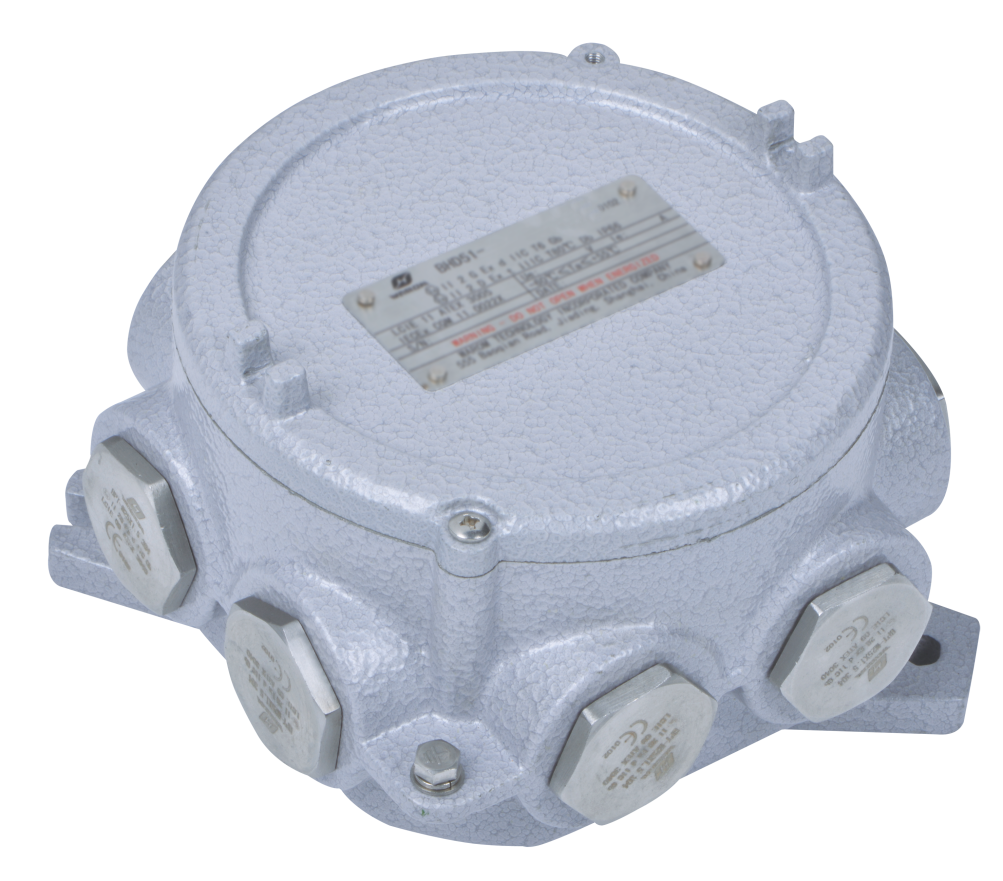
Hydrogen compression trains put local motor disconnecting and lockable isolation directly upstream of the distribution cabinet. <Explosion Proof Motor Disconnects: ATEX and NEC Compliance> explains how ATEX and NEC ratings differ and why maintenance isolation on a compressor skid should be designed before the cabinet feed is finalized.
| Protection concept | Where I use it in a green hydrogen plant | Main constraint |
|---|---|---|
| Ex d flameproof | Circuit breakers, contactors, motor starters, any arcing component | Flamepaths must be clean and protected from corrosion and site damage |
| Ex e increased safety | Terminals, busbar chambers, cable marshalling | Not for sparking or hot components; clearance and creepage must be controlled |
| Compound Ex d/e | Main distribution cabinets and power panels | The assembly must be certified as a complete unit, not as loose components |
| Ex p pressurized | Large control or converter enclosures, analyzer cubicles | Purge gas and pressure monitoring become permanent operating systems |
Why I Avoid a Pure Ex e Box for Breaker Feeds
Ex e works well for cable joints and terminal chambers because no ignition source is normally present. A circuit breaker or contactor is different. It produces an arc during switching and under fault conditions, so it belongs in an Ex d chamber or a certified component system. A cabinet marketed only as Ex e should not include unverified breakers inside. I ask for the component certificate and the assembly certificate together, because the combination is what the hazardous area approval actually covers.
When a Pressurized Cabinet Fits
Pressurization makes sense when a small enclosure carries too many closely packed electronic or switching components for a practical flameproof layout, for example a control suite beside a converter room. The trade-off is continuous system operation: purge gas supply, pressure monitoring, and interlocks must all remain healthy. For most outdoor power distribution duty, a compound d/e cabinet is simpler to install and maintain than a pressurized enclosure.
Where a green hydrogen project mixes high DC rectifier feeders with compressor motors and battery-backed auxiliaries, I would not freeze the cabinet bus rating until the actual load list and cable sizes are checked. If your project has this mix, it is worth confirming the protection concept and short-circuit grouping before the BOM is issued. Send the motor list and preliminary single-line diagram to gm*@***om.com and we will check the practical grouping, not just quote a standard rating.
How Do You Choose Enclosure Material and Cable Entries for Outdoor Hydrogen Plants
Green hydrogen sites are increasingly outdoor, exposed, and sometimes coastal. That changes the enclosure material decision. For inland sites, copper-free aluminium alloy with a powder-coated finish and stainless steel fasteners is usually enough. For coastal or high-chloride locations, stainless steel is worth the additional cost because flamepath corrosion and enclosure degradation become direct safety issues.
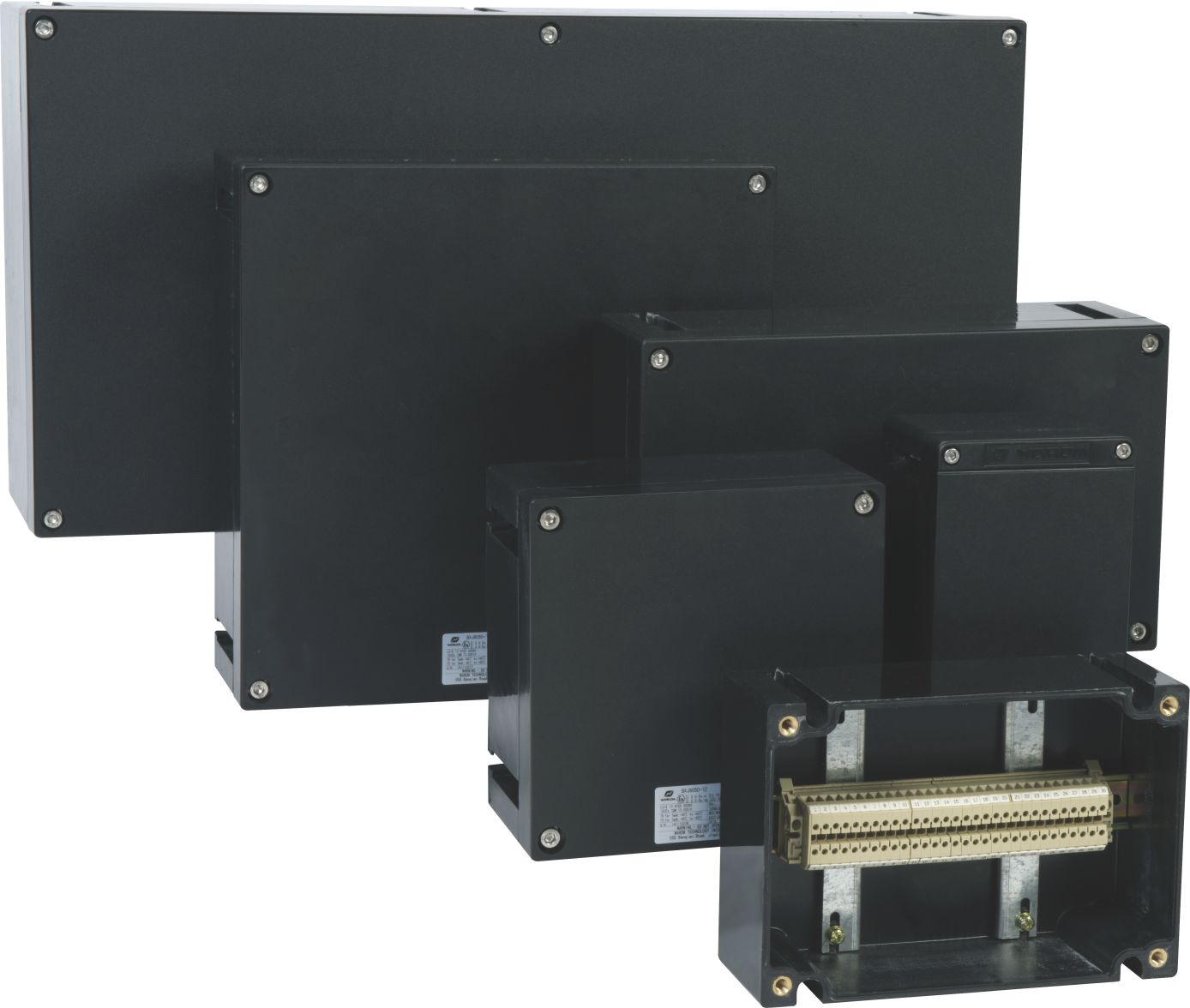
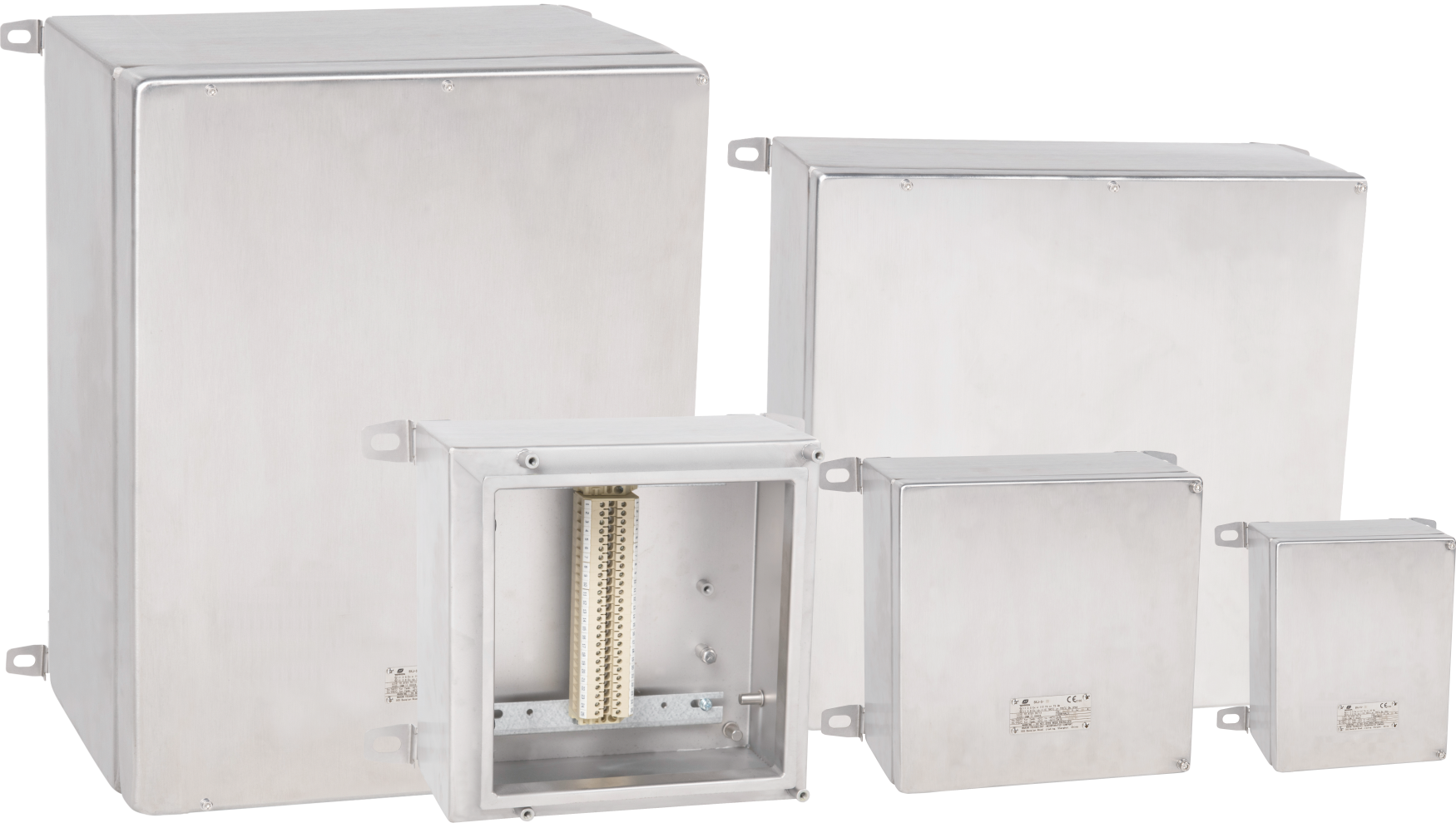
WAROM builds distribution panels in both paths. HRMD93 uses copper-free aluminium alloy with IP66, an ambient range from -60°C to +60°C, and stainless steel fasteners. HRMD92 is the stainless steel panel family I review for marine or coastal duty. The difference is not only appearance; it affects how long the certified flamepaths stay within specification after repeated exposure to salt and moisture.
Cable glands are as important as the enclosure. Hydrogen can pass through a poorly sealed entry, so the gland must match the cable construction and be certified for the protection concept. In IECEx and ATEX terms, I look for Ex db IIC Gb or Ex eb IIC Gb as the application requires, plus IP66 sealing. For mixed metric and NPT projects, the entry strategy must be fixed before the gland plate is drilled.
WAROM DQM-III/II cable glands cover M20 to M115 and carry Ex db IIC Gb for M and NPT threads. The series is not a generic accessory. For hydrogen projects I specify it when armored or screened cables land in a flameproof cabinet. The gland plate should follow the final cable schedule, because re-drilling a certified plate after approval is a common source of nonconformance.
What Should You Check Before Accepting a Hydrogen Cabinet Design
Before approving a cabinet for release, I concentrate on four items that are commonly underestimated.
- Certificate and nameplate: gas group must read IIC, and the protection concept must match the assembly, not only the enclosure.
- Component certificates: each arcing device and each gland must be listed for the enclosure system used.
- Cable entry schedule: threads, gland types, cable diameters, and direction must match the plot plan before the gland plate is machined.
- Test record: confirm what was tested at the factory, including insulation and mechanical verification, and how the serial number ties to the test configuration.
A nameplate showing Ex e IIB or a generic flameproof claim without a certificate number is not enough for hydrogen service. I also ask whether the panel will be assembled as a complete certified unit from the factory. An empty enclosure that is later loaded by a local panel builder can lose the very certification that made it acceptable at bid stage. That is a difficult position for an EPC team to defend during inspection.
What Should You Send to Confirm a Hydrogen Cabinet Specification
Most rework I see in hydrogen projects happens when the cabinet is ordered before the gas group, cable schedule, and outdoor environment are confirmed. A Group IIB gland or an indoor-style Ex e terminal box can pass a generic checklist and still be wrong for the installed hydrogen condition. If the design includes electrolyzer feeders, compressor motor circuits, battery storage, or a coastal outdoor layout, send the single-line diagram, cable sizes, and certification requirements to gm*@***om.com or call +86 21 39977076 or +86 21 39972657. We will confirm the protection concept, IIC cable entry compatibility, and enclosure material against the real operating environment before you commit to a BOM.
What Else Do Green Hydrogen Teams Ask Before Ordering
Can a Zone 2 Area Use a Zone 1 Cabinet
Yes, and in hydrogen service this is often the safer path when area classification is uncertain. A Zone 1 certified cabinet can be installed in a Zone 2 area as long as the gas group is IIC and the temperature class suits the site. The reverse is not acceptable: a Zone 2 cabinet cannot be moved into a Zone 1 area. Many green hydrogen projects contain both zones, so standardizing on Zone 1 hardware reduces the chance of a misapplied enclosure during site changes.
Does an IP66 Rating Make a Cabinet Suitable for Hydrogen
A common misunderstanding is that a high ingress protection rating on its own makes an enclosure safe for hydrogen. It does not. IP66 addresses water and dust, while explosion protection depends on the gas group, protection concept, and certified flamepaths or sealing. A cabinet can be weather tight but electrically unsafe for a Group IIC gas if the internal components or cable glands are not approved. Hydrogen projects need both: IIC certification for the gas risk and a sealing rating such as IP66 for outdoor conditions.
Which Enclosure Material Should Be Used for Coastal Hydrogen Projects
It depends on the site environment rather than the gas group alone. For inland installations, copper-free aluminium alloy with a powder-coated finish and stainless steel fasteners is usually adequate. For coastal, offshore, or high-chloride locations, stainless steel is the better choice because salt corrosion can degrade flamepaths and maintainability. The additional cost is small compared with a later enclosure replacement or a failed inspection. The cable glands and fasteners must also be corrosion resistant, not just the cabinet body.
What Usually Delays Hydrogen Cabinet Delivery
In the projects I review, the longest delays rarely come from the enclosure casting. They come from late cable schedules, unresolved gland plate drilling, or missed IIC certification data. Once the cable outer diameters and entry directions are frozen, the cabinet design can move quickly. If you are compiling a specification, send the preliminary single-line diagram and cable list to gm*@***om.com and we will confirm the certificate and entry details before the order is locked.
If you’re interested, check out these related articles:
EMC Explosion Proof Cable Glands for Shielded Control Cables: A Technical Guide
The 137th Canton Fair is Underway
With over a decade of experience, he is a seasoned Explosion-Proof Electrical Engineer specializing in the design and manufacture of safety and explosion-proof products. He possesses in-depth expertise across key areas including explosion-proof systems, nuclear power lighting, marine safety, fire protection, and intelligent control systems. At Warom Technology Incorporated Company, he holds dual leadership roles as Deputy Chief Engineer for International Business and Head of the International R&D Department, where he oversees R&D initiatives and ensures the precise delivery of design documentation for international projects. Committed to advancing global industrial safety, he focuses on translating complex technologies into practical solutions, helping clients implement safer, smarter, and more reliable control systems worldwide.

Qi Lingyi