

Zone 1 power distribution design becomes expensive when the enclosure is treated as a late-stage box rather than an engineered part of the circuit. Explosion proof distribution cabinets for Zone 1 power distribution have to satisfy access for maintenance, flameproof integrity under pressure, and cable entry arrangements that survive the actual gland schedule. When I review bids that come back from site, the failures are seldom the certificate. They are usually thermal assumptions, ambiguous earthing, or gland plate holes that do not match the installation drawings.
Specification Inputs for Zone 1 Distribution Cabinets
Before a Zone 1 distribution cabinet quote goes out, three inputs matter more than the unit price: the hazardous area classification report, the single-line diagram, and the cable schedule. The classification report fixes the gas group, temperature class, and ambient limits. The single-line diagram fixes incoming and outgoing circuits, breaker ratings, and whether metering or control equipment sits in the same enclosure. The cable schedule fixes entry positions and gland types. If any of these is missing, the supplier prices assumptions, and those assumptions become change orders later.
Zone 1 means a gas atmosphere is likely to occur in normal operation, not only under rare failure. For power distribution, that changes what can be housed in a single enclosure and how internal heat is managed. A cabinet that is certified for Zone 1 but not derated for a 55°C summer ambient can pass inspection in mild weather and then trip or degrade in a hot process corridor.
Protection Methods Behind Explosion Proof Distribution Cabinets
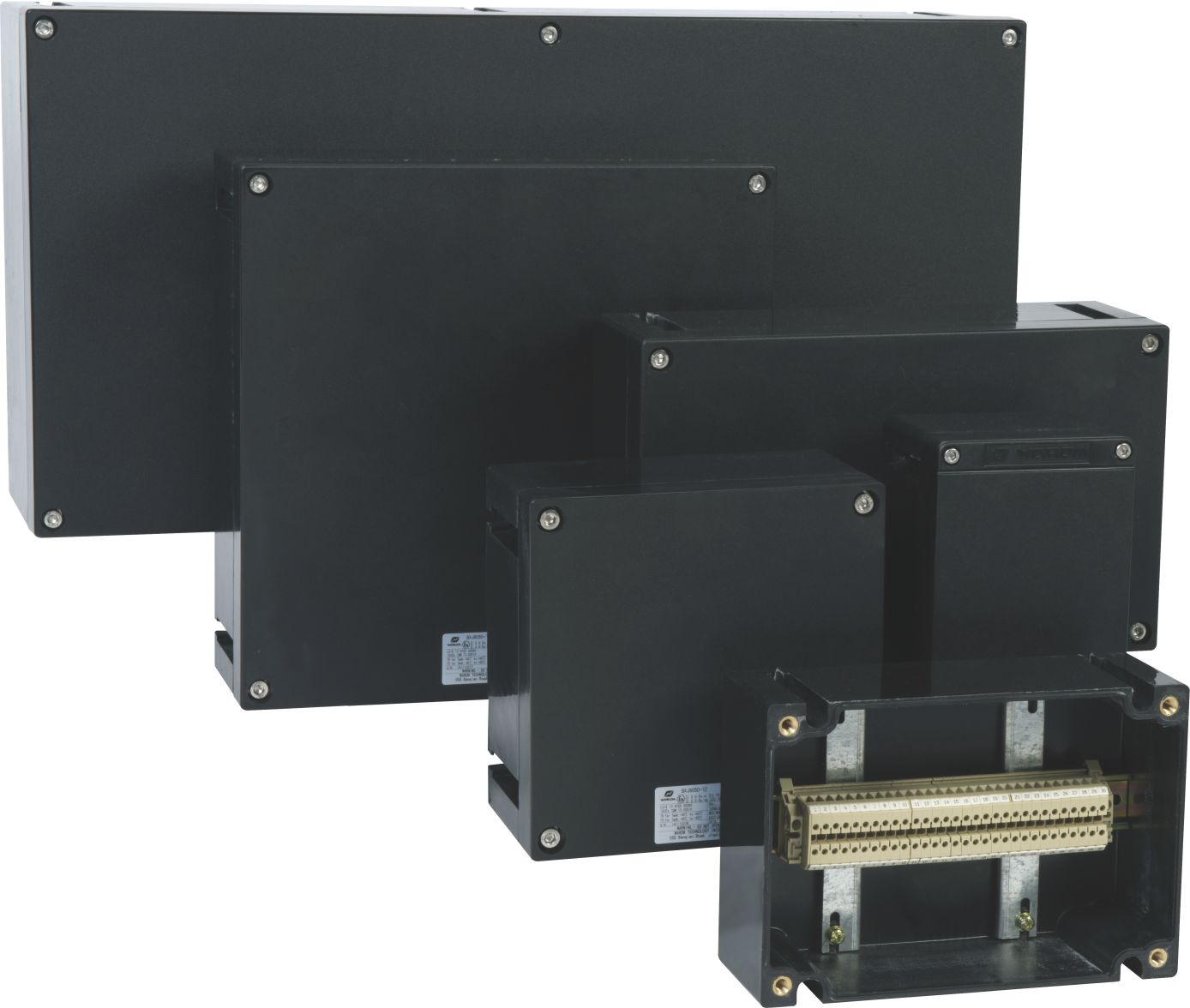
The three methods that appear most often in Zone 1 power distribution are Ex d flameproof, Ex e increased safety, and Ex p pressurization. Each solves a different problem. Ex d contains an internal ignition and forces the flame along a controlled path until it cools. Ex e eliminates ignition sources in normal operation, so it suits terminals, busbar chambers, and cable termination areas. Ex p keeps the enclosure under protective gas pressure so that a surrounding hazardous atmosphere cannot enter.
Ex d or Ex e for Zone 1 Distribution
A distribution cabinet rarely needs to choose between Ex d and Ex e; it usually needs both in the right chambers. Circuit breakers and contactors that arc during operation belong in an Ex d chamber. Terminals, busbar, and earthing points belong in an Ex e chamber. This mixed construction appears in products such as Warom’s HRMD93 Series, where the design priority is to keep the breaker section accessible for maintenance without compromising the flamepath. When two suppliers quote the same circuit count, compare which chambers are Ex d and which are Ex e. That split changes the size, weight, and installation cost more than the number of circuits.
Temperature Class and Gas Group Selection
Temperature class and gas group are not certificate trivia. A cabinet restricted to IIB gases cannot be installed where IIC hydrogen may be present, and a T6 cabinet can carry less heat-producing equipment than a T4 cabinet under the same ambient conditions. Most petrochemical and LNG installations I work with fall between T4 and T5, but the buyer should not assume. The RFQ should state the gas group, temperature class, and maximum ambient temperature as a single requirement, because a supplier cannot reliably back-derive them from the cable schedule.
Material and Thermal Decisions for Zone 1 Cabinets
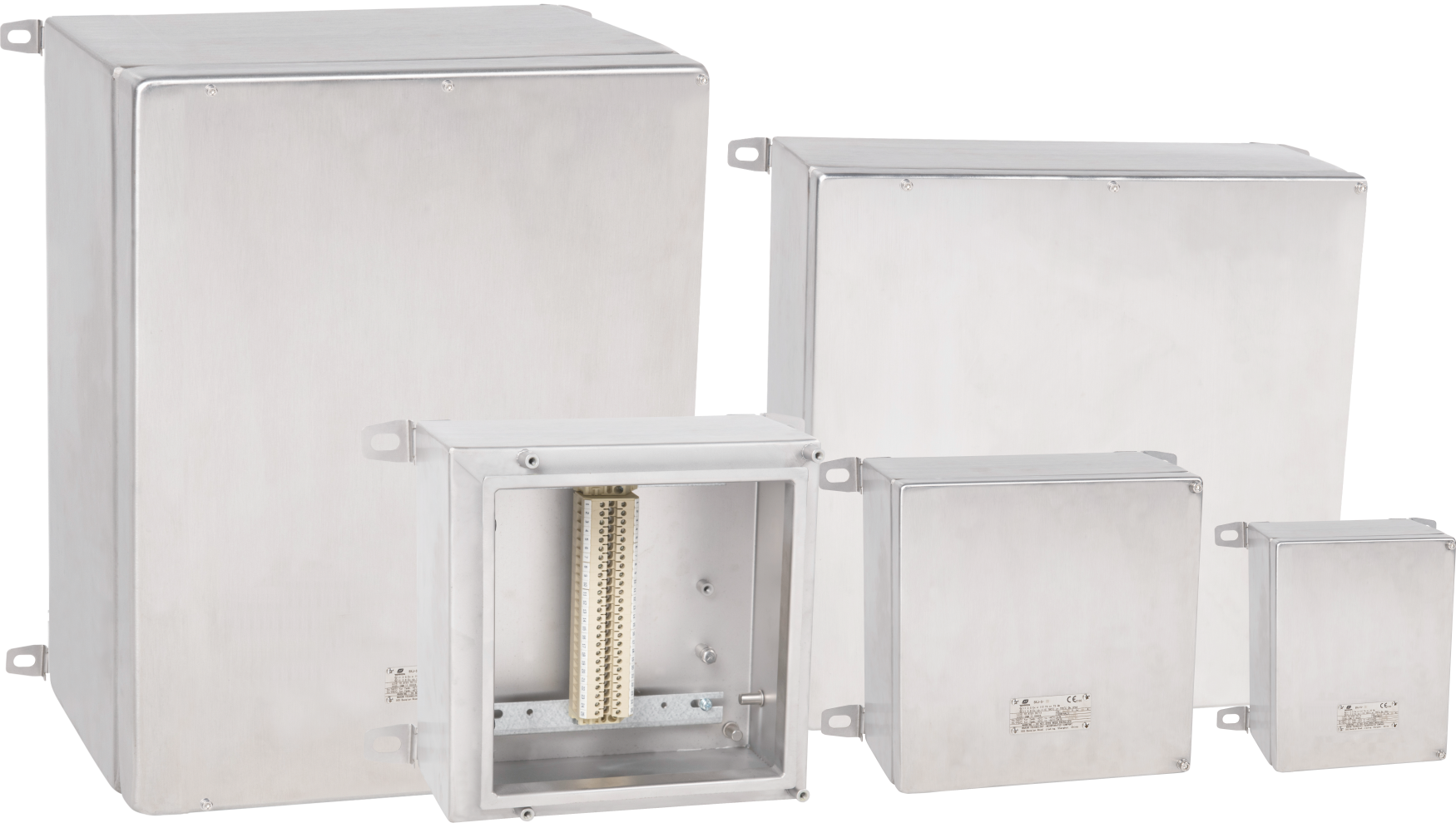
The certificate can be identical for two enclosures made of different materials. The site still decides which one survives. Coastal plants, marine vessels, and chemical facilities need 316 stainless steel or GRP enclosures where a standard copper-free aluminium body may pit or lose coating integrity. Inland dry sites can use copper-free aluminium and get a lighter, easier-to-modify cabinet at lower cost. The mistake is to leave material as a supplier default. Once the foundation holes are drilled and the gland plates are cut, switching material becomes a design exercise, not a purchase note.
| Material | Where it fits | What to verify |
|---|---|---|
| Copper-free aluminium alloy | Inland Zone 1 distribution, high circuit density, frequent modification | Coating, earthing continuity, corrosion class |
| 316 stainless steel | Coastal, marine, salt spray, corrosive process areas | Weight, wall support, external earthing bolts |
| GRP | Chemical exposure, acids, low conductivity risk | Earthing detail, mechanical fixings, UV stability |
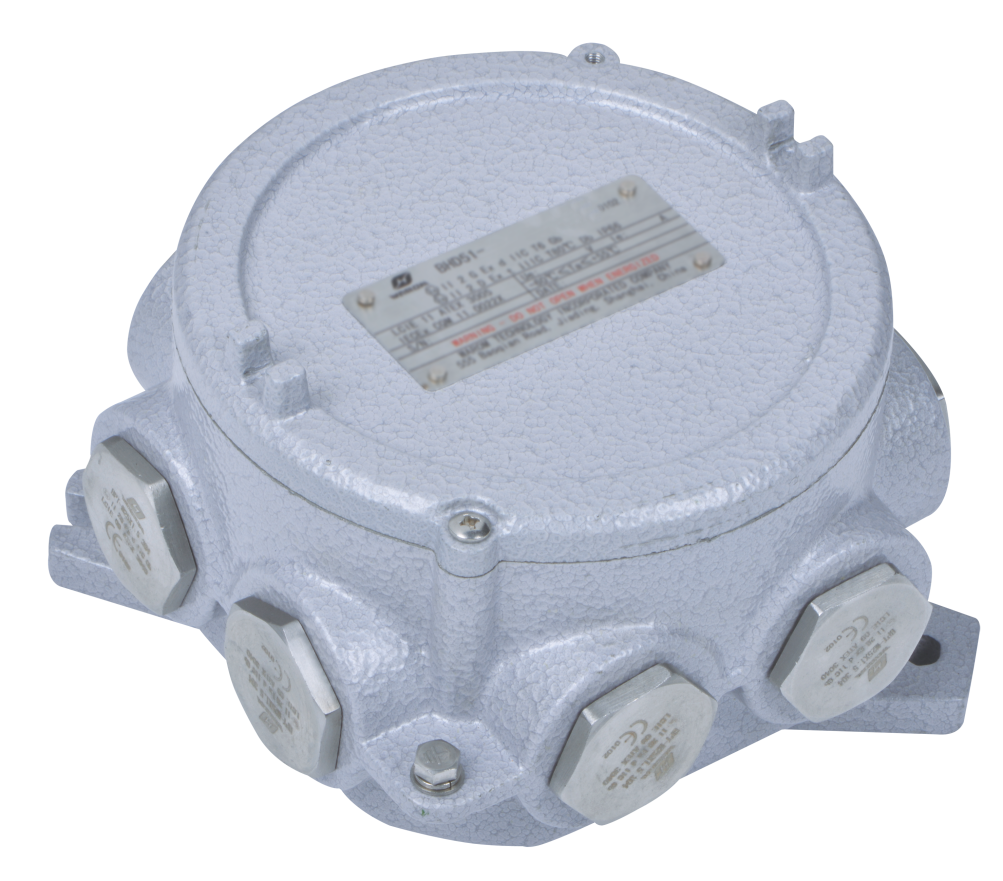
During a chemical plant upgrade in Mexico, the original distribution boxes had been accepted on certificate alone and had corroded under solvent and dust exposure. Our change was not a different certificate; it was anti-corrosion coating and glands matched to the exposure. That site condition drove the material decision and prevented the type of early replacement that inflates lifetime cost.
If a coastal or offshore site is part of the scope, <Stainless Steel Explosion Protection for Marine Electrical Systems> explains why 316 stainless enclosures and nickel plated brass glands change the maintenance interval when salt spray is continuous.
Before you settle on enclosure material, confirm the corrosion class and the maximum ambient temperature on the site plot. If the cabinet sits near salt spray or solvent vapours, do not let the supplier default to aluminium. Send the cable schedule and site exposure notes to gm*@***om.com so the enclosure material can be fixed before the bill of materials freezes.
Certification and Documentation You Should Verify
Zone 1 distribution cabinets are not a finished product until the certificate and the nameplate tell the same story. On a Zone 1 project, I look for the full marking string, not just the certificate number. The marking must show the protection concept, gas group, temperature class, equipment protection level, and IP rating. A certificate that lists IEC 60079-0 and IEC 60079-1 means little by itself if the actual enclosure drawing does not match the listed cable entries and ambient range.
Certificate Details That Signal a Problem
Three details separate a usable certificate from a filed document. The ambient temperature range on the certificate must match the site climate. If the site reaches 50°C and the certificate is limited to 40°C without derating, the cabinet is not valid for that location. The cable entry list must match the actual holes and glands. And the gas group must align with the area classification; IIB is not a substitute for IIC when hydrogen may be present.
What Factory Testing Should Include
Factory acceptance pressure tests, dielectric checks, and fit checks are not optional for a Zone 1 distribution cabinet. The factory should verify flamepath gaps and surfaces, internal continuity, and earthing continuity. For mixed Ex d/Ex e cabinets, the test should also confirm that components entering the Ex e chamber carry the correct Ex e rating. If a supplier cannot explain what its standard FAT includes, ask for the test report list before accepting the delivery date.
For projects that mix North American and IEC requirements, <NEMA 7 vs ATEX Certified Explosion Proof Control Stations> explains why a NEMA 7 box is not simply the same product with a different label and how the certification basis changes what inspectors accept.
How Zone 1 Distribution Cabinet Quotes Should Be Compared
A low unit price can hide the items that make a Zone 1 distribution cabinet expensive to install. Compare the bill of materials line by line: enclosure material, cable glands, blanking plugs, earthing bars, gland plates, and documentation. Two suppliers can quote the same cabinet outline and differ by what they treat as accessories. Ask whether the quote includes drilled and tapped entries in the specified positions, or whether the installer has to machine them on site. Ask whether the certificate number is tied to the built configuration or to a generic reference design.
When standard configurations cannot absorb the cable schedule, <OEM Explosion Proof: When Custom Engineering Elevates Industrial Safety> covers how engineered gland plates and busbar changes affect lead time and first-fit reliability.
For complex Zone 1 projects, factory built cabinets are easier to validate than site-assembled panels because the tested configuration leaves the factory intact. Procurement should also verify lead times against the civil, cable pulling, and commissioning schedules. A cabinet that arrives early creates storage and handling problems if the certification must be re-verified after drilling. A cabinet that arrives late delays the next inspection point.
If your Zone 1 power distribution scope includes mixed Ex d and Ex e construction, multiple gas groups, or coastal exposure, the quote comparison should not be only about price per unit. Send the single-line diagram, cable schedule, and hazardous area classification report to gm*@***om.com, or call +86 21 39977076 / +86 21 39972657 before the order freezes. That is the point where changing a gland schedule costs days, not weeks.
Common Questions About Zone 1 Power Distribution Cabinets
What is the difference between a Zone 1 and Zone 2 distribution cabinet?
Zone 1 equipment must contain or prevent an ignition source because a hazardous gas atmosphere is likely during normal operation. Zone 2 equipment is rated for atmospheres that occur only under abnormal conditions. The practical difference lies in the protection concept and sometimes the number of certified components. A cabinet designed specifically for Zone 1 is generally required when a risk assessment classifies the area as Zone 1; using Zone 2 equipment in that location would violate the plant’s hazardous area assessment.
Can a Zone 1 distribution cabinet be modified on site?
Many buyers assume that once a certificate is issued, no modification affects it. In practice, even machining an extra cable entry can change the flamepath or invalidate the certification if the replacement gland is not part of the approved schedule. A new entry should be engineered and documented by a competent party. For this reason, the safest route is to finalize the cable schedule before manufacturing and avoid site drilling on Ex d surfaces. Any post-delivery changes should be checked against the original certificate.
How many outgoing circuits can a Zone 1 distribution cabinet handle?
It depends on the enclosure size, busbar rating, and the temperature class of the installation. Small cabinets may serve four to six circuits; large multi-bay panels can run dozens of outgoing feeders with mixed Ex d and Ex e chambers. The limiting factors are usually busbar heat, breaker density, and cable bending radius. A 250 A incoming board is different from a 100 A lighting distribution board. The circuit count should be defined by the single-line diagram before the cabinet is sized, not the reverse.
What should the nameplate show before shipment?
When procurement teams ask what belongs on the nameplate, the real question is what the inspector will verify at final walkdown. The nameplate should show the manufacturer, model, certificate number, protection concept, gas group, temperature class, ambient range, IP rating, and the maximum voltage and current for the built configuration. If any of these values do not appear, request the marking drawing. Share the hazardous area classification report and the cable schedule to confirm the correct marking before shipment and avoid a final inspection hold.
If you’re interested, check out these related articles:
Offshore Wind Substations: Explosion Proof Electrical Distribution Solutions
WAROM is heading to the Australian Energy Producers Conference & Exhibition in Perth!
Explosion-Proof High Mast Lighting for LNG Terminal Safety
Warom at 40th ADIPEC 2024
With over a decade of experience, he is a seasoned Explosion-Proof Electrical Engineer specializing in the design and manufacture of safety and explosion-proof products. He possesses in-depth expertise across key areas including explosion-proof systems, nuclear power lighting, marine safety, fire protection, and intelligent control systems. At Warom Technology Incorporated Company, he holds dual leadership roles as Deputy Chief Engineer for International Business and Head of the International R&D Department, where he oversees R&D initiatives and ensures the precise delivery of design documentation for international projects. Committed to advancing global industrial safety, he focuses on translating complex technologies into practical solutions, helping clients implement safer, smarter, and more reliable control systems worldwide.

Qi Lingyi