
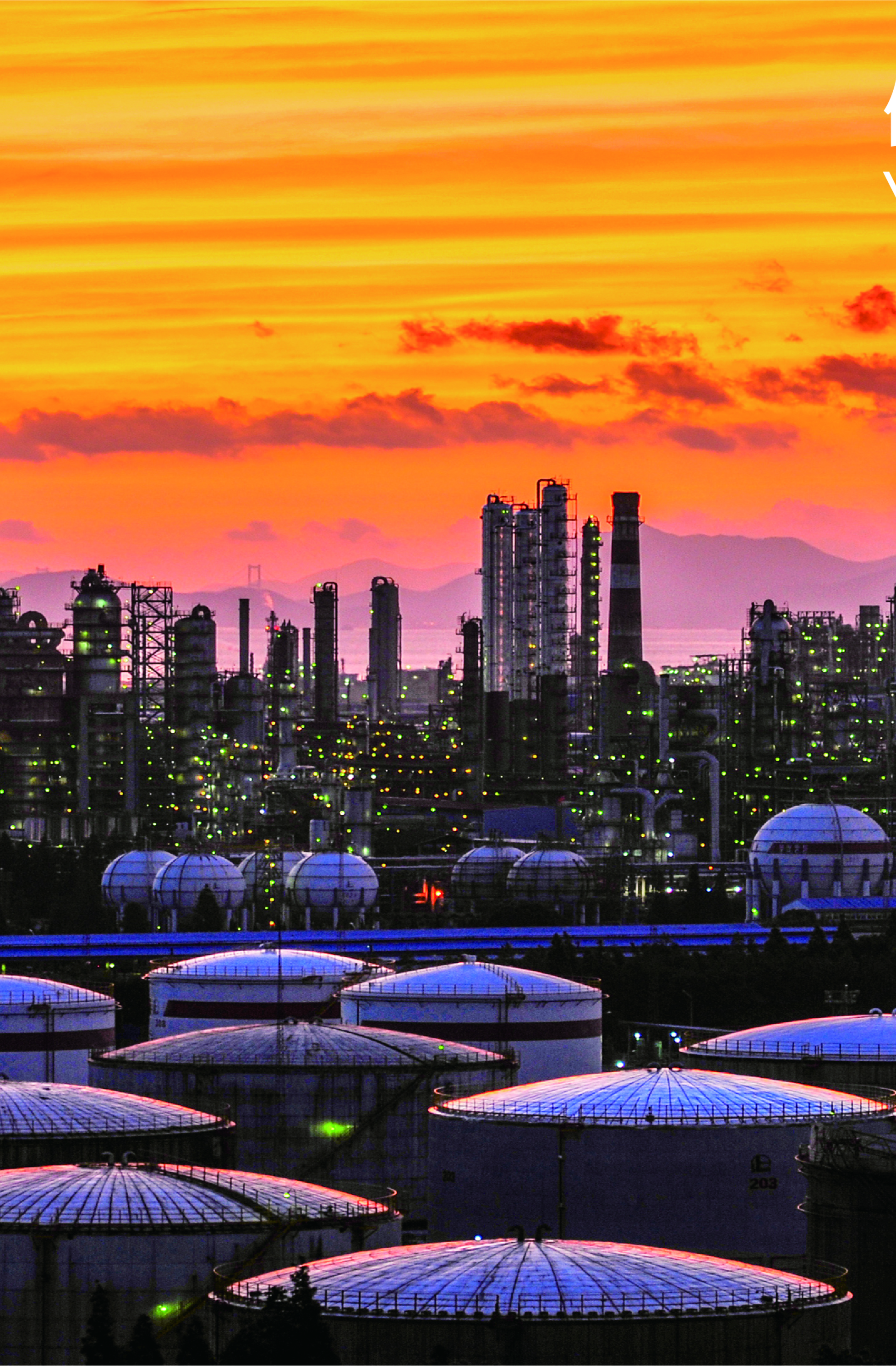
Explosion proof equipment for mineral processing plant hazardous areas has to be chosen from the area classification outward, not from a product catalog backward. Most buyers start with lighting or distribution boxes before the dust group and zone have been fixed, and that sequence causes rework during installation. In mineral processing, the real question is whether the equipment can contain an ignition source and keep dust and moisture out while standing up to vibration from crushers, screens, and conveyors. This article works through the selection path from zone and dust group to enclosure, gland, lighting, certification, and final procurement checks.
Explosion Proof Equipment Starts With the Area Classification
A mineral processing plant rarely has one hazardous area. The crusher house, screen deck, transfer tower, dust collector, and storage silo each create different release conditions. Combustible dust settles on cable trays, motor frames, and junction boxes, while fine sulfide ore can form a dust cloud when conveyed or dropped. The first step is to fix the zone under IEC 60079-10-2 for dust and, where flotation reagents or fuel gas are present, IEC 60079-10-1 for gas.
Zone 20 applies inside equipment where dust is always present or expected. Zone 21 covers areas around frequent leaks and open transfer points. Zone 22 is the wider area where dust may settle under abnormal conditions. Most mineral processing areas fall into Zone 21 or Zone 22, but the difference changes the equipment marking. A Zone 21 installation needs certified equipment for flammable dust, while a Zone 22 location still requires dust-tight enclosures and controlled surface temperature.
Temperature class matters more in dust atmospheres than many buyers expect. A dust layer on a hot enclosure can smolder and then ignite the dust cloud above it. The surface temperature must stay below the ignition temperature of both the dust cloud and the dust layer. For metal sulfide dust or fine metal-bearing dust, the ignition energy can be low enough that even ordinary arcs begin to matter. We ask for the dust group and ignition temperature on the hazard area drawing before quoting.
Enclosure Ratings and Cable Glands for Mineral Processing Dust
Dust-tight enclosures are the primary protection method in most mineral processing dust zones. A flameproof Ex d enclosure prevents a gas explosion from escaping, but it does not by itself solve dust handling. The enclosure needs the right IP rating, usually IP66, and the surface temperature class must match the dust layer conditions. We use IP66 as the default for mineral processing because the areas combine dust with water sprays, washdown, and high humidity.
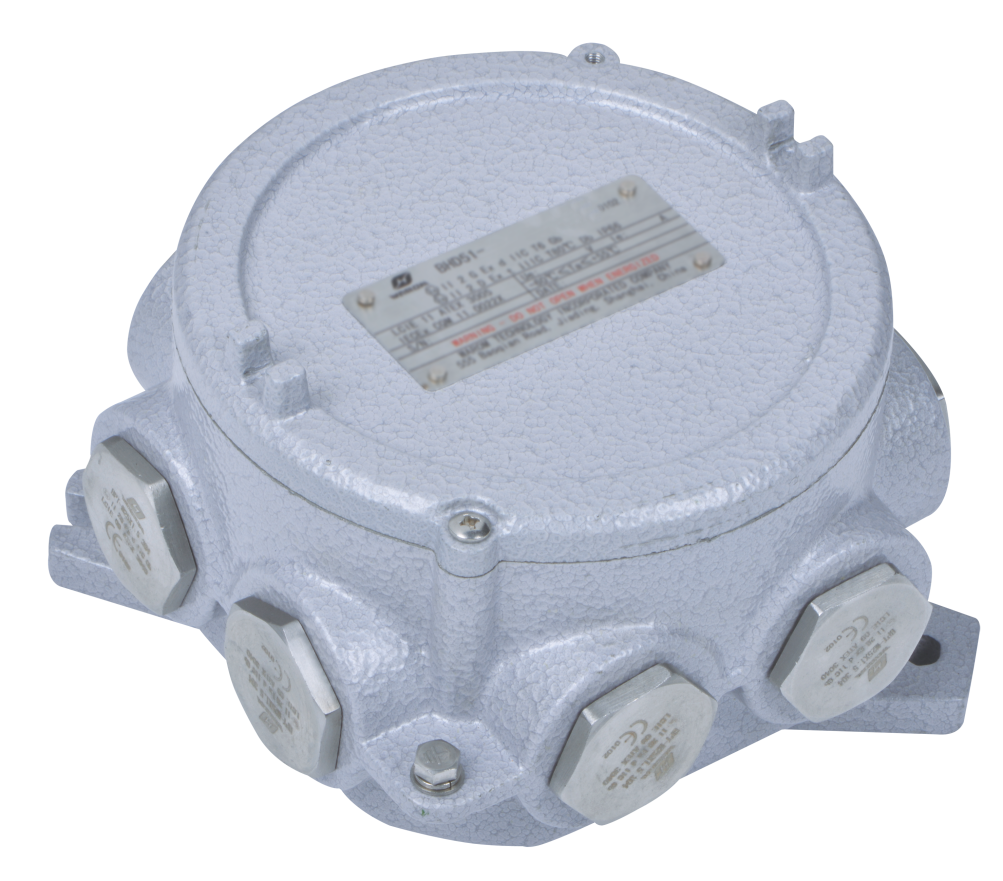
Junction boxes and terminal boxes should be selected by the actual connection load and cable count, not by a generic size. The BHD91 aluminum junction box is rated to 500 V AC, IP66, with terminal cross sections from 2.5 mm² to 6 mm². For increased safety instrument and control terminations, the BXJ8050 terminal box is rated to 690 V AC and carries an Ex e IIC mark with T6 at -40°C to +40°C or T5 at -40°C to +55°C. We specify GRP enclosures where sulfide dust and water create corrosion risk, and stainless steel or copper-free aluminum where structural impact or marine conditions are present.
| Process area | Equipment type | Typical choice | Reason |
|---|---|---|---|
| Crusher house cable marshalling | Junction box | BHD91, IP66 | Dust tight, 500 V AC, aluminum body |
| Instrument and control terminations | Terminal box | BXJ8050, Ex e IIC | Increased safety, GRP corrosion resistance |
| Mill and screen lighting supply | Distribution panel | HRMD92 or HRMD93, IP66 | Ex d and Ex e chambers, modular circuits |
| Cable entry to enclosures | Cable gland | DQM-III, Ex db IIC | Nickel plated brass, -60°C to +90°C, IP66 |
Cable glands are easy to treat as accessories, but they are part of the flamepath or dust seal. The DQM-III series is certified Ex db IIC Gb and IP66, with an ambient range of -60°C to +90°C. The gland must match the cable construction, armored or unarmored, and the thread form must match the enclosure entry, M or NPT. A gland that fits the cable but not the enclosure thread will leave an open path for dust and moisture.
Mineral processing plants often mix power, control, and instrument cables in the same cable ladder. <EMC Explosion Proof Cable Glands for Shielded Control Cables: A Technical Guide> covers shield termination practices that reduce electromagnetic interference in variable speed drive circuits, which matters in mill and screen control systems.
In one wet grinding circuit I reviewed, aluminum junction boxes were installed under a screen wash line without matching glands. Water and sulfide fines entered through the threaded entries, and within two years the flame paths showed corrosion pitting. The replacement package used BHD91 IP66 boxes with DQM-III nickel plated brass glands and the entries were sealed. That is the difference between a drawing that says Ex d and an installation that still meets the tests after production starts.
If your flow sheet includes both sulfide dust and a flotation reagent tank, confirm whether the final package must meet both gas and dust certification. Send the hazard area drawing and cable schedule to gm*@***om.com before you freeze the enclosure list.
Explosion Proof Lighting and Monitoring for Mills, Screens, and Conveyors
Lighting selection in mineral processing has to handle vibration, dust buildup, and long operating hours. A standard industrial LED fitting will not survive the vibration on a screen deck, and a fitting with poor sealing will pack dust behind the lens until the light output falls. We specify LED fittings with an IP66 enclosure and corrosion resistance class WF2 because mill buildings and screen structures are washed down.
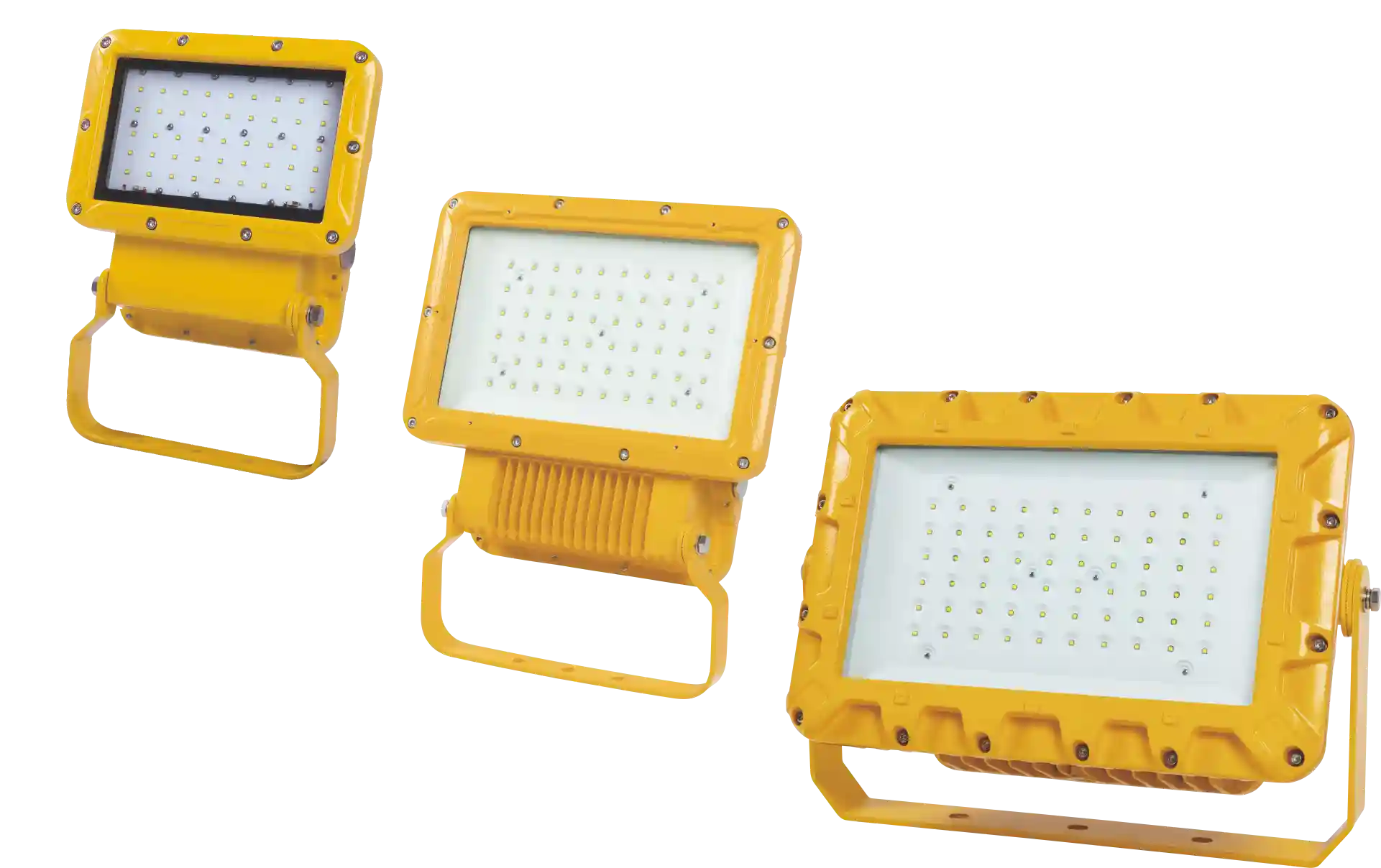
The BAT86 explosion proof LED floodlight is built for this type of area. It uses a steel body with powder coating, IP66 protection, WF2 corrosion resistance, and an ambient range of -60°C to +60°C. The terminal supports 1.5 to 4 mm² conductors, with two M25 entries. The HRNT95 series provides higher output options from 80 W to 300 W for high bay and perimeter lighting, with a similar LED module approach and wide voltage input. We use BAT86 for conveyor galleries and HRNT95 for high mast or mill bay lighting.
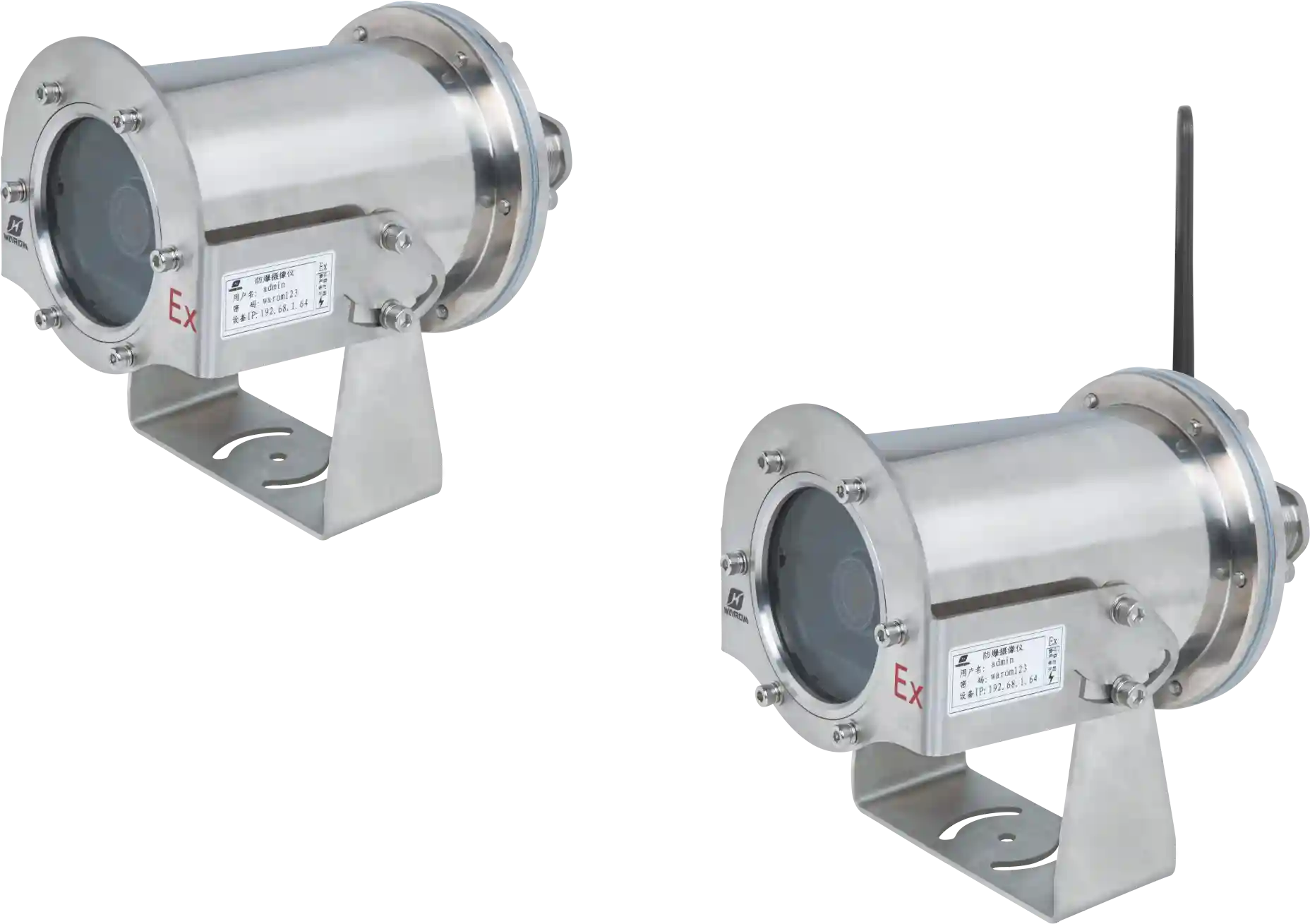
Monitoring equipment also needs explosion proof certification when it enters dust zones. The BJK-S/G camera is certified for Zone 1, 2, 21, and 22, with IP66 or IP68 options and H.265 video compression. We place cameras at transfer points and screen decks to watch for blockages and spillage without sending an operator into the dust zone.
On a recent project in Uganda, we supplied explosion proof lighting and electrical systems for wellpads and a central processing facility where temperature swings and vibration were part of the specification. The installation reached commissioning with zero safety incidents. The lighting package included LED fittings that maintained output through commissioning and required low maintenance in a remote operating environment. Mineral processing plants place the same vibration and dust burden on electrical equipment, so the selection logic transfers directly.
Certification Documents and Installation Checks for Mineral Processing Plants
A certificate is only useful when it covers the equipment as built. Before shipment, the supplier should provide the IECEx or ATEX certificate, the marking plate information, installation instructions, and a declaration that the product matches the certificate scope. For mineral processing plants that may run under multiple standards, the certificate should state the dust protection method, temperature class, ambient range, and the exact cable entry configuration.
We check five items on every nameplate before equipment leaves the factory: the Ex marking, the gas or dust group, the temperature class, the IP rating, and the certificate number. If one of these does not match the purchase order, the equipment will be questioned during site inspection. The certificate number should be traceable on the IECEx or ATEX online database.
Installation checks are just as important. After installing junction boxes and glands, the plant should verify that all unused cable entries are plugged with certified stopping plugs, that the gland seals match the cable diameter, and that the enclosure bolts are torqued to the manufacturer instruction. A missing stopping plug changes an IP66 enclosure into an open dust path. A loose gland can compromise the flamepath even when the product itself is certified.
Factory acceptance testing helps for large mineral processing packages. The plant should witness insulation tests, continuity checks, cable entry torque, and the enclosure protection checks. The approved documentation should be packed with the equipment, not mailed later. We prepare inspection and test plans before the factory visit so the plant engineer can walk the test line against the purchase specification.
A Procurement Checklist for Mineral Processing Plants
The selection path should be visible in the purchase order. Before asking for a quotation, the buyer should have the hazardous area drawing, the dust group and ignition temperature, the cable schedule, and the ambient conditions for each building. Without these, the quote will be based on assumptions.
A workable inquiry package for mineral processing includes:
- Zone and dust group for each building and outdoor area
- Gas classification where flotation reagents or fuel systems are present
- Required temperature class and IP rating
- Cable type, armoring, and entry thread preference
- Equipment list by area, not a single generic line item
- Certification requirements, IECEx, ATEX, or both
- Factory acceptance test requirements and witness plan
The final quote is not a product list. It is a set of enclosure, gland, lighting, and panel choices that match the plant classification. That is why we ask for the site drawings and cable schedule at the start. Send your zone drawings, dust group, temperature class, and equipment list to gm*@***om.com, or call +86 21 39977076 or +86 21 39972657. We will return a compliance check against the certificate scope and a preliminary specification before the order freeze.
Common Questions About Explosion Proof Equipment in Mineral Processing
Does a mineral processing plant always need explosion proof equipment?
Not every building in the plant will be classified. Hazardous areas are determined by the dust release, the material ignition properties, and the ventilation. A crushing and screening building handling combustible sulfide ore usually has Zone 21 and Zone 22 areas, but a separate workshop with no dust source may not. The plant cannot assume either way. The area classification drawing is the only defensible basis for deciding where explosion proof equipment is required.
How do I choose between Ex d and Ex e enclosures?
It depends on the installed components. Ex d flameproof enclosures contain an internal explosion and cool the escaping gases through a controlled flamepath. Ex e increased safety enclosures prevent arcs and hot spots from occurring in normal operation. For a junction box with only terminals, Ex e is often lighter and easier to inspect. For a control panel containing contactors or circuit breakers, Ex d is usually required. In mineral processing, we combine both methods in distribution panels where the switching chamber is Ex d and the terminal chamber is Ex e.
What documentation should the supplier include before shipment?
The supplier should include the IECEx or ATEX certificate, the declaration of conformity, the nameplate schedule, installation and maintenance instructions, and the approved inspection and test plan. The certificate must cover the exact configuration, including cable entries and accessories. If the equipment is modified after certification, the new configuration needs its own certificate or the supplier must confirm that the modification does not affect the protection method. Keep the certificate number accessible for the site inspector.
Can one equipment specification cover both gas and combustible dust?
Some equipment can be certified for both gas and dust, but the marking will show both protection methods. A fitting may carry Ex db IIC for gas and Ex tb IIIC with a stated maximum surface temperature for dust. A product certified only for gas will not satisfy a Zone 21 dust area. The plant should list both classifications when flotation reagents, fuel systems, or process gases are present alongside combustible dust. Share your equipment list and site drawings and we will confirm whether the documentation package matches the certificates you will need for commissioning.
If you’re interested, check out these related articles:
Warom at 2025 ADIPEC
Ultimate Guide to Portable Explosion Proof Lighting
Explosion Proof Solutions for Coal Conveyor Safety
Stainless Steel Explosion Protection for Marine Electrical Systems
With over a decade of experience, he is a seasoned Explosion-Proof Electrical Engineer specializing in the design and manufacture of safety and explosion-proof products. He possesses in-depth expertise across key areas including explosion-proof systems, nuclear power lighting, marine safety, fire protection, and intelligent control systems. At Warom Technology Incorporated Company, he holds dual leadership roles as Deputy Chief Engineer for International Business and Head of the International R&D Department, where he oversees R&D initiatives and ensures the precise delivery of design documentation for international projects. Committed to advancing global industrial safety, he focuses on translating complex technologies into practical solutions, helping clients implement safer, smarter, and more reliable control systems worldwide.

Qi Lingyi