

Zone 21 and Zone 22 call for explosion proof equipment that controls dust ingress, surface temperature, and certificate conditions together, not separately. A product with IP66 can still fail in a sugar mill or chemical plant if its temperature class does not match the dust cloud ignition limit, or if an X condition on the certificate went unread. I want to focus on how those equipment decisions are actually made: zone classification, enclosure protection, temperature ratings, cable glands, and the document checks that separate a safe installation from an expensive reorder.
Where Must Explosion Proof Equipment Handle Combustible Dust?
Zone 21 covers areas where a combustible dust cloud is likely to occur during normal operation. Filling points, silo inlets, hammer mill feed chutes, and bag dump stations handling flour, sugar, starch, or aluminum powder are the usual places. Zone 22 covers areas where a cloud is not likely during normal operation but may appear briefly after a spill, leak, or maintenance action. A warehouse storing bagged flour may be Zone 22 while the open bag dump station inside the same building is Zone 21.
The classification should come from a documented area study based on IEC 60079-10-2 or the local equivalent, not from a guess based on dust type alone. Equipment choice follows the zone, but the dust group and ignition temperature remain separate variables. A grain dust with moderate ignition sensitivity and a conductive metal dust with a lower ignition threshold may be found in areas with the same zone number, and they still require different equipment markings.
How Do Zone 21 and Zone 22 Change Equipment Requirements?
Once the area is classified, Zone 21 normally requires category 2D equipment with EPL Db. Zone 22 normally requires category 3D equipment with EPL Dc. An enclosure marked Ex tb IIIC T80°C Db is in the Zone 21 family; Ex tc IIIC T80°C Dc points to Zone 22. The letters after Ex t are not interchangeable.
| Requirement | Zone 21 | Zone 22 |
|---|---|---|
| Equipment protection level | Db | Dc |
| ATEX category | 2D | 3D |
| Typical dust enclosure marking | Ex tb IIIC T80°C Db | Ex tc IIIC T80°C Dc |
| Dust cloud during normal operation | Likely | Not likely |
| Enclosure design basis | IP6X dust exclusion | IP6X dust exclusion |
The table is a starting point. It does not replace the area classification drawing, because one building commonly contains both zones. The equipment marking must also show the correct dust group: IIIA for combustible flyings, IIIB for non-conductive dust, and IIIC for conductive dust such as aluminum or carbon black. IIIC is the strictest dust group, and many industrial buyers default to it because it covers conductive dust and simplifies spares. The certified marking still has to match the actual dust.
Why Do Temperature Ratings and Dust Layers Decide Equipment Suitability?
Surface temperature is where dust-area equipment decisions are won or lost. Dust cloud ignition temperatures are often much lower than gas autoignition temperatures, and a dust layer sitting on an enclosure acts as thermal insulation. An enclosure that stays below the surface temperature limit in clean air can exceed it after a 5 mm layer builds up. For a dust cloud, the equipment surface temperature has to remain below the cloud ignition temperature with a safety margin; for a dust layer, the permissible surface temperature drops further as the layer thickness grows. That is why the certificate states a maximum surface temperature such as T80°C, and why it is never safe to read only the IP rating.
At General Paint in Mexico, the plant had both solvent vapors and pigment dust, and the original electrical review had focused mostly on gas. We supplied explosion-proof junction boxes, distribution boxes, gas detectors, plugs and sockets, static electricity discharge devices, and anti-corrosion equipment over a three-month cycle. The point is not the product list; the point is that the site had to treat dust and gas as two separate ignition risks before the enclosure and temperature choices could be locked.
How Should You Specify Explosion Proof Equipment and Verify Certificates?
Specification for dust areas starts from the certificate, not the catalog. I usually ask for the dust group, EPL, maximum surface temperature, ambient temperature range, IP rating, and any X conditions before comparing prices. Then I move to the equipment families.
Lighting choices for Zone 21 and Zone 22
LED fixtures are the main choice for dust areas because they reduce relamping and dust disturbance. The enclosure still has to carry an Ex t marking, IP66 or equivalent dust exclusion, and a surface temperature limit matched to the dust. In a product such as the BAT86 LED floodlight, the IP66 rating and WF2 corrosion protection are part of the package, but they have to be confirmed against the specific dust certificate for the project. For areas with high dust build-up, avoid open fins and difficult-to-clean top surfaces; dust gathers there first and becomes a layer that changes the temperature behavior.
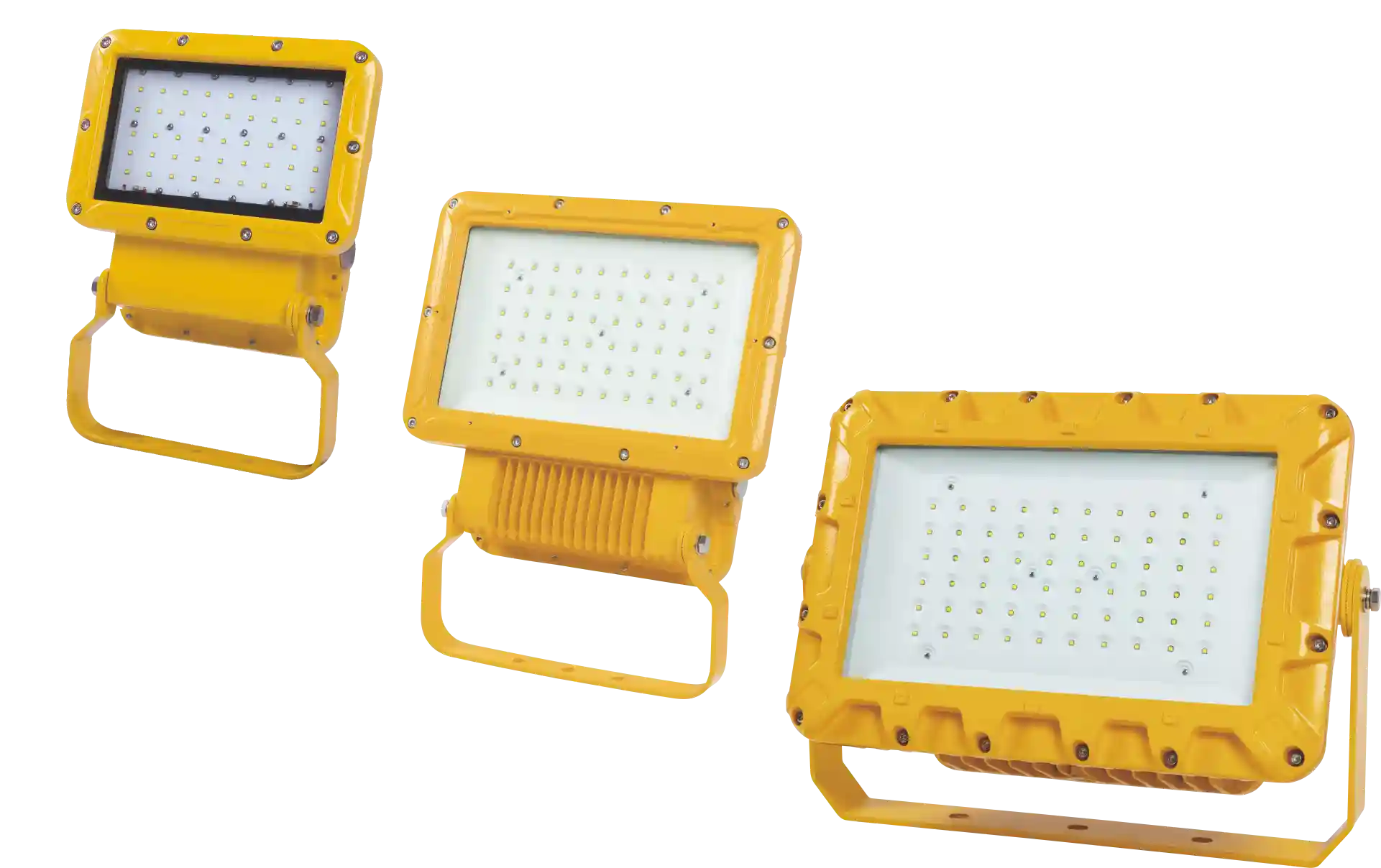
Dust-zone lighting is often specified with gas habits in mind, so the marking deserves a closer look. <ATEX vs UL Classification: Mastering Explosion Proof Lighting> covers how ATEX and UL certification routes differ and why a fixture may show different limitations depending on whether the design office expects European or North American approval.
Control equipment, junction boxes, and cable entries
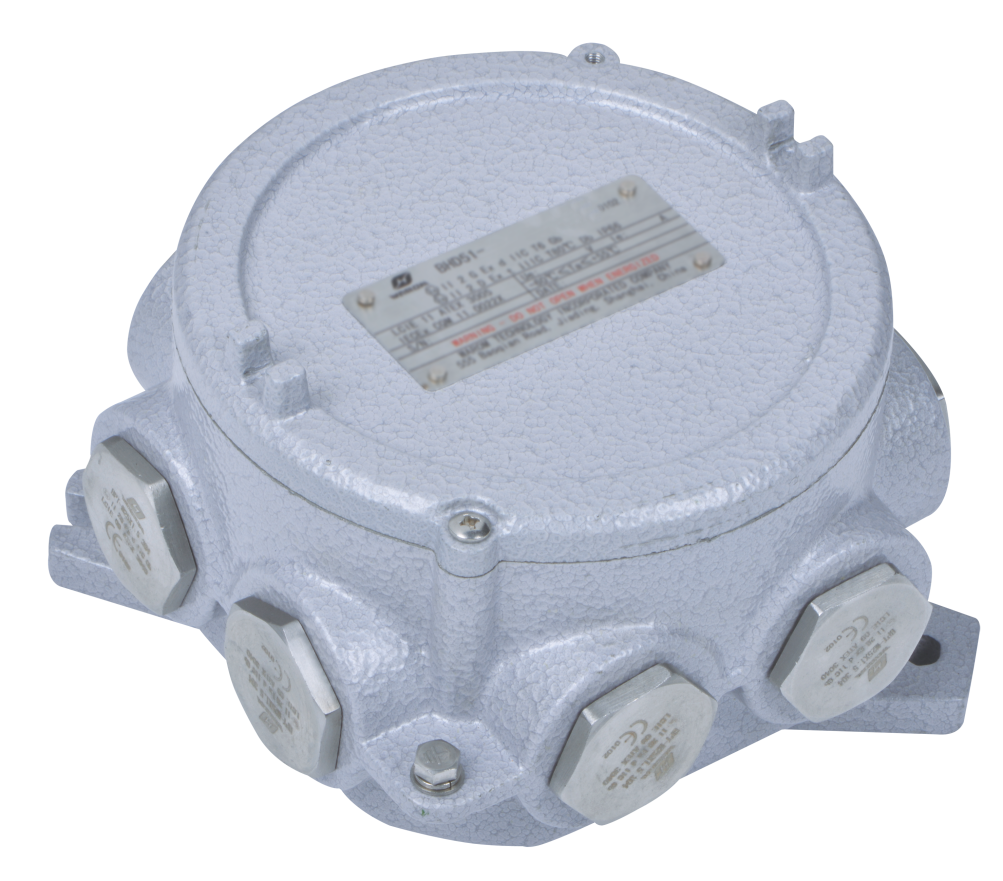
Distribution boxes, junction boxes, and terminal boxes in dust zones need the same dust exclusion discipline as luminaires. An enclosure such as the BHD91 junction box uses a copper-free aluminum body and IP66 protection. In a dust area, the model chosen must also state the dust protection level on the nameplate, because the enclosure form alone is not enough. Cable entries are the place where a sound design falls apart. Every gland, blanking plug, and adaptor has to preserve the enclosure IP rating. If the cable gland is supplied separately, request the manufacturer to confirm the gland is covered by the equipment certificate or a declared-approved combination.
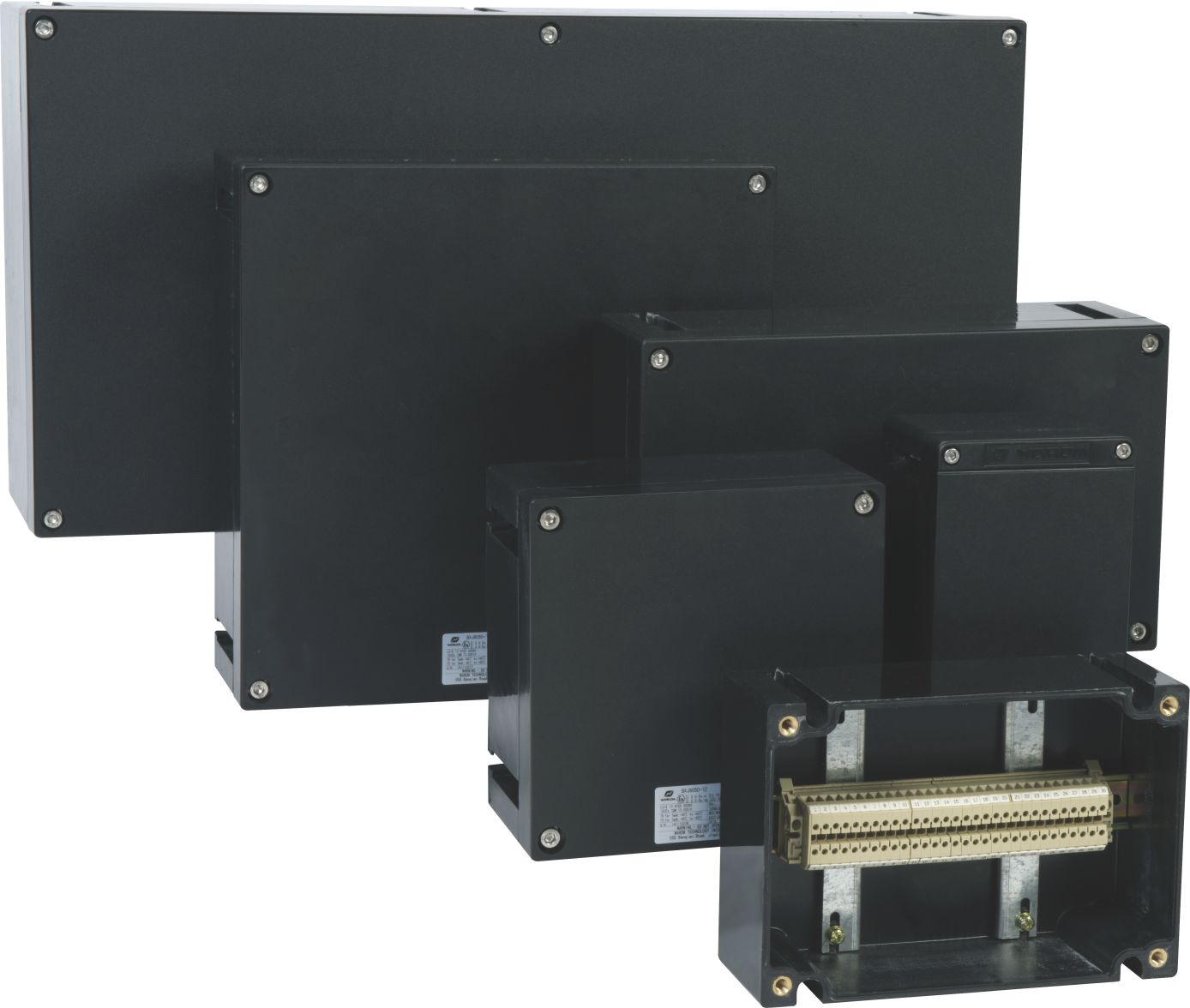
Dust and gas installations share many product categories, but dust certification records are not automatically present in every quote. <Evaluating Chinese Explosion Proof Distribution Box Suppliers> covers the test documentation, factory audits, and certificate checks that should sit behind a distribution box quotation for hazardous areas.
Surveillance in dust areas should get the same hazard review. <Explosion-Proof CCTV for Zone 1: Hazardous Area Surveillance> covers the enclosure, gland, and marking details for cameras in hazardous locations; in Zone 21 or Zone 22, the camera certificate must still state dust protection.
If your site handles conductive dust, uses washdown cleaning, or plans cable entries in floor-standing distribution boards, confirm the IP6X sealing arrangement and gland combinations before freezing the bill of materials. Send the dust classification, dust data, and equipment schedule to gm*@***om.com, and our engineers can check the group, EPL, and surface temperature against your combustible dust parameters.
Certificate details to check before quotation
Before accepting a quote, request the certificate number and issuing body. The core standards for dust ignition protection by enclosure are IEC 60079-0 and IEC 60079-31, with the ATEX Directive added for European projects. The certificate has to state the product model, dust group, EPL, temperature class, ambient temperature limits, IP rating, and special conditions of use. Check the conditions after the X, because that is where mounting orientation, gland restrictions, or limited ambient ranges appear. A certificate that shows only gas protection or that omits the dust group should stop the review. If the supplier cannot produce the certificate schedule, the price difference is no longer the main issue.
How Can You Confirm Your Dust-Safe Package Without Guesswork?
When a bill of materials mixes Zone 21 and Zone 22 items, or when a supplier substitutes gas-certified enclosures into a dust pack to save time, the cost appears later during installation or inspection. The practical correction is to send the area classification drawing, the dust data sheet with cloud and layer ignition temperatures, and the marked-up equipment schedule to a manufacturer that holds both ATEX and IECEx dust certification records. Warom can compare the planned equipment against the dust group and EPL before quotation, so the delivered package aligns with the certified design. Send the drawing and quantities to gm*@***om.com or call +86 21 39977076 or +86 21 39972657 for a technical review.
What Questions Do Buyers Ask About Zone 21 and Zone 22 Equipment?
Zone 21 is the more demanding classification. It describes areas where a dust cloud is expected during normal operation, so equipment needs category 2D or EPL Db. Zone 22 describes areas where a cloud is not expected in normal operation, and category 3D or EPL Dc is usually acceptable. The zone is not a measure of how dangerous the dust is; it is a measure of how often a cloud is likely to be present. A metal dust with high ignition sensitivity can still be present in a Zone 22 area, which means the dust group and temperature class stay important even when the equipment category drops.
No. Gas-certified equipment should not move into dust service unless the nameplate and certificate state dust groups, EPL Db or Dc, and an Ex t marking. A Zone 1 gas fixture may have an IP66 enclosure, but that alone does not make it dust explosion proof. Dust protection needs a certified ignition protection concept and maximum surface temperatures matched to the dust, not the gas group. If the same product carries both gas and dust certification, the certificate will say so; otherwise the substitution is not supported by the area classification.
It depends on the dust. Conductive dust such as aluminum or carbon black falls under group IIIC and requires IP6X dust exclusion. Non-conductive dusts such as flour, starch, and grain dust are normally also handled with IP6X enclosures because housekeeping cannot always be guaranteed. The cleaner point is to verify the IP rating on the certificate, not the catalog page, and to confirm that every cable gland preserves that rating at each entry. If the dust assessment allows a different construction, the certificate will record the permitted alternative.
In projects I have reviewed, the errors usually appear at the edges: an X condition limiting mounting orientation, a gland shipped separately that breaks the IP66 system, or a distribution board delivered without the full certificate schedule. Ask for the complete certificate before accepting the equipment. The last step is not just checking a box; it is making sure every accessory and entry is included in the certified design. If your package mixes Zone 21 and Zone 22 equipment, share the marked-up drawing with gm*@***om.com and we can verify the dust group, EPL, and cable gland combinations before you commit.
If you’re interested, check out these related articles:
Explosion-Proof Hand Lamps: Essential Safety for Hazardous Areas
Offshore Wind Substations: Explosion Proof Electrical Distribution Solutions
Group I Explosion Proof Lighting for Coal Mines: Safety First
APPEA 2024
With over a decade of experience, he is a seasoned Explosion-Proof Electrical Engineer specializing in the design and manufacture of safety and explosion-proof products. He possesses in-depth expertise across key areas including explosion-proof systems, nuclear power lighting, marine safety, fire protection, and intelligent control systems. At Warom Technology Incorporated Company, he holds dual leadership roles as Deputy Chief Engineer for International Business and Head of the International R&D Department, where he oversees R&D initiatives and ensures the precise delivery of design documentation for international projects. Committed to advancing global industrial safety, he focuses on translating complex technologies into practical solutions, helping clients implement safer, smarter, and more reliable control systems worldwide.

Qi Lingyi