
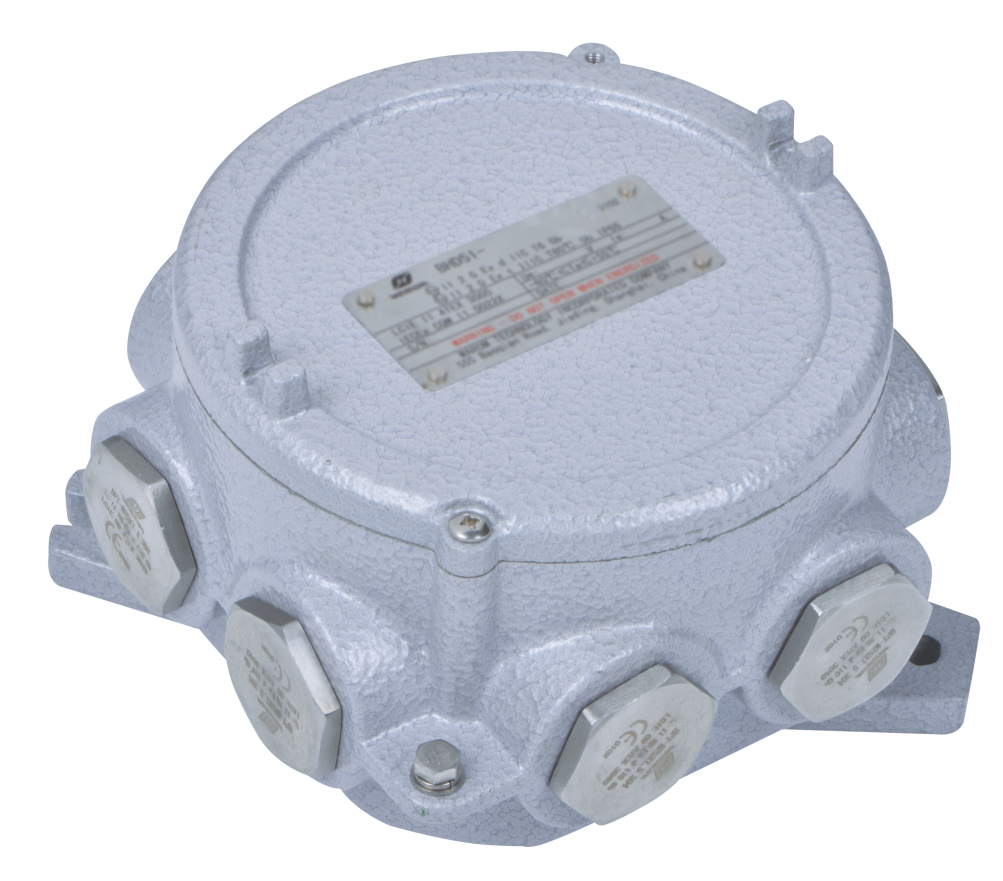
An explosion proof cable gland for mining equipment is a certified part of the flameproof enclosure, not a strain relief accessory picked at the end of the project. Underground, the cable entry is one of the routes by which an internal ignition could reach a methane and coal dust atmosphere, so the gland, the entry thread, the sealing arrangement and the enclosure are assessed as one assembly [1]. When a maintenance team replaces a damaged gland with an IP66 brass fitting from general stock, the enclosure can still look intact and still carry its Group I nameplate while the certified arrangement has already gone. What follows covers the marking comparison, the cable matching, and the installation checks that keep the certificate meaningful.
What Does an Explosion Proof Cable Gland Actually Do Underground?
A flameproof enclosure works by withstanding an internal explosion and cooling the hot gases as they pass along the flame path, the long narrow gap between mating surfaces. On the enclosure wall that gap is the flange joint; at a cable entry it is formed by the thread engagement and the gland’s internal construction. The entry is therefore part of the flameproof assessment rather than an accessory bolted onto it [1].
In a coal mine the atmosphere brings two loads at once. Firedamp is present as a gas and fine coal dust settles on every horizontal surface, so the entry has to hold pressure and hot gas during a fault and still keep dust and washdown water out during normal operation. A gland that seals well but has no flame path control, or that controls flame but lets water past the seal, only does half the job.
Four functions decide whether the part is suitable:
- Flame containment at the entry, including the thread engagement into the enclosure wall
- Cable retention, which matters most on trailing cables that are dragged, snagged and bent through tight radii
- Sealing against dust and water so the enclosure’s declared IP rating survives real conditions [3]
- Earth continuity through the armour clamp, which carries fault current back to the protection device
Retention and earthing usually fail together. When a gland is selected on thread size and IP rating alone, the armour clamp may be sized for the wrong wire diameter, the wires are cut short of the ring, and the resistance of the earth path rises quietly over a few maintenance cycles. Nothing looks wrong until a fault current finds the path inadequate.
Where the entry method is still open, choosing between a glanded cable and a conduit entry changes both the sealing arrangement and the inspection routine. <Explosion Proof Distribution Box: Glands vs Conduit for Safety> covers how each entry method is sealed and maintained.
| Function | What fails when it is wrong | Evidence to request |
|---|---|---|
| Flame containment at the entry | Hot gas escapes past a short or mismatched thread and can ignite the surrounding atmosphere | Certificate listing the gland size and the entry thread it was assessed with |
| Cable retention | Armour or sheath pulls back on a trailing cable and the seal opens | Declared cable outside diameter and armour wire range for that size |
| Dust and water sealing | Coal dust and washdown water enter the enclosure and insulation resistance falls | IP rating stated against the test standard, usually IP66 to IEC 60529 [3] |
| Earth continuity | The clamp cannot carry fault current and the protection device does not operate as designed | Clamp ring material, wire diameter range and earthing terminal detail |
| Thread compatibility | The gland sits short in the entry or cross threads, reducing engagement | Thread type, size and tolerance shown on the certificate and the order |
Which Certification Must the Gland Carry for a Coal Mine?
Group I covers equipment for mines susceptible to firedamp, with methane as the representative gas. Group II covers surface industry and is subdivided into IIA, IIB and IIC by representative gas [4]. It is tempting to assume that a gland tested for group IIC, the hydrogen group, is somehow stronger and therefore acceptable underground. It is not a valid substitution unless the certificate scope and the marking cover Group I, because the certification route assesses the equipment against different conditions, and the mechanical assumptions behind a mining entry are not the same as those behind a surface terminal box.
Alongside the group, check the equipment protection level. Group I equipment is marked Ma or Mb. Ma equipment retains its protection with two independent faults present and can stay functional in a firedamp atmosphere, which suits circuits that cannot simply be switched off. Mb equipment is protected to a high level and is de-energised when the atmosphere becomes hazardous, which covers most power, conveyor and lighting circuits underground [4]. A marking such as Ex db I Mb tells you the protection type, the group and the level in one line.
In Europe the same split appears as ATEX Group I Category M1 and M2 under Directive 2014/34/EU [5]. Increased safety entries marked Ex e are common on mining terminal and control equipment where the circuit does not produce sparks in normal operation, and that marking also has to be carried through to the gland [6]. A flameproof Ex d gland on an Ex e enclosure is not automatically wrong, but the combination has to be one the certification supports.
Certificates prove less than buyers expect, and the gap is where most procurement mistakes sit.
| Record | What it proves | What you must not infer |
|---|---|---|
| IECEx certificate for a gland in size M25 covering 12.5 to 20.5 mm cable | That this size and cable range was tested and assessed as declared | That a 22 mm cable will seal, or that the M32 version shares the same assessment |
| ATEX certificate marked Group I, Category M2 | Compliance with the ATEX requirements for that category | That the gland is approved for a US coal mine, which follows a separate route |
| IP66 declared on the gland datasheet | Protection against dust and water jets when correctly installed [3] | That the assembled enclosure still meets IP66 after a non-original gland is fitted |
| A certificate number cast on the gland body | Traceability to a certificate that can be checked | That the item in your hand was manufactured under that certificate’s quality system |
One practical example of why scope matters: the WAROM DQM-II and DQM-III flameproof gland series carries IECEx TUR 22.0035X and ATEX TÜV 22 ATEX 8855X, is marked Ex db IIC Gb, and is rated IP66 across -60 °C to +90 °C. That is a Group II marking. On a surface plant distribution box it sits inside its declared scope; offered for a Group I mining enclosure, the same gland is acceptable only if the certificate and body marking cover Group I. A datasheet is a starting point, not an approval.
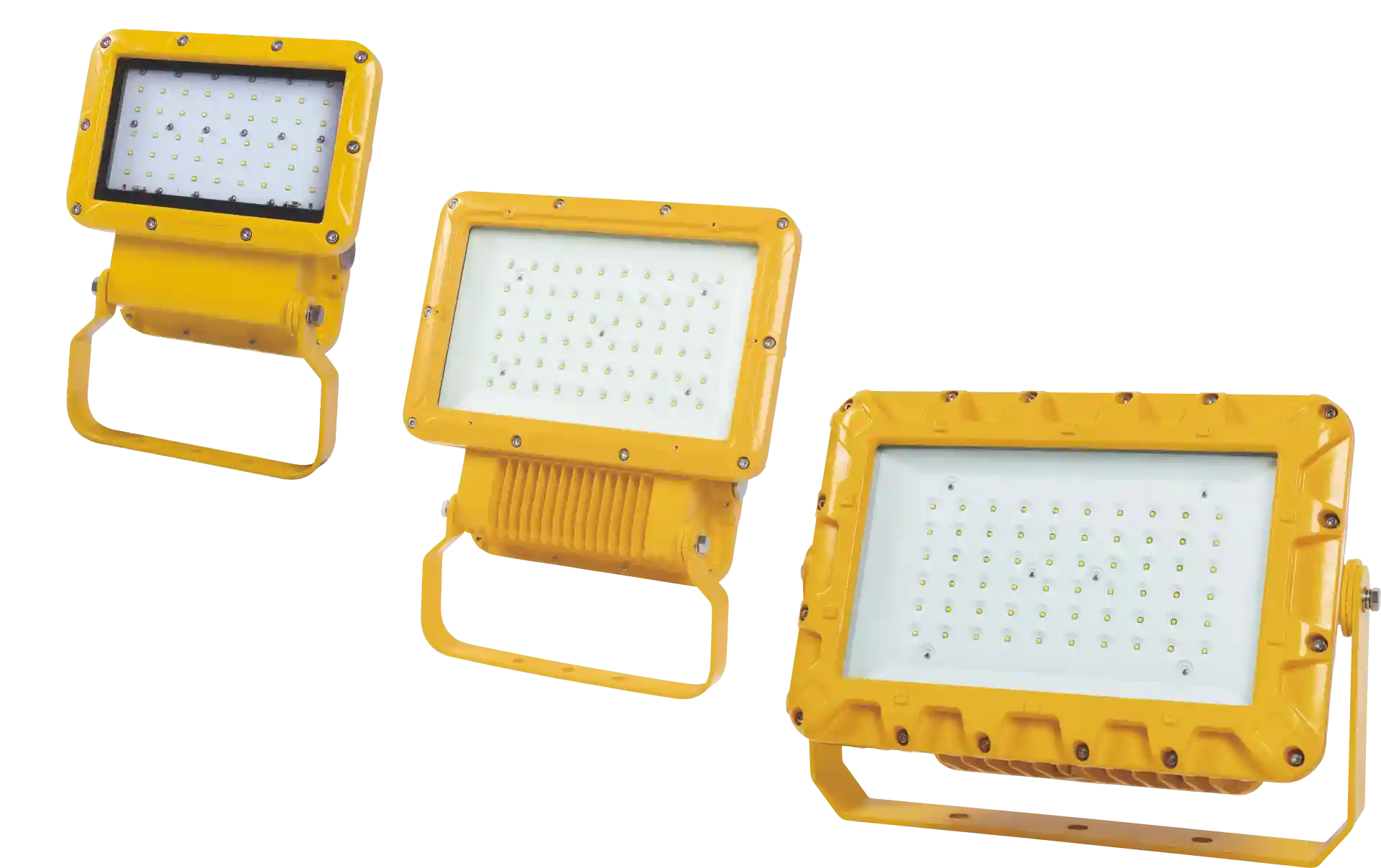
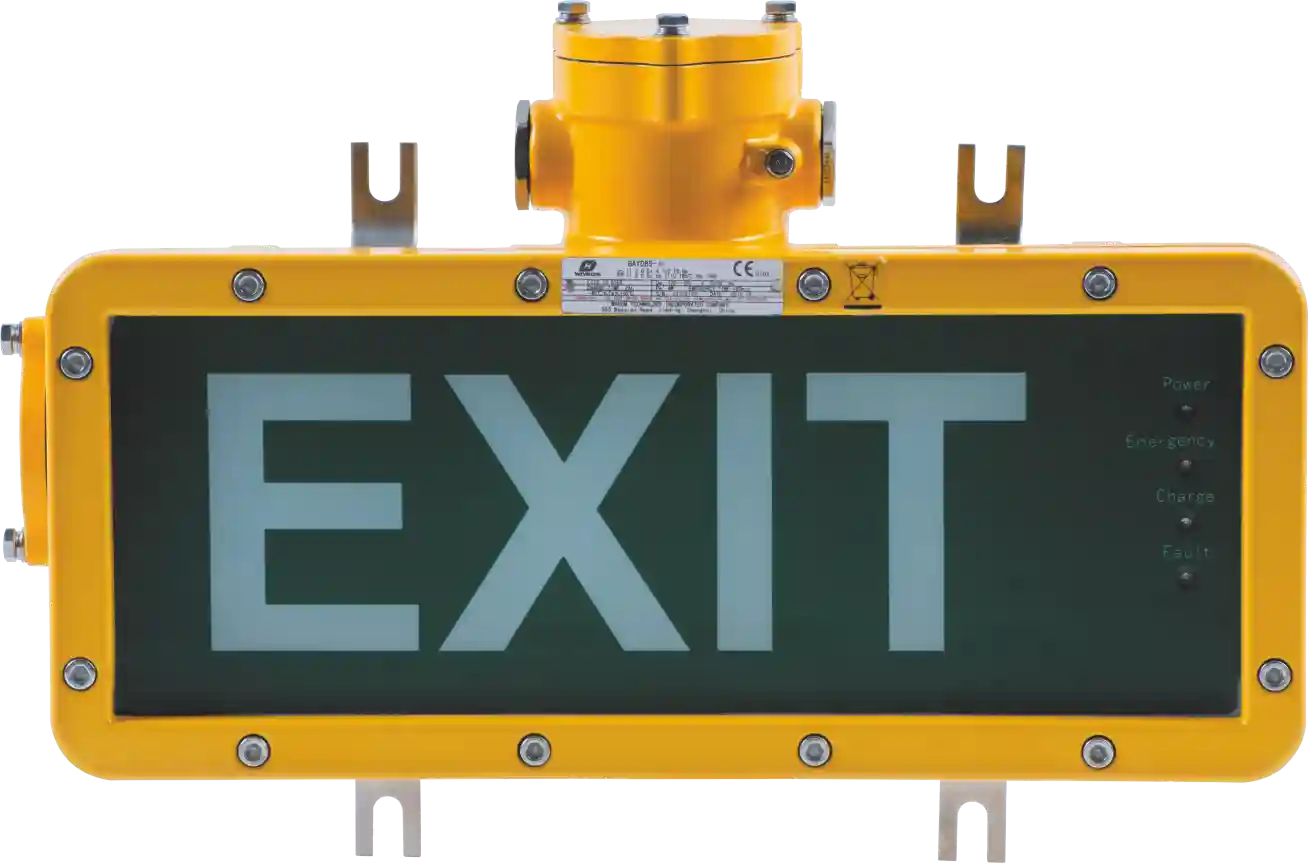
The same comparison applies to every hazardous area item on the machine, light fittings and emergency exit units included, where a fitting marked for one group is often assumed to suit another. <Explosion Proof Light Fittings for Zone 1 Hazardous Areas> covers how Zone 1 fittings are selected and marked.
In the United States, approval of electric motor-driven mine equipment and accessories is handled under Title 30, Part 18 of the Code of Federal Regulations [7]. That approval attaches to the machine or assembly, so substituting a gland is a question about the approval, not only about the gland datasheet.
How Do You Match a Gland to the Cable?
Start with a measurement, not the cable schedule. A gland declared for 12.5 to 20.5 mm depends on the seal compressing against the actual sheath. Near the low end, compression can be marginal and the seal never reaches its rated contact; near the high end, insertion distorts the seal and pushes it out of its seat. Measure the outside diameter at three points along the length that will pass through the gland, and use the largest figure when selecting the size.
Armour type decides the clamp ring. Steel wire armoured cable needs a ring sized to the wire diameter and count, braided screened cable needs a separate screen termination, and unarmoured flexible cable needs retention that does not depend on the seal. On drag conveyors, shearers and shuttle cars, the cable is pulled and flexed continuously, so the gland must hold mechanically even when the seal is under load.
The cable itself can also form a flame path. Where the construction allows gas to migrate through interstices or between strands, a barrier gland with sealing compound closes that route. A standard sealing gland does not, however well it seals against water. The cable construction and the enclosure certification decide this, not the catalogue page.
| Cable construction | Gland feature that matters | What goes wrong if mismatched |
|---|---|---|
| Steel wire armoured power cable | Clamp ring sized to the wire diameter and count | Wires cut or missed, so earth continuity fails under fault current |
| Braided screened control cable | Separate screen termination and EMC insert | Screen floats, causing interference and no drain path |
| Unarmoured flexible cable on a moving machine | Mechanical retention separate from the seal | The seal carries the pull, then tears or releases the cable |
| Cable whose construction allows gas migration | Barrier gland with sealing compound | The cable becomes the flame path to the surrounding atmosphere |
| Cable at the extreme of a declared diameter range | The next size, or a different seal insert | Leakage at the low end, a distorted seal at the high end |
Thread, Material and Corrosion Choices That Affect Service Life
Metric and NPT entries behave differently. An NPT thread is tapered and seals along the thread, so partial engagement leaves both a mechanical and a sealing weakness. A metric thread is parallel and relies on full thread engagement plus a face or O-ring seal. Adapters and reducers are acceptable only where the certification covers them, which is rarely the case with a general-purpose reducer bought separately.
Full engagement is easy to check and easy to skip. After tightening, count the exposed threads at the entry and compare with the manufacturer’s instruction; a gland standing two threads proud has less flame path and less mechanical strength than the same gland fully seated.
Material choice is a cost against service life trade-off, not a preference. Nickel-plated brass conducts well and suits most dry or lightly washed locations. Type 316 stainless steel costs more but survives acidic mine water, chloride-bearing washdown and hydrogen sulphide, where plated brass can show through-wall corrosion within a couple of years. Polyamide and GRP bodies avoid corrosion entirely but need checking for impact resistance and temperature at the mounting point. Where dissimilar metals meet, such as a stainless gland in an aluminium enclosure, specify isolating washers or match the materials, because galvanic attack at the thread is a slow, hidden failure.
Temperature needs both numbers. The gland’s ambient range has to cover the site, and the surface temperature under fault has to sit inside the enclosure’s temperature class. A gland rated to +90 °C on an enclosure whose class assumes a lower limit is a mismatch that only appears in the documentation review.
Which Installation Checks Keep the Flameproof Rating Valid?
The certification holds only if the installation matches what was assessed. Six checks cover most of the risk, and each one produces a record.
- Verify the marking before opening anything. Compare the gland body marking, the enclosure marking and the certificate scope. If the group letter differs, stop and resolve it before the cable is touched.
- Prepare the cable to the gland’s documented dimensions. Over-stripping leaves conductors exposed inside the chamber; under-stripping keeps the armour short of the clamp ring.
- Terminate the armour and prove continuity. Measure from the armour to the enclosure earth terminal and record the value against the project limit. If the reading is high, find the clamp fault rather than adding an external earth strap as compensation.
- Seat the seal on the measured cable diameter and check that compression is even around the circumference. A seal that has been compressed once should be replaced, not reused.
- Engage the thread by hand, then torque to the manufacturer’s figure while holding the gland body, so the enclosure entry is not rotated with it.
- Close every unused entry with a certified blanking plug, then record gland type, certificate number, measured cable diameter, torque and continuity reading in the enclosure file.
The last step is the one that pays off at the next audit, because the file shows what was installed rather than what was ordered.
Why Do Mining Cable Glands Fail After Commissioning?
Most entry failures are visible long before they become reportable incidents, provided someone looks at the right evidence.
| Symptom | Likely cause | How to confirm |
|---|---|---|
| White or green corrosion product within a year | Plated brass in acidic or high-chloride water | Check water pH and chloride, inspect plating at the thread root |
| Earth continuity rises at the annual test | Armour wires cut short of the clamp, or the wrong ring diameter | Inspect the clamp witness mark and count the clamped wires |
| Water in the enclosure after washdown | Reused seal, wrong diameter, or a plastic cap on an unused entry | Remove one entry at a time and check the seal witness ring |
| Gland loosened on a trailing cable | No locknut, or the gland is carrying cable pull | Check for a locknut and look for elongation in the seal |
| Auditor rejects an existing installation | Group II marking only, or a certificate that does not cover the size | Compare certificate scope against the marking on the gland body |
A symptom confirms its own row and nothing more. Corrosion on a gland does not prove it was uncertified, and a rejected certificate does not mean the gland was badly made. Keeping the two findings separate prevents the wrong corrective action, such as replacing a correctly certified gland when the real fault was acidic water.
What Should the RFQ and Pre-Shipment Verification Cover?
A short, specific enquiry produces a usable quotation. A request for “explosion proof cable glands, M25, brass” produces whatever the supplier has on the shelf.
| RFQ field | What to state | Why it matters |
|---|---|---|
| Enclosure marking | Protection type, group, level, temperature class and entry thread | Fixes the minimum the gland must match |
| Cable schedule | Diameter minimum and maximum, armour type and wire diameter, cores, screen | Sets gland size, clamp ring and whether a barrier gland is needed |
| Thread | M or NPT, size, tolerance and engagement requirement | Prevents adapters and short engagement |
| Material and finish | Brass with stated plating thickness, 316 stainless, or polyamide | Determines corrosion life in washdown or acid water |
| Certification | Standard set, certificate numbers and marking to be applied | Makes the scope checkable at goods-in rather than at the face |
| Documentation | Certificate of conformity, marking photo, seal range and lot test record | Allows rejection before shipment instead of after installation |
Verification before release is a component check, not an installation approval. Match the certificate scope to the gland size, gauge the thread, confirm the seal range against the measured cable diameter, and check batch traceability and marking legibility. None of that certifies the finished entry, which still depends on cable preparation and torque at the mine.
Send the Cable Schedule Before You Order
A gland shortlisted from a catalogue page is a guess; the certificate scope and the measured cable diameter decide whether it fits. Send the enclosure marking with its group, level and entry thread, the cable schedule with measured diameter minimum and maximum, armour type and wire diameter, screen details, thread type and size, material preference, ambient and wash conditions, the certification you must hold, and the quantity with a spare ratio.
Wang Lei, explosion-proof electrical engineer at WAROM Technology Incorporated Company, reviews these details against the certificate scope before a quotation is issued. Email gm*@***om.com or call +86 21 39977076 or +86 21 39972657.
FAQ
Can I use a Group II cable gland on Group I mining equipment?
Only where the marking or the certificate scope covers Group I. A Group IIC marking shows testing against hydrogen for surface industry and does not establish conformity to the mining certification route. If the gland body carries only Ex db IIC Gb, treat it as unapproved for a Group I enclosure until the certificate or a manufacturer declaration shows Group I in its scope. Dual-marked glands exist, but the marking on the body must show the group you are installing into.
Does a cable gland need its own certificate?
The entry is part of the flameproof assessment, so the arrangement has to be certified. In practice the gland is either certified as a separate component or assessed together with a specific enclosure. Check that the certificate covers the gland size and the entry thread you are using. A certificate for the enclosure alone does not extend to a gland from a different maker, and a certificate for one size does not cover the rest of the family.
What IP rating should a mining cable gland have?
IP66 is the common baseline for dust protection and water jets under IEC 60529 [3]. The gland’s rating and the enclosure’s rating are separate claims, and the assembly is what has to hold. Washdown or sump areas may justify IP67 or IP68, but only where the cable and the enclosure are rated to match, since a high-rated gland on a lower-rated enclosure adds cost without adding protection.
When is a barrier gland needed instead of a sealing gland?
When the cable construction can let gas or flame travel through it. Stranded conductors, some armoured designs and cables with open interstices can act as a path from the enclosure to the surrounding atmosphere, and a barrier gland filled with sealing compound blocks it. For a compact, gas-tight cable the sealing arrangement may be sufficient. The cable construction and the enclosure certification decide, not the gland catalogue.
How often should cable glands be inspected underground?
The interval belongs to the mine’s electrical maintenance scheme rather than to the gland. As a working rule, inspect whenever the enclosure is opened and include the glands in the periodic earth continuity and visual corrosion checks. Record the readings against the enclosure file so a rising resistance or a plating failure becomes visible while it is still an entry problem rather than an enclosure failure.
References
[1] IEC 60079-1:2014, “Explosive atmospheres – Part 1: Equipment protection by flameproof enclosures ‘d’,” International Electrotechnical Commission, Geneva, 2014.
[2] IEC 60079-14:2013, “Explosive atmospheres – Part 14: Electrical installations design, selection and erection,” International Electrotechnical Commission, Geneva, 2013.
[3] IEC 60529:1989, “Degrees of protection provided by enclosures (IP Code),” International Electrotechnical Commission, Geneva, 1989.
[4] IEC 60079-0:2017, “Explosive atmospheres – Part 0: Equipment – General requirements,” International Electrotechnical Commission, Geneva, 2017.
[5] Directive 2014/34/EU of the European Parliament and of the Council on the harmonisation of the laws of the Member States relating to equipment and protective systems intended for use in potentially explosive atmospheres, Official Journal of the European Union, 2014.
[6] IEC 60079-7:2015, “Explosive atmospheres – Part 7: Equipment protection by increased safety ‘e’,” International Electrotechnical Commission, Geneva, 2015.
[7] U.S. Code of Federal Regulations, Title 30, Part 18, “Electric motor-driven mine equipment and accessories,” Mine Safety and Health Administration.
If you’re interested, check out these related articles:
Day 1 Of IPA 2025
Explosion Proof Equipment: Offshore Drilling Hazardous Area Safety
Explosion-Proof CCTV for Zone 1: Hazardous Area Surveillance
Warom at 2025 Canton Fair
WAROM AT OIL&GAS INDONESIA 2025
With over a decade of experience, he is a seasoned Explosion-Proof Electrical Engineer specializing in the design and manufacture of safety and explosion-proof products. He possesses in-depth expertise across key areas including explosion-proof systems, nuclear power lighting, marine safety, fire protection, and intelligent control systems. At Warom Technology Incorporated Company, he holds dual leadership roles as Deputy Chief Engineer for International Business and Head of the International R&D Department, where he oversees R&D initiatives and ensures the precise delivery of design documentation for international projects. Committed to advancing global industrial safety, he focuses on translating complex technologies into practical solutions, helping clients implement safer, smarter, and more reliable control systems worldwide.

Qi Lingyi